
Reviewed · PAELLA AND COOKING CLASSES
Paella and Sangria Workshop in Malaga
The best part of this Malaga cooking class is that paella is not treated as a quick tourist demonstration. You help prepare the meal, learn the rice and liquid balance, and cook the original Valencian style with chicken rather than the seafood version many people expect. I especially like the hands-on format and the chance to make three savory dishes instead of only one.
I also like the local angle. Ajoblanco, Malaga soak, Andalusian dessert, and sangria give you more than a standard paella lesson, while instructors such as Diego, Laura, and Nahuel add food stories and practical tips. The main consideration is that the paella may not match your preferred style, and one participant found the paprika and sugar-free sangria less appealing than the other dishes.
In This Review
- Key points
- A paella class that teaches the whole meal
- Starting with ajoblanco, Malaga’s cold almond soup
- Preparing the Malaga soak
- Learning the traditional Valencian paella
- Mixing fresh sangria during the cooking
- Finishing with an Andalusian dessert
- Eating what you cooked
- What makes the teaching useful
- Is $84.66 a fair price?
- Timing, meeting point, and planning
- Who should book this Malaga cooking class?
- Should you book it?
- FAQ
- Where does the Paella and Sangria Workshop take place?
- How long does the cooking class last?
- What language is the class offered in?
- What dishes will I prepare?
- Is the paella made with seafood?
- How many people can join the class?
- Are vegan options available?
- Can I request vegetarian or gluten-free food?
- What is included at the end of the class?
- What is the cancellation policy?
Key points
- Three-hour cooking session: Prepare ajoblanco, Malaga soak, Valencian paella, sangria, and an Andalusian dessert.
- Traditional chicken paella: The class teaches the original Valencian method, which may surprise seafood-paella fans.
- Small maximum group: The class accepts no more than 14 people, keeping the work fairly interactive.
- Helpful instructors: Diego, Laura, Nahuel, Nicolas, and other kitchen staff lead sessions, depending on the date.
- A full meal at the end: You eat the dishes made during class, with drinks available during the meal.
- Dietary choices need advance notice: Vegan, vegetarian, and gluten-free options are available if requested before the class.
A paella class that teaches the whole meal
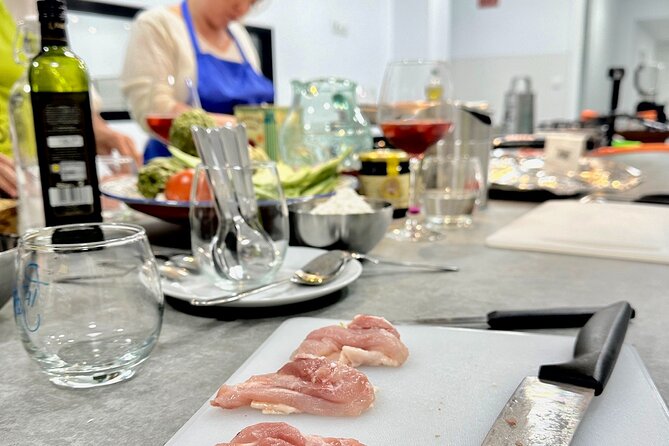
This is a cooking lesson first and a meal second, but the meal is a very satisfying finish. Over about three hours, you work through several recipes in the kitchen, then sit down to taste the results.
The class begins with dishes from Malaga and Spain before moving to the main event. That order makes sense. You start with cooler, simpler preparations, learn how local ingredients fit together, and then spend more time on the rice dish that requires the most care.
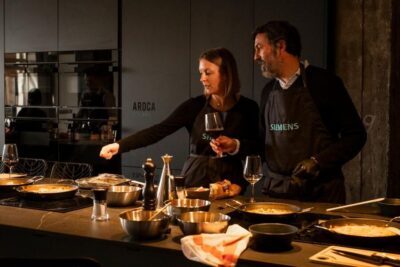
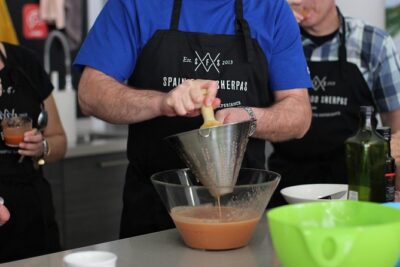
The group size can reach 14 people. That is not a private lesson, but it is still small enough for a teacher and helper to move around the kitchen and give people a task. The classes are designed to be interactive, so you should expect to chop, mix, season, stir, and take part rather than sit and watch.
The instruction is offered in English. Sessions may be led by Diego, Laura, Nahuel, Nicolas, or another member of the Lebasi Taller de Cocina team. Diego is praised for giving clear step-by-step guidance and useful cooking tips. Laura is described as warm, funny, and easy to follow, while Laura and Nahuel have also made a point of including younger cooks in the work.
More paella and cooking classes in Malaga:
- Málaga: Spanish Cooking Workshop with Paella and Sangria
★ 4.9 · 613 reviews - Malaga: Sailing Catamaran with Swimming and Paella Lunch
★ 4.1 · 578 reviews - Paella Cooking Class in Malaga
★ 5.0 · 209 reviews
Starting with ajoblanco, Malaga’s cold almond soup
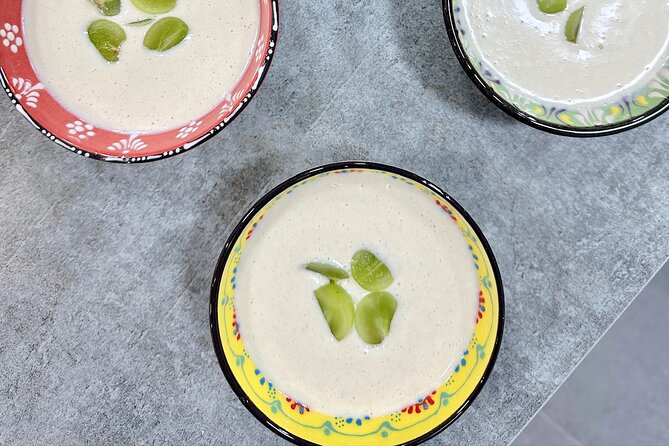
The first dish is ajoblanco, sometimes translated as white garlic. It is a cold soup made with almonds, and it gives the class a distinctly Andalusian opening.
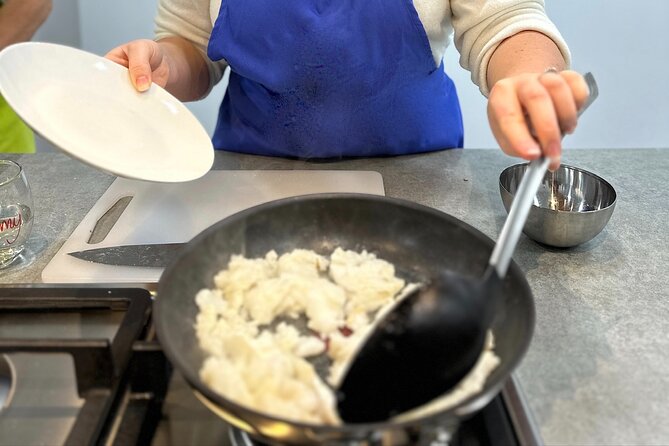
Ajoblanco may be unfamiliar if your idea of Spanish food begins and ends with tapas and paella. The dish shows how southern Spanish cooking uses a few basic ingredients in a clever way. It is served cold, so it also makes sense in Malaga’s warm climate.
This part of the class is useful for cooks who want to understand texture and balance. Cold soups can seem simple, but the right mix of almond, garlic, liquid, and seasoning matters. The class gives you a chance to see how the ingredients are brought together rather than simply receiving a finished bowl.
You should not expect a heavy starter. Ajoblanco is a cool, light beginning, and it leaves room for the courses ahead. If you are looking for a strong seafood flavor right away, this is not that kind of cooking class. Its value is in showing you a local dish that many visitors would not learn to make on their own.
Preparing the Malaga soak
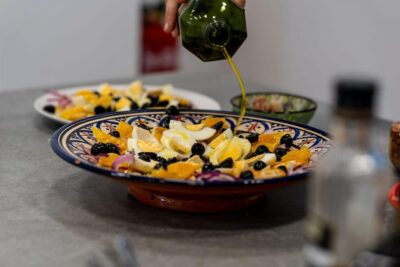
The second savory course is called Malaga soak. The description identifies it as a typical dish from the Costa del Sol, while some class descriptions refer to it as a salad.
The name may be unfamiliar, so this is one of the more interesting parts of the session. You are not simply repeating the same paella lesson found in many Spanish cities. You are also learning a regional preparation connected with Malaga and the surrounding coast.
The dish helps break up the cooking. After the cold almond soup, you move to another preparation before tackling the rice. This gives the class a steady rhythm and means you are building a three-course meal rather than waiting around while someone else cooks the paella.
The exact ingredients are not specified, so you should not book this expecting a particular salad or fixed recipe beyond the stated Malaga soak. The useful point is that the class includes a local starter with a regional identity, not just a generic side dish.
Learning the traditional Valencian paella
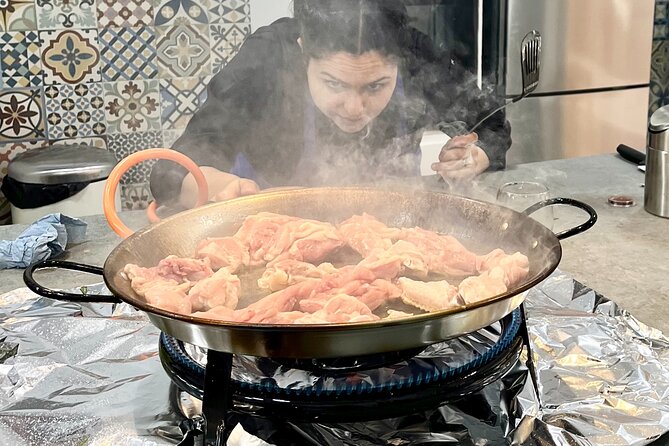
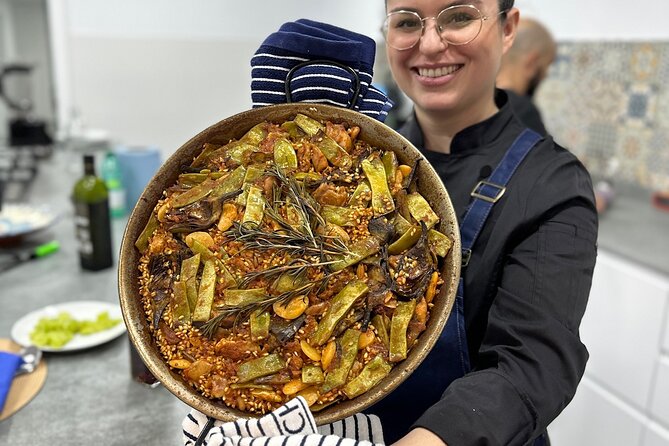
Paella is the main reason most people book this class, and the lesson focuses on the original Valencian tradition. One detail matters: the paella is made with chicken rather than seafood.
That can catch you off guard if you picture prawns, mussels, and squid. Seafood paella is widely served in Spain, but it is not the only form, and this workshop uses chicken to teach a traditional Valencian approach. If you want to learn how paella is made in its older regional style, that is a useful distinction.
The central lesson is rice and liquid. Several participants especially wanted to learn the correct amount of each, having tried to make paella at home without getting the texture right. The class addresses that practical problem directly.
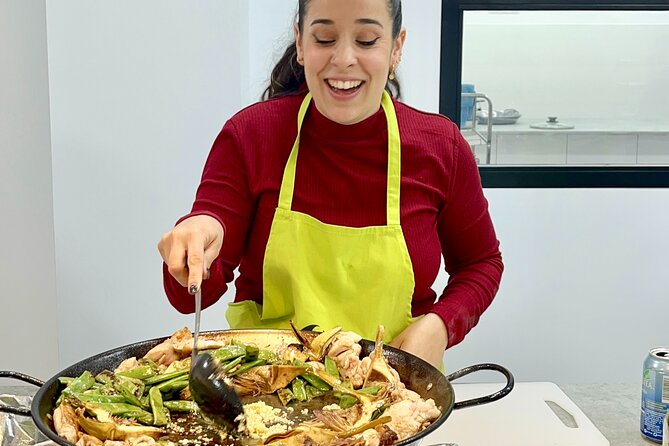
You also learn about traditional methods and cooking techniques. Diego is singled out for explaining how to debone chicken legs and thighs easily, and the class can include advice on how to improve flavor as you cook. This is the sort of information you can use again at home, rather than a recipe that only works in a professional kitchen.
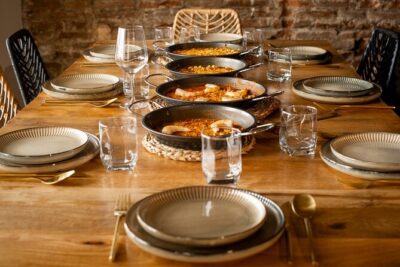
The paella is prepared as a group effort. You get a chance to see how the ingredients are handled and how the rice develops. The class then serves the finished paella as part of the meal, so you can judge the result immediately.
Taste is personal, and the experience is not a guarantee that every part of the dish will suit you. One participant found the paella too heavy on paprika. That is worth noting if you prefer delicate seasoning. Still, the point of the workshop is not only the final plate. It is learning a method you can adjust in your own kitchen.
A few more Malaga outings worth comparing
- Málaga: Museo Picasso Málaga Entry Ticket
★ 4.4 · 11,138 reviews - Málaga: Alcazaba and Roman Theatre Guided Tour With Entry
★ 4.8 · 5,792 reviews - From Malaga and Costa del Sol: Gibraltar Tour
★ 4.4 · 4,483 reviews - Malaga: Teatro Flamenco Malaga Live Flamenco Show
★ 4.7 · 4,254 reviews
Mixing fresh sangria during the cooking
Sangria is prepared during the class rather than brought in as a ready-made drink. That makes it part of the activity, not just a beverage attached to the meal.
You learn about sangria and its place in Spanish food culture while the cooking continues. The drink is served fresh, and there are several other beverages available when it is time to eat.
The style may not suit everyone. One participant did not enjoy the zero-sugar version and found the flavor less appealing than the food. If you prefer sweet sangria, it is sensible to ask about the recipe or available options at the start of the session.
I like the fact that the class treats sangria as something to make and understand. Many visitors encounter it as a restaurant shortcut, often served in places aimed squarely at tourists. Here, you see how it fits into a shared meal and learn enough to experiment with it later.
Finishing with an Andalusian dessert
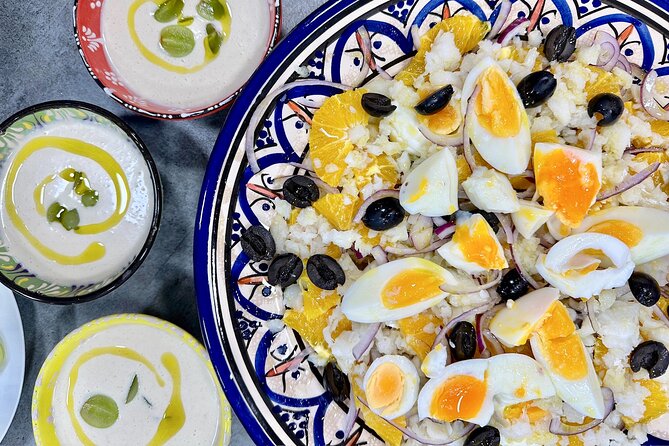
The meal ends with a typical Andalusian dessert, described as an Andalusian sorbet. It is a small but welcome part of the menu.
The dessert gives the class a proper finish after soup, a regional starter, paella, and drinks. It also keeps the focus on southern Spanish food rather than ending with a generic sweet course.
The supplied details do not name the sorbet flavor or describe its preparation in detail. You should think of it as a final taste of Andalusia, not a separate pastry-making lesson. The main cooking work centers on the savory dishes and sangria.
Eating what you cooked
The strongest practical feature of the workshop is the final meal. You do not prepare food only to watch someone else carry it away. You sit down and eat the soup, Malaga soak, paella, dessert, and drinks as part of the experience.
That changes the feel of the class. The work has a clear purpose, and you can compare the stages of the meal as they arrive. It also makes the three-hour length easier to understand. The time includes instruction, preparation, cooking, and a shared meal.
The meal is filling. You should allow space in your schedule afterward rather than planning another large dinner immediately. The class is suited to couples, families, solo visitors, and small groups who enjoy meeting people around a table.
The social side is part of the appeal. The kitchen format lets you work alongside people from different places, and the shared meal gives the group an easy reason to talk. You may prefer a quiet private meal, but if you like food classes that feel social, this setup should work well.
What makes the teaching useful
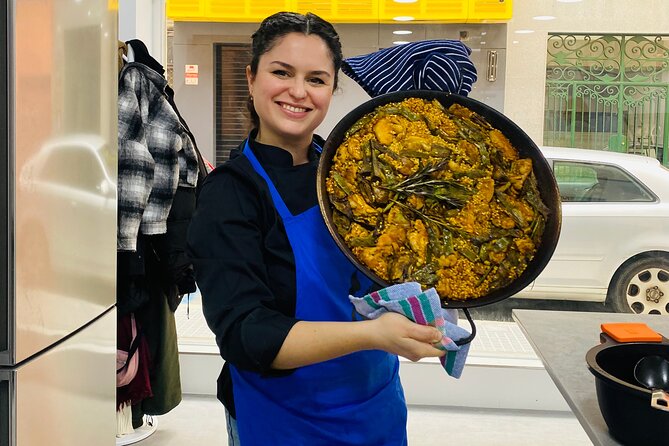
The instructors focus on clear, practical directions. Diego is praised for explaining each stage, answering questions, and sharing tips that improve the food. Laura is also described as an engaging teacher who explains what you are doing while adding stories and advice about Malaga.
The class suits a wide range of cooking ability. You do not need to be a confident cook, and the activity can work for families with children. A 13-year-old took part actively, and another class included people ranging from age three to 70.
That does not mean every moment will be equally active for everyone. With up to 14 people, some tasks may be shared, and you may not personally handle every part of every dish. Still, the format is far more participatory than a demonstration where you only watch a chef work.
The cultural information adds value, too. You learn where paella comes from, how local dishes fit into Malaga’s food traditions, and why particular techniques matter. The instructors may also offer general Malaga restaurant suggestions, which can help you choose where to eat after the class.
Is $84.66 a fair price?
At $84.66 per person, this is not the cheapest meal in Malaga. You can find a plate of paella for much less, especially away from the main visitor areas.
The better comparison is with a cooking class plus dinner. For the price, you receive about three hours of instruction, several dishes, sangria, dessert, and the chance to eat the food you helped prepare. You also leave with techniques that can be repeated at home, especially the rice-to-liquid balance and chicken preparation.
The value is strongest if you want an activity, not just a meal. You are paying for the kitchen time, the instructor, the group setting, and the practical lesson. If your main goal is to sample the best possible paella without cooking, spend the money at a restaurant instead.
Recipe follow-up is worth checking before you leave. Some participants received recipes, while others were still waiting for them. Ask how the recipes will be sent and make sure the promise is clear, especially if learning to recreate the dishes is a major reason for booking.
Timing, meeting point, and planning
The class starts at C. Martínez Campos, 15, in Malaga’s Centro district, and ends at the same meeting point. It is near public transportation, so you should be able to reach it without arranging a special transfer.
Build in a little time to find the kitchen. The activity begins at a specific central address, and arriving late could mean missing the early instructions. Confirmation is sent within 48 hours of booking, subject to availability, so do not assume the reservation is final until that confirmation arrives.
The experience is often booked around 30 days ahead. That does not guarantee that every date sells out, but it is a useful planning signal. If the class is important to your Malaga schedule, reserve before arrival rather than waiting for the last day.
Free cancellation is available up to 24 hours before the start time for a full refund. Changes or cancellations inside that 24-hour window are not accepted for a refund. The provider also requires a minimum number of participants, and if that minimum is not reached, you are offered another date or experience, or a full refund.
Tell the provider about dietary needs before the class. Vegan, vegetarian, and gluten-free choices are available with advance notice. The information does not promise that every dish will be identical to the standard menu, so give clear details when booking.
Who should book this Malaga cooking class?
I would choose this for couples wanting an active date, families looking for something beyond sightseeing, and solo visitors who enjoy meeting people through food. It also suits anyone who has tried to make paella at home and wants a better grasp of the rice, liquid, and cooking method.
It is a good match for mixed-age groups. The teaching style is described as friendly and easy to follow, and younger participants can take part in the cooking. You do not need advanced skills.
I would hesitate only if you want seafood paella, dislike group activities, or have very particular tastes in paprika and sangria. The traditional chicken paella is an important detail, not a minor variation.
Should you book it?
Book this workshop if you want to spend an afternoon or evening making a real meal, learning regional recipes, and eating at the end. The combination of ajoblanco, Malaga soak, chicken-based Valencian paella, sangria, and Andalusian sorbet gives you a broader look at Spanish cooking than a single-dish lesson.
The main trade-off is simple: this is a group class, and the menu may differ from the paella you imagined. For most people, the value comes from the clear instruction, friendly teaching, full meal, and techniques you can use at home. If those matter more to you than a seafood-heavy menu, Lebasi Taller de Cocina is a strong pick in central Malaga.
FAQ
Where does the Paella and Sangria Workshop take place?
The class starts and ends at C. Martínez Campos, 15, Distrito Centro, 29001 Málaga, Spain.
How long does the cooking class last?
The activity lasts approximately three hours, including cooking and eating the meal.
What language is the class offered in?
The workshop is offered in English.
What dishes will I prepare?
You prepare ajoblanco, also called white garlic soup, Malaga soak, and traditional Valencian paella. You also make sangria and finish with an Andalusian sorbet.
Is the paella made with seafood?
The traditional paella taught in this class uses chicken rather than seafood.
How many people can join the class?
The experience has a maximum of 14 participants.
Are vegan options available?
Vegan options are available if you notify the provider in advance.
Can I request vegetarian or gluten-free food?
Yes. Vegetarian and gluten-free options are available with prior notice.
What is included at the end of the class?
You taste the dishes prepared during the workshop, including the soup, Malaga soak, paella, sangria, and dessert. Other beverages are also available during the meal.
What is the cancellation policy?
You can cancel at least 24 hours before the start time for a full refund. Cancellations or changes made less than 24 hours before the start time are not accepted for a refund.
Just added around Malaga
- San Miguel Cemetery Tour of Malaga★ 5.0 · 3 reviews
- A Self-Guided Tour of Ancient Malaga’s History★ 4.5 · 3 reviews
- MALAGA: ULTIMATE FLAMENCO & TAPAS TOUR★ 5.0 · 3 reviews
- Private Winery Tour and Visit to Ronda★ 5.0 · 3 reviews
- Ronda and Setenil from la Costa del Sol★ 3.8 · 3 reviews
- From Nerja/Almunecar: Sierra Nevada and Alpujarra day trip★ 4.0 · 3 reviews
- From Seville: Ronda and Setenil de Las Bodegas Private Tour★ 5.0 · 3 reviews
- Private tour in Malaga from Costa del Sol★ 4.5 · 3 reviews
Paella and Cooking Classes, compared.
Spanish Cooking Workshop with Paella and Sangria
Read our review →
Sailing Catamaran with Swimming and Paella Lunch
Read our review →
Paella Cooking Class with English Guide in Malaga
Read our review →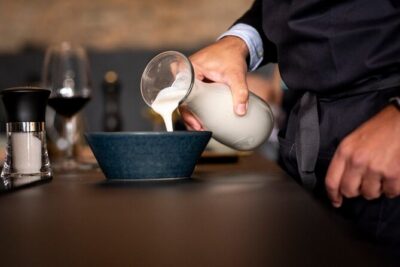
Paella and Tapas Tour with The Best Flamenco Show
Read our review →Browse the lists this tour appears in