
Reviewed · PAELLA AND COOKING CLASSES
Málaga: Spanish Cooking Workshop with Paella and Sangria
Málaga’s food culture makes more sense once you get your hands on it. In this three-hour cooking workshop, you prepare paella, ajoblanco, remojón malagueño, and a surprise dessert, then sit down to eat what you helped make with sangria in your glass.
I like the central location, just five minutes from Atarazanas Market, and I like the teaching team. Laura brings Le Cordon Bleu training and paella instruction from a Valencian specialist, while Diego brings a Málaga upbringing and years in Andalusian kitchens. The main consideration is simple: this is a participatory class, not a quiet meal. You will chop, stir, ask questions, and spend much of the session involved in the cooking.
In This Review
- Key points at a glance
- Meeting Laura and Diego in central Málaga
- A hands-on start with ajoblanco
- Preparing remojón malagueño
- The paella lesson, from pan to table
- Mixing sangria and settling in for the meal
- Dessert and the pleasure of a shared table
- What you take home besides a full stomach
- Is $78 a fair price?
- Who should book this Málaga cooking class?
- Should you book it?
- FAQ
- How long does the Málaga cooking workshop last?
- What dishes will I prepare?
- Is the class taught in English?
- Can the menu accommodate dietary requirements?
- Where does the activity take place?
- What are the cancellation and payment options?
Key points at a glance
- Four courses plus sangria: Prepare ajoblanco, paella, remojón malagueño, and a surprise dessert before eating together.
- Two different culinary viewpoints: Laura focuses on paella and Spanish food traditions, while Diego specializes in Málaga and Andalusian dishes, especially sweets.
- A genuinely hands-on format: You help prepare the ingredients and dishes rather than watching a chef do all the work.
- Useful Málaga advice: The chefs can suggest markets, shops, restaurants, bars, and places to visit.
- Easy central setting: The modern kitchen sits in Málaga’s historic center, close to Atarazanas Market.
- Good flexibility: The class is in English, wheelchair accessible, and can adapt to allergies, intolerances, vegetarian diets, and vegan diets with advance notice.
Meeting Laura and Diego in central Málaga
The workshop takes place in Málaga’s historic center, which makes it easy to fit into a day of sightseeing. You are only about five minutes from Atarazanas Market, a useful landmark and a natural place to visit before or after class.
I particularly like the market connection. Atarazanas is not just a convenient address marker. It gives you a chance to see the kind of produce, seafood, fruit, and pantry ingredients that shape cooking in southern Spain. You can visit the market first, then hear the chefs explain how Spanish cooks use similar ingredients in the kitchen.
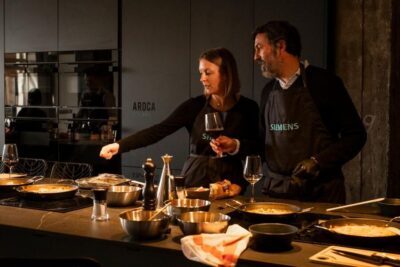
The setting itself is modern and comfortable. That matters during a three-hour class, especially if you are worried about being on your feet for the whole session. High stools with backs are available, so you can take part while seated when needed. The room is designed for participation rather than a formal restaurant meal, but it is not a rough or cramped setup.
Your instructors may be Laura or Diego, and sometimes other members of the team assist with the class. Laura studied at Le Cordon Bleu in London and has worked in Michelin-starred restaurants. Her paella training came from a Valencian chef, a useful connection because paella is strongly tied to the cooking traditions of Valencia.
Diego grew up and trained in Málaga after beginning his culinary path at age nine. His focus is Andalusian and Málaga-style cooking, with particular interest in desserts. He also brings experience from both traditional kitchens and more exclusive restaurants in the city.
The difference between the two teaching styles can add variety. Laura tends to explain technique, ingredients, and food customs in careful detail. Diego brings plenty of humor and stories, while still giving clear instructions. Both speak English, and the class is conducted in English.
More paella and cooking classes in Malaga:
- Malaga: Sailing Catamaran with Swimming and Paella Lunch
★ 4.1 · 578 reviews - Paella Cooking Class in Malaga
★ 5.0 · 209 reviews - Paella Cooking Class with English Guide in Malaga
★ 5.0 · 149 reviews
A hands-on start with ajoblanco
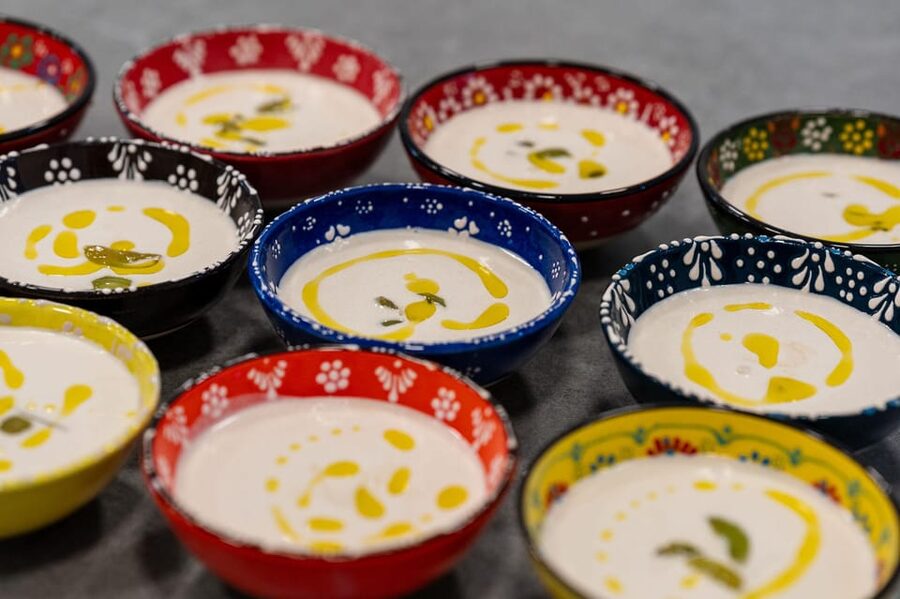
The cooking begins with ajoblanco, one of Málaga’s signature dishes. This chilled almond and garlic soup may surprise you if your picture of Spanish food begins and ends with tapas and paella.
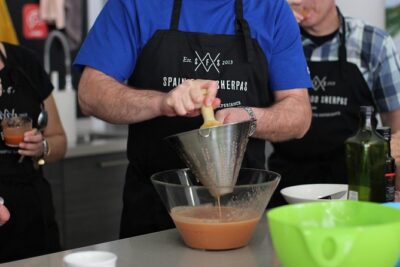
Ajoblanco shows how southern Spanish cooking makes something memorable from a short list of ingredients. Almonds, garlic, bread, olive oil, and other simple elements come together in a smooth soup with a cool, savory character. It is especially useful as a lesson in balance. Too much garlic can dominate, while the right amount gives the dish its identity.
You do not simply watch the chef blend it. The class is built around preparing ingredients and helping make the food. The instructors explain the purpose of each step and connect the dish to Málaga’s food traditions.
I like this part because it keeps the workshop from becoming a standard paella lesson. You leave with a better sense of the region’s cooking, not just one famous rice dish. Ajoblanco is also practical to recreate at home, provided you can find good almonds and olive oil.
The chefs use the dishes as a way to discuss local ingredients, cooking habits, and the relationship between food and daily life in Andalusia. You can ask questions as you go, and the teaching format allows time for one-to-one help when someone needs an extra explanation.
Preparing remojón malagueño
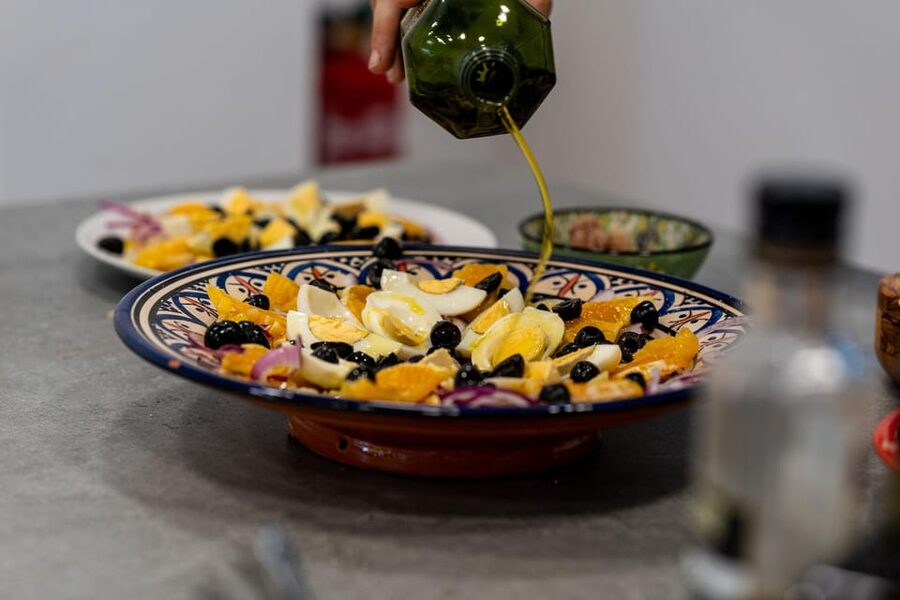
Next comes remojón malagueño, a typical Málaga salad. Like ajoblanco, it offers a useful counterpoint to paella because it is lighter, fresher, and closely tied to local cooking.
The dish gives you another lesson in how Andalusian food handles contrast. The ingredients, preparation, and seasoning create a salad that works beside the richer rice course. You prepare it as part of the shared meal, so you are not just collecting separate recipes. You are learning how a Spanish meal is put together.
The class also gives context for why the dishes belong together. A traditional meal often relies on more than one texture and flavor. A cold soup, a fresh salad, a substantial main course, and dessert make for a more complete table than paella alone.
This is where the workshop feels more useful than a quick cooking demonstration. You pick up ideas about pacing a meal, serving several dishes, and using regional recipes in a modern kitchen. The chefs also answer questions about ingredients and can point you toward places to shop in Málaga.
The paella lesson, from pan to table
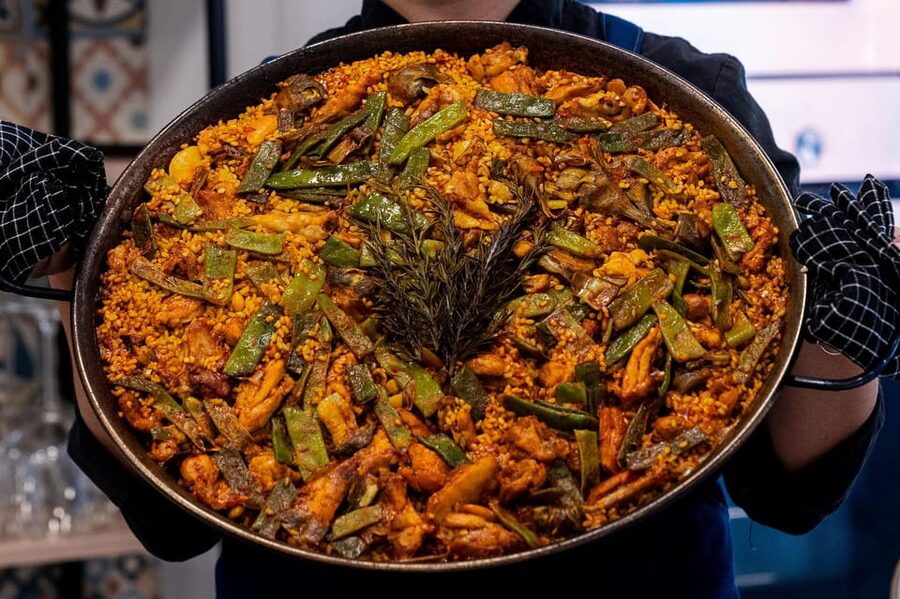
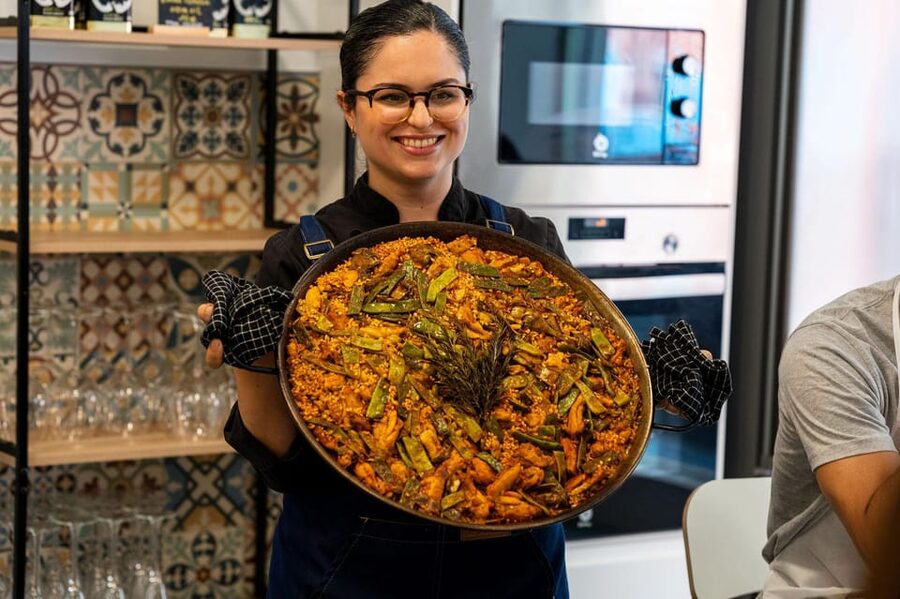
Paella is the main event, and the instructors give it plenty of attention. Laura’s Valencian training is especially relevant here, while Diego explains the dish through his Andalusian cooking background and local food knowledge.
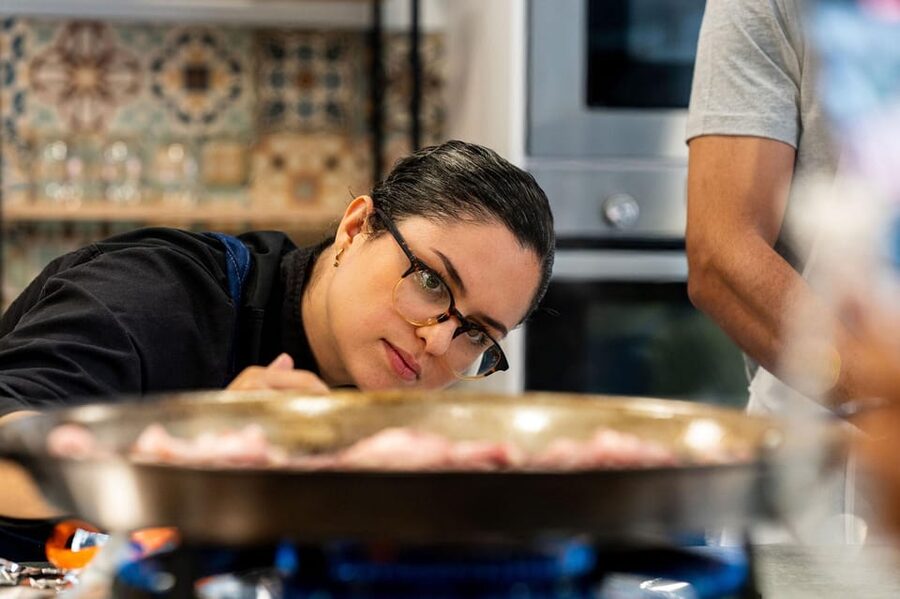
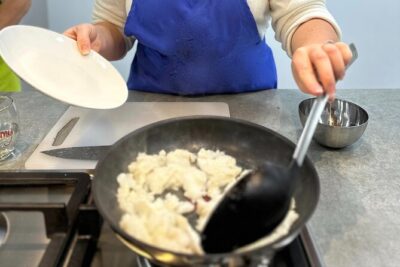
You learn the method rather than just being handed a finished pan. The chefs explain how the ingredients are prepared, when they go into the pan, and how the rice should be treated. One of the most useful details is the focus on getting the rice right. That means paying attention to the cooking process instead of stirring constantly or treating paella like an ordinary risotto.
You also hear about the origins and regional identity of paella. This adds needed context. Paella is often simplified outside Spain, where almost any rice dish cooked in a wide pan gets the name. In class, you learn why technique and ingredients matter, and why cooks care so much about the dish.
The workshop is participatory, so you help with the preparation. That makes the final meal more satisfying, but it also means you should be ready to work. If you prefer an activity where you sit back and watch, this may feel more demanding than expected.
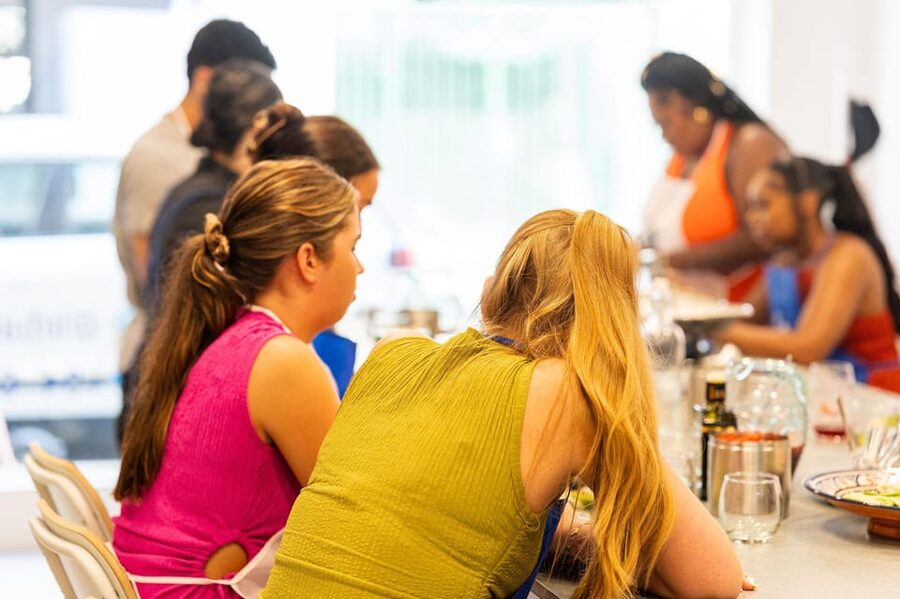
The instructors keep the mood relaxed. Humor is part of the teaching, and questions are welcome. The class is social without requiring you to arrive with a large group. The minimum is four participants, and class sizes shown in the available feedback included groups of about nine or ten, small enough for personal help without making the room feel too quiet.
Once the paella is ready, you eat together. This shared meal is one of the strongest parts of the format. You get to taste the result while the cooking steps are still fresh in your mind, and conversation develops naturally around the table.
A few more Malaga outings worth comparing
- Málaga: Museo Picasso Málaga Entry Ticket
★ 4.4 · 11,138 reviews - Málaga: Alcazaba and Roman Theatre Guided Tour With Entry
★ 4.8 · 5,792 reviews - From Malaga and Costa del Sol: Gibraltar Tour
★ 4.4 · 4,483 reviews - Malaga: Teatro Flamenco Malaga Live Flamenco Show
★ 4.7 · 4,254 reviews
Mixing sangria and settling in for the meal
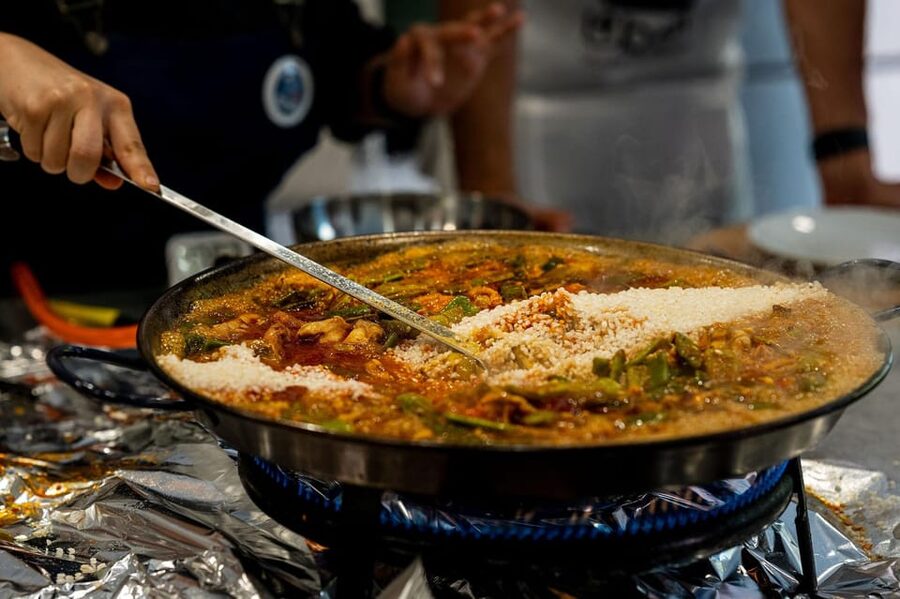
Sangria is included, and the preparation is part of the fun rather than an afterthought. The chef explains how it is made in Spain and gives you the chance to take part before it accompanies the meal.
The drink helps turn the class into a social evening, but it is not the only reason to book. The real value is the combination of cooking instruction, food culture, and dinner. You receive more than a single demonstration, yet you are not paying separately for a restaurant meal and a class.
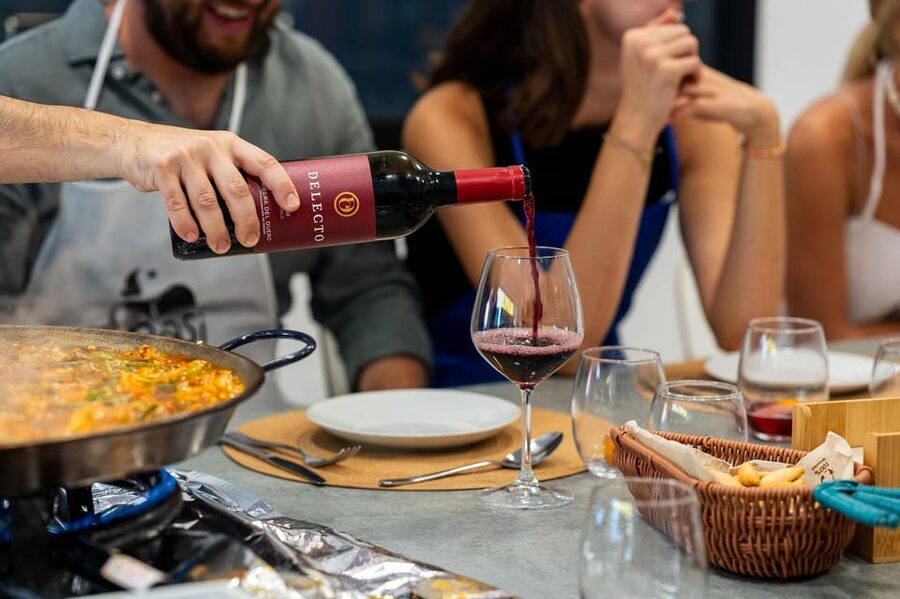
The amount of sangria included is described as one or two servings according to your choice. Alcohol and drugs are not allowed beyond the included drink service, so this is a cooking workshop with sangria, not a bar crawl or drinking tour.
If you do not drink alcohol, check the arrangements before booking because the activity description specifically highlights sangria rather than a nonalcoholic alternative. The class is also unsuitable for anyone expecting a fully alcohol-free format unless that point is confirmed in advance.
Dessert and the pleasure of a shared table
The menu ends with a surprise dessert, with Diego’s Andalusian pastry background adding a useful touch. The exact dessert is not fixed in the information provided, which is part of the appeal but also means you should not book expecting a particular sweet.
Dessert gives the chefs room to discuss the region’s broader cooking traditions. It also rounds out the meal. After working on soup, salad, rice, and drink, you finish with something sweet rather than leaving after the main course.
The shared meal is relaxed and generous. You eat the dishes prepared during the session, including the soup, salad, paella, and dessert, with sangria during the meal. Several parts of the menu are substantial enough to make this feel like a proper meal, not a few small tasting portions.
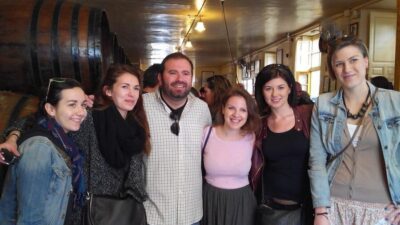
I like the way this structure turns strangers into a temporary dinner party. You cook side by side, compare results, and trade questions with people from different countries. That social element cannot be guaranteed in exactly the same way each time, but the format encourages it.
What you take home besides a full stomach
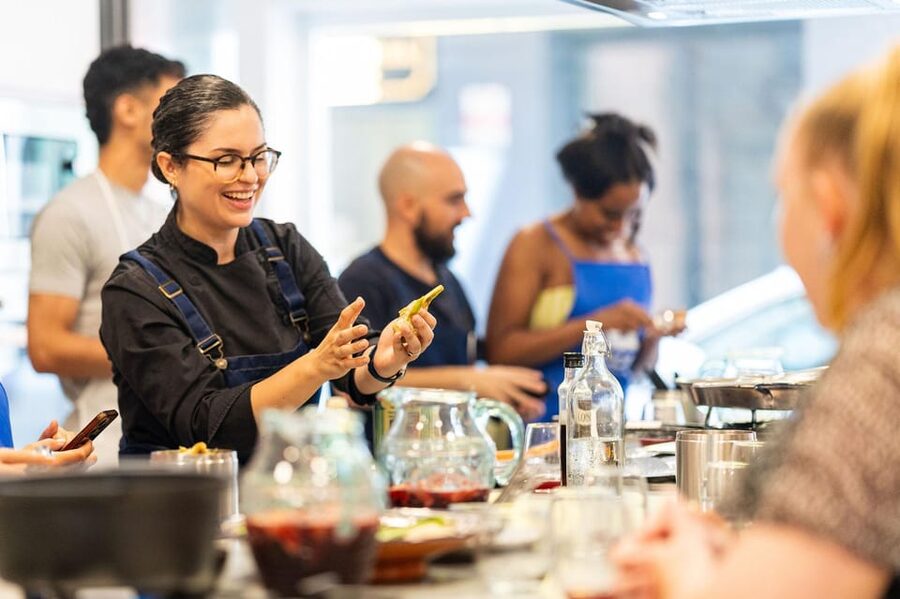
The most useful souvenir is technique. Paella is easy to attempt and surprisingly easy to get wrong, so learning the small decisions behind the dish has real value. You also leave with recipes, allowing you to try the dishes again at home.
The chefs share practical advice about sourcing ingredients and suggest local markets, shops, restaurants, bars, and places to visit in Málaga. This can help you make better choices for the rest of your stay. It is particularly useful if you are still deciding where to eat or want to buy Spanish ingredients before leaving.
You may also pick up advice that applies beyond this menu. The class covers seasoning, ingredient quality, traditional preparation, and the cultural background of the dishes. That makes it a good choice for cooks who want more than a souvenir recipe card.
The lesson is not aimed only at experienced home cooks. Instructions are designed to be easy to follow, and the hands-on structure lets the chefs correct or guide you as you work. Families, couples, solo visitors, and small groups can all fit the format.
Families should note that the activity includes food preparation and alcohol service. The information does not give a specific minimum age, so check that point if you are booking with children.
Is $78 a fair price?
At $78 per person, this sits above the cost of an ordinary Málaga meal, but the comparison is not quite fair. You are paying for three hours of instruction, several dishes, a shared meal, sangria, recipes, and local recommendations.
The value is strongest if you want to cook again at home. A restaurant dinner may be cheaper, but it will not teach you how to make paella or explain why ajoblanco and remojón malagueño belong to Málaga’s food culture.
The price also includes an activity that works well on a rainy day or during a break from sightseeing. You get out of the weather, meet people, and eat a full meal while doing something active. That makes the cost easier to justify for a short stay.
I would think twice only if you are not interested in cooking, do not want a group setting, or are looking for a luxury food tour with a highly private format. This workshop is friendly and practical rather than formal. Its strength is participation, not exclusivity.
Free cancellation is available up to 24 hours before the start for a full refund, and you can reserve now and pay later. Dietary requirements, allergies, intolerances, and vegan or vegetarian preferences can be accommodated with advance notice. The kitchen is wheelchair accessible, but it is still wise to notify the organizers about mobility needs before arriving.
Who should book this Málaga cooking class?
I would recommend it to you if you enjoy learning by doing. It suits home cooks who want to improve their paella, food lovers who want local context, and couples or families looking for an evening that is more memorable than another restaurant meal.
It also works well for solo visitors. The group format gives you an easy way to meet people, and the meal at the end creates a natural chance to talk. You do not need to arrive with a full party, though the class requires at least four participants to run.
The workshop is a good match for anyone who wants practical Málaga advice from people who cook there. Laura and Diego can help you think beyond the class menu, from where to buy ingredients to what places to visit next.
I would skip it if you want a silent demonstration, a tightly scripted professional kitchen lesson, or a private chef’s table. The class is lively, conversational, and hands-on. You should expect to participate fully.
Should you book it?
Yes, if you want a useful and social food activity in Málaga. The menu gives you more than paella, the location is convenient, and the instruction combines formal culinary training with local Andalusian knowledge.
The strongest reason to book is the balance of food and context. You prepare a proper meal, learn the background of regional dishes, enjoy sangria, and leave with recipes and ideas for the rest of your time in Málaga.
Book with advance notice if you need vegan, vegetarian, or allergy-friendly adaptations. For everyone else, bring an appetite, comfortable clothes, and a willingness to chop, stir, taste, and ask questions. At $78, it is a solid value for a three-hour activity that feeds you twice, once with dinner and once with skills you can use later.
FAQ
How long does the Málaga cooking workshop last?
The workshop lasts three hours. Check the available dates for the starting time that fits your schedule.
What dishes will I prepare?
You will prepare ajoblanco, paella, remojón malagueño, and a surprise dessert. Sangria is also included during the meal.
Is the class taught in English?
Yes. The live tour guide and cooking instruction are in English.
Can the menu accommodate dietary requirements?
Food allergies and intolerances can be accommodated. Vegan and vegetarian options are available with advance notice.
Where does the activity take place?
The class takes place in central Málaga, in the city’s historic center. The kitchen is about five minutes from Atarazanas Market.
What are the cancellation and payment options?
You can cancel up to 24 hours before the activity for a full refund. You can also reserve your place and pay later, so you do not need to pay at the time of booking.
Just added around Malaga
- San Miguel Cemetery Tour of Malaga★ 5.0 · 3 reviews
- A Self-Guided Tour of Ancient Malaga’s History★ 4.5 · 3 reviews
- MALAGA: ULTIMATE FLAMENCO & TAPAS TOUR★ 5.0 · 3 reviews
- Private Winery Tour and Visit to Ronda★ 5.0 · 3 reviews
- Ronda and Setenil from la Costa del Sol★ 3.8 · 3 reviews
- From Nerja/Almunecar: Sierra Nevada and Alpujarra day trip★ 4.0 · 3 reviews
- From Seville: Ronda and Setenil de Las Bodegas Private Tour★ 5.0 · 3 reviews
- Private tour in Malaga from Costa del Sol★ 4.5 · 3 reviews
Paella and Cooking Classes, compared.

Sailing Catamaran with Swimming and Paella Lunch
Read our review →
Paella Cooking Class with English Guide in Malaga
Read our review →
Paella and Tapas Tour with The Best Flamenco Show
Read our review →Browse the lists this tour appears in