
Reviewed · HISTORICAL TOURS
A Self-Guided Tour of Ancient Malaga’s History
Malaga’s story unfolds in a compact walk from the port to Plaza de la Constitución. Along the way, you pass Roman ruins, Moorish architecture, Picasso landmarks, old churches, and one of the city’s best-known tapas bars. The route gives you a useful first look at central Malaga without tying you to a guide’s schedule.
I like the GPS-guided format, which lets you stop for photos, food, or a quick look inside a church when the mood strikes. I also like the price: $9.99 buys lifetime access, English audio, offline maps, and geodata. The main catch is that this is a passing tour, not an attraction-entry tour, and you may find some overlap if you already have another walking tour of the cathedral, Alcazaba, and Roman theater.
In This Review
- Key points to know before you go
- From Malaga’s fisherman statue into the old center
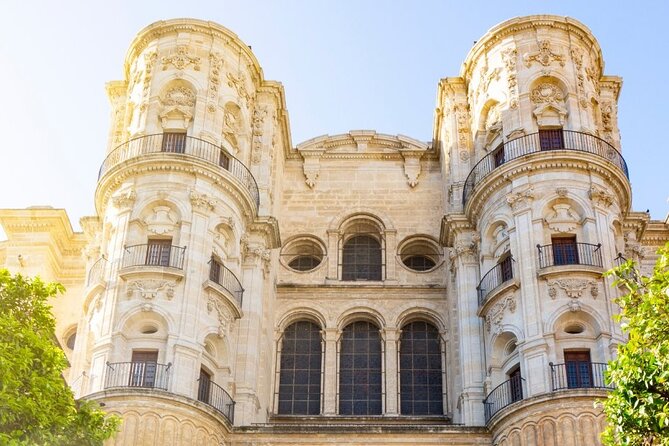
- Plaza del Obispo and the cathedral called Manquita
- Churches, Picasso, and a famous tapas stop
- Plaza de la Juderia and the Roman theater
- Alcazabilla and Malaga’s Moorish legacy
- Plaza de la Merced and Picasso’s early life
- Plaza de Uncibay and a lively finish through the center
- What the VoiceMap format feels like in practice
- Price, timing, and who gets the best value
- Small details that can improve your walk
- Should you book this Malaga audio walk?
- FAQ
- How long does the Malaga self-guided tour take?
- Where does the tour start?
- Where does the tour end?
- What language is the audio tour offered in?
- Is this a live guided tour?
- Does the tour include a guide?
- Do I need internet access during the walk?
- Are attraction tickets included?
- Are food and drinks included?
- Can I cancel or change the booking?
Key points to know before you go
- Start at the fisherman statue: Begin at Estatua del Cenachero beside Plaza de la Marina, a fitting introduction to Malaga’s working waterfront.
- Follow a compact historic route: Walk from the port through the cathedral area, old Jewish quarter, Roman theater, Alcazabilla, and Plaza de la Merced.
- Use GPS instead of printed directions: The VoiceMap app guides you as you move and provides offline audio, maps, and location data.
- See Picasso from several angles: The route includes Plaza de la Merced, the Picasso statue, his birthplace museum, and the Ateneo connection to his father.
- Build in food time: Las Bodegas El Pimpi and the tapas streets around Plaza de Uncibay are useful places to pause.
- Expect sights from the outside: The route passes many major landmarks, but food, transport, and attraction admission are not included.
From Malaga’s fisherman statue into the old center
The walk begins near the port at Plaza de la Marina, in front of Estatua del Cenachero. The statue shows a local fisherman carrying baskets, and it gives the tour a human starting point. Before you reach grand churches or ancient ruins, you get a reminder that Malaga grew from ordinary work as much as from kings, artists, and armies.
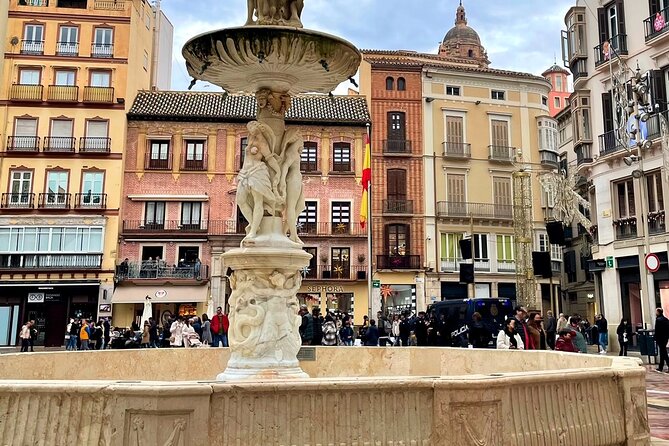
You then cross Plaza de la Marina. This is a central city square where modern Malaga meets the old center. The setting helps you get your bearings: the port is behind you, while the historic streets begin ahead.
The opening is short and easy to follow. If you have just arrived by ship, train, or bus, this is a practical way to begin without first solving Malaga’s street plan on your own.
A few more Malaga outings worth comparing
- Nerja: Caves of Nerja Entry Ticket with Audio Guide
★ 4.6 · 1,616 reviews - Málaga: Picasso Birthplace Museum Ticket & City Audio Guide
★ 4.1 · 158 reviews - Malaga: Centre Pompidou Malaga Ticket and City Audio Guide
★ 3.4 · 36 reviews
Plaza del Obispo and the cathedral called Manquita
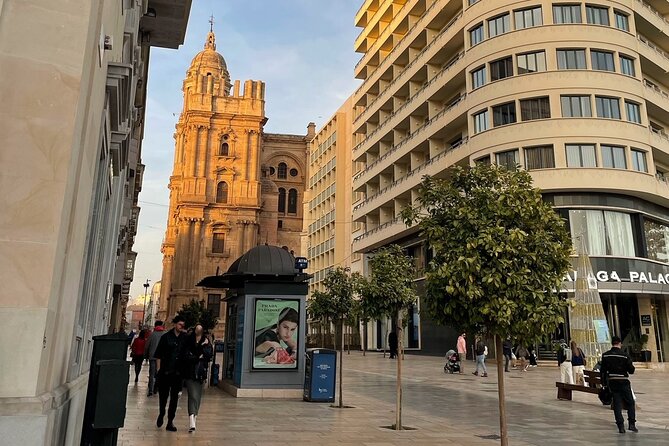
The route continues to Plaza del Obispo, one of the city’s most attractive historic spaces. From here, you pass Malaga Cathedral, locally known as Manquita, or the one-armed lady.
The nickname refers to the cathedral’s unfinished state. The missing second tower is not a minor detail. It gives the building a distinctive identity and offers a simple way to understand how large church projects could remain incomplete.
You mainly see the cathedral as part of the walk rather than as an included interior visit. That matters if you want to study the chapels, art, or ceiling. You will need to arrange that separately, but the audio stop still gives you a helpful introduction before you decide if you want more time inside.
For many people, this section will be the visual high point of the first part of the route. Allow extra time here if you want photos or a quiet look around the square.
Churches, Picasso, and a famous tapas stop
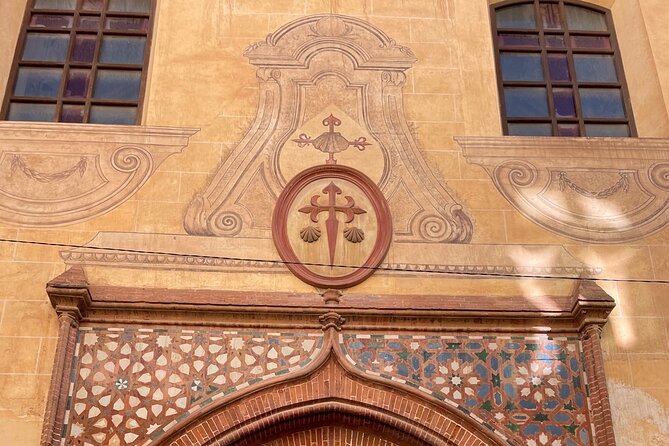
Next comes the Church of St Augustine, a Catholic church with Moorish influences. That combination is typical of Malaga’s long sequence of cultural changes. The route does not treat the city as a collection of isolated monuments. Instead, it points out how Islamic and Christian design sit close together in the same old streets.
You also pass the Picasso Museum Málaga. Picasso is Malaga’s most famous son, so his presence appears again and again as you walk. The museum is worth noting even if you do not plan to enter. This tour only brings you past it, so check the museum separately if seeing the collection is a priority.
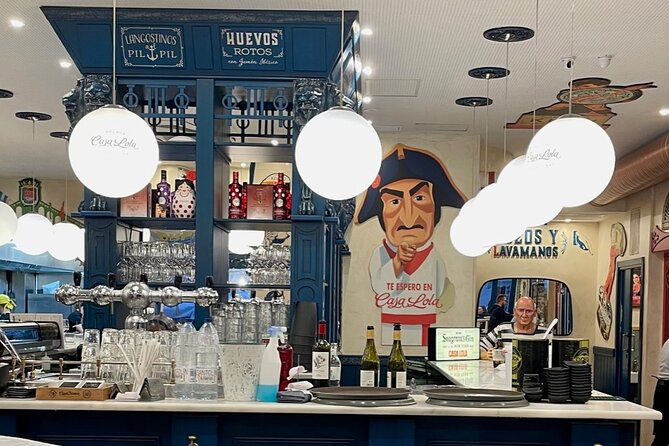
Las Bodegas El Pimpi is another useful stop. This old tapas bar is included as a landmark, not as a meal or tasting. You can choose to stop for lunch or a drink, but that cost is yours.
I like this part because it connects art with everyday city life. A museum tells one part of Malaga’s story, while a traditional bar shows how the old center still works as a place to eat, meet, and linger.
Plaza de la Juderia and the Roman theater
From the Picasso area, the route moves toward Plaza de la Juderia. The square adds another layer to the city’s past and gives you a change of pace from the larger cathedral setting.
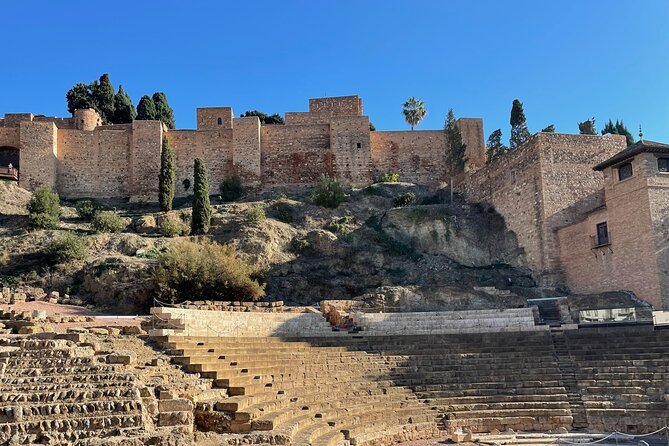
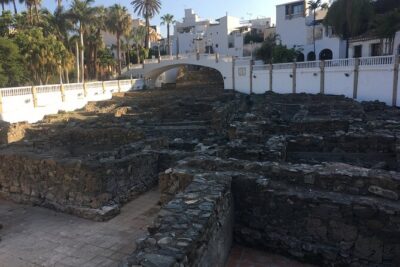
You then pass Teatro Romano de Málaga, the Roman theater. This is one of the clearest ancient remains in the city center, and its position near the Alcazaba makes the area especially useful for understanding Malaga’s long timeline.
The tour does not include a separate admission or extended visit inside the Roman theater. You get the historical setting and the audio explanation while passing through. If ancient Roman sites are your main reason for booking, plan on checking the theater’s own access details rather than assuming the walking tour covers entry.
This is also a place where you may want to pause. The route lasts about 45 minutes to one hour at a normal pace, but the audio format means you are not forced to keep moving. You can stop the narration, look around, and restart when ready.
Same base, a completely different kind of day:
- Málaga: Caminito del Rey Guided Tour with Transportation
★ 4.8 · 12,183 reviews - Caminito del Rey: Guided Tour and Entry Ticket
★ 4.6 · 11,286 reviews - Málaga: Museo Picasso Málaga Entry Ticket
★ 4.4 · 11,138 reviews - From Málaga & Costa del Sol: Caminito del Rey Guided Tour
★ 4.7 · 7,488 reviews
Alcazabilla and Malaga’s Moorish legacy
The walk continues along Alcazabilla, a street with views toward the Alcazaba fortress. This is one of the strongest stretches for architecture. The Roman theater, Alcazaba, and surrounding streets place several periods of Malaga’s past within a short distance.
The audio helps give meaning to what you see, but the route does not take you through the fortress itself. If you want courtyards, walls, views, and a longer look at the complex, you will need a separate visit.
You also pass Parroquia Santiago Apóstol Málaga, a Catholic church with Islamic influences. The stop reinforces an important point about Malaga: its buildings do not fit into neat historical boxes. Earlier forms and later religious uses often appear side by side.
For a first visit, this is valuable context. You are not simply collecting names of monuments. You are learning to look for the overlap between Roman, Islamic, Christian, artistic, and commercial Malaga.
Plaza de la Merced and Picasso’s early life
The route then heads to Plaza de la Merced, where Picasso was born and grew up. This square gives the Picasso story a more personal setting than a museum label does.
The audio includes the story of Picasso’s survival at birth, an unusual detail that makes the stop memorable. You also pass Monumento a Torrijos, a monument dedicated to the Spanish liberal José María Torrijos, and Estatua de Picasso, a tribute to the artist.
The Museo Casa Natal de Picasso comes next. This is the museum connected with Picasso’s childhood home. Again, the tour takes you past the site rather than providing admission.
That distinction is important when planning your day. If you want a quick orientation to Picasso’s connection with Malaga, the walk does the job. If you want rooms, objects, and exhibitions, treat the stop as a prompt for a later visit.
You also pass Teatro Cervantes, bringing the route back to Malaga’s performing arts. The theater helps show that the city’s cultural life extends beyond Picasso and historic churches.
Plaza de Uncibay and a lively finish through the center
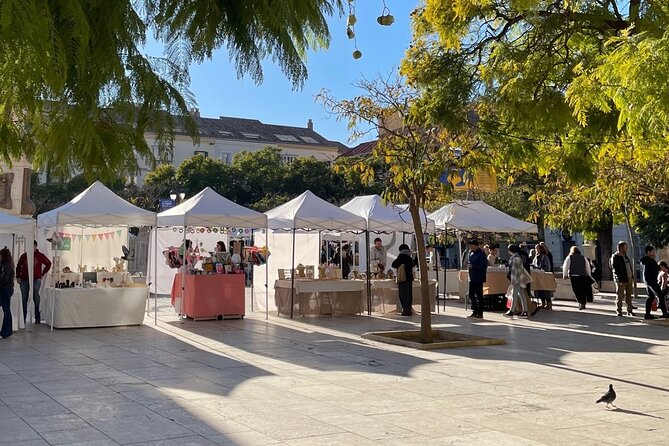
Plaza de Uncibay is a good place to pause because it is lined with tapas bars and restaurants. The tour points you toward the city’s food culture without including a meal. You can stop here, or continue to the final squares and return later.
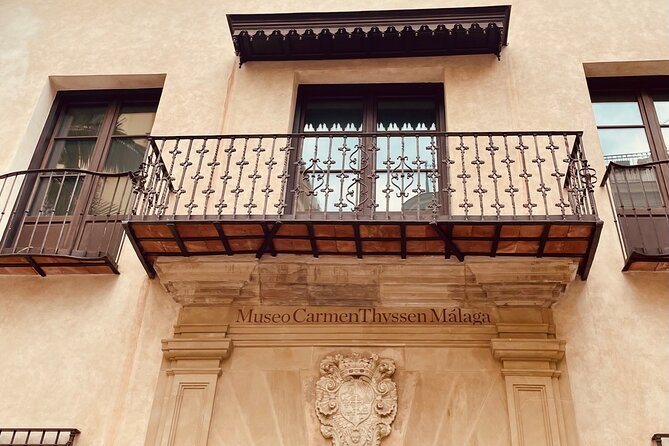
The Church of the Holy Martyrs Ciriaco and Paula adds another religious landmark. You then pass Museo Carmen Thyssen Málaga, which broadens the art story beyond Picasso.
The route also includes Ateneo de Málaga. This cultural center was once the San Telmo School of Fine Arts, where Picasso’s father taught drawing. It is a small but useful connection between the city’s art institutions and the family background of its most famous artist.
The final stop is Plaza de la Constitución. Here, the audio explains the origin of the square’s name. Ending in this central plaza makes practical sense. You finish in the middle of Malaga, close to restaurants, shops, and more sights, rather than at an isolated meeting point.
What the VoiceMap format feels like in practice
This is not a live tour with a guide answering questions. It is a private audio walk for your own group, delivered through the VoiceMap app for Android and iOS.
The strongest practical feature is GPS tracking. The audio is designed to guide you as you move, so you do not need to stare at your phone for every turn. The GPS function has worked well enough for the route to feel easy to follow, while offline access helps if your mobile connection is weak or you prefer not to use data.
You need to bring your own smartphone and headphones. Transportation is not included, and neither are food or drinks. The route is near public transportation, but the experience itself is on foot.
You can pause when you want. That is especially useful at El Pimpi, Plaza de la Merced, the cathedral, and the Roman theater. The walk may take 45 minutes to one hour without long breaks, but your actual outing can be longer if you stop for lunch or enter a museum.
Price, timing, and who gets the best value
At $9.99 per person, this is inexpensive for a city introduction. The value improves if you use the lifetime access more than once, perhaps by taking the route on your first afternoon and replaying selected sections later.
The cost also compares well with the flexibility you get. You do not need to meet a guide at a fixed hour beyond reaching the start, and your group can move at its own pace. For a couple or small family, that can be more convenient than paying for a private live guide.
The low price does not mean you receive a full guided visit to Malaga’s main attractions. You are paying for narration, directions, maps, and a planned route. Admission tickets, meals, and personal transport remain separate.
I would use this tour as an orientation tool, especially on a first day. It gives you a route through the core sights, then helps you decide where to spend more time.
One caution: avoid booking it alongside another walking tour that covers the Teatro Romano, Alcazaba, cathedral, and Picasso sites unless you want repetition. The route is designed around Malaga’s essential old-center sights, so overlap is likely with other city walks.
Small details that can improve your walk
Start with enough battery on your phone. The app provides offline access, but offline audio does not remove the need for a working device.
Bring headphones and comfortable walking shoes. No special fitness level is stated, and most people can participate, but the experience is still a walking route through central streets.
Use the flexible format to your advantage. Pause the audio before stepping into a church, stopping for tapas, or taking pictures. You can also treat the route as a framework rather than a race to the final square.
Service animals are allowed, and the activity is near public transportation. Confirmation is provided at booking. The experience is non-refundable and cannot be changed after booking, so make sure your date and group plans are firm.
Should you book this Malaga audio walk?
Book it if you want a cheap, flexible introduction to central Malaga with clear GPS guidance and a useful mix of Roman, Moorish, Christian, artistic, and food-related stops. It suits independent visitors, cruise passengers with limited time, and anyone who prefers listening at their own pace.
Skip it if you want a live guide, long interior visits, or a tour focused on just one subject. You will see many important places from the outside, but you must arrange museum and monument entry separately.
For most first-time visitors, the best plan is to take the walk early in your stay, pause at the places that catch your interest, and return later to the cathedral, Roman theater, Alcazaba, Picasso museum sites, or a tapas bar. At $9.99, it is a modest-risk way to get your bearings and choose what deserves more of your day.
FAQ
How long does the Malaga self-guided tour take?
The audio walk takes approximately 45 minutes to one hour. Stops for photos, food, church visits, museums, or sightseeing will make your outing longer.
Where does the tour start?
It starts at Estatua del Cenachero, at Plaza de la Marina, 1, in Malaga’s Distrito Centro.
Where does the tour end?
The tour ends at Plaza de la Constitución in central Malaga.
What language is the audio tour offered in?
The tour is offered in English.
Is this a live guided tour?
No. It is a self-guided audio tour delivered through the VoiceMap app.
Does the tour include a guide?
There is no live guide listed for this experience. You follow the audio, GPS directions, maps, and geodata on your own smartphone.
Do I need internet access during the walk?
The tour includes offline access to the audio, maps, and geodata. You still need a compatible smartphone and headphones.
Are attraction tickets included?
No attraction admissions are included. The route passes the cathedral, Roman theater, Picasso Museum Málaga, Museo Casa Natal de Picasso, and other sights, but entry tickets are separate.
Are food and drinks included?
No. Food and drinks are not included, though the route passes Las Bodegas El Pimpi and areas with tapas bars and restaurants.
Can I cancel or change the booking?
No. The experience is non-refundable and cannot be changed for any reason after booking.
Just added around Malaga
- San Miguel Cemetery Tour of Malaga★ 5.0 · 3 reviews
- MALAGA: ULTIMATE FLAMENCO & TAPAS TOUR★ 5.0 · 3 reviews
- Private Winery Tour and Visit to Ronda★ 5.0 · 3 reviews
- Ronda and Setenil from la Costa del Sol★ 3.8 · 3 reviews
- From Seville: Ronda and Setenil de Las Bodegas Private Tour★ 5.0 · 3 reviews
- Private tour in Malaga from Costa del Sol★ 4.5 · 3 reviews
- From Nerja/Almunecar: Sierra Nevada and Alpujarra day trip★ 4.0 · 3 reviews
- Walk and dolphin watching in Fuengirola + 1 drink★ 5.0 · 3 reviews
Historical Tours, compared.
Malaga City Tour 3 Hour Historical Segway Adventure
Read our review →Malaga City Tour: 3-Hour Historical Segway Adventure
Read our review →
Ronda Historical Walking Tour with Bullring Entrance
Read our review →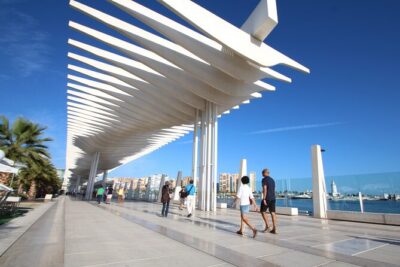
Browse the lists this tour appears in