
Reviewed · ENTRANCE TICKETS
Nerja: Caves of Nerja Entry Ticket with Audio Guide
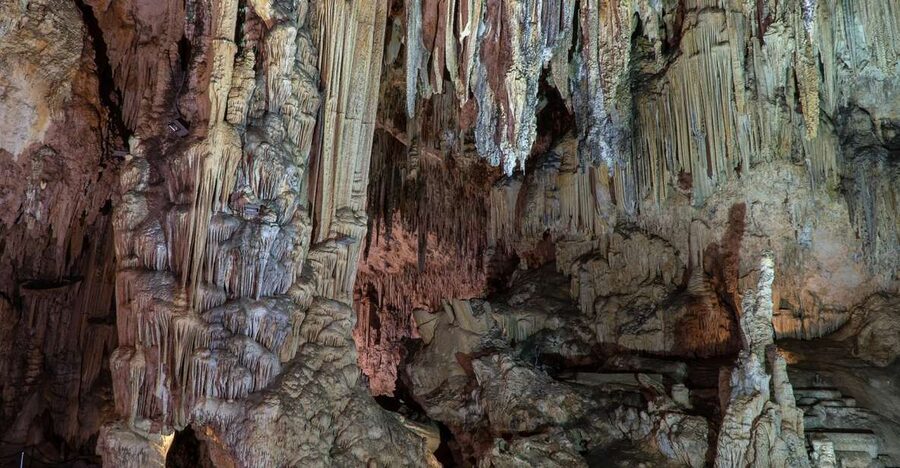
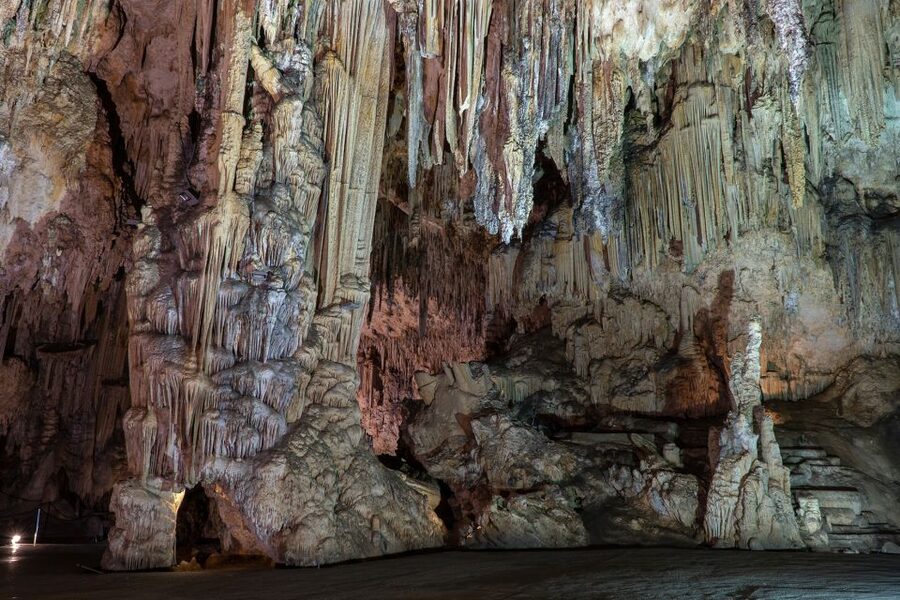
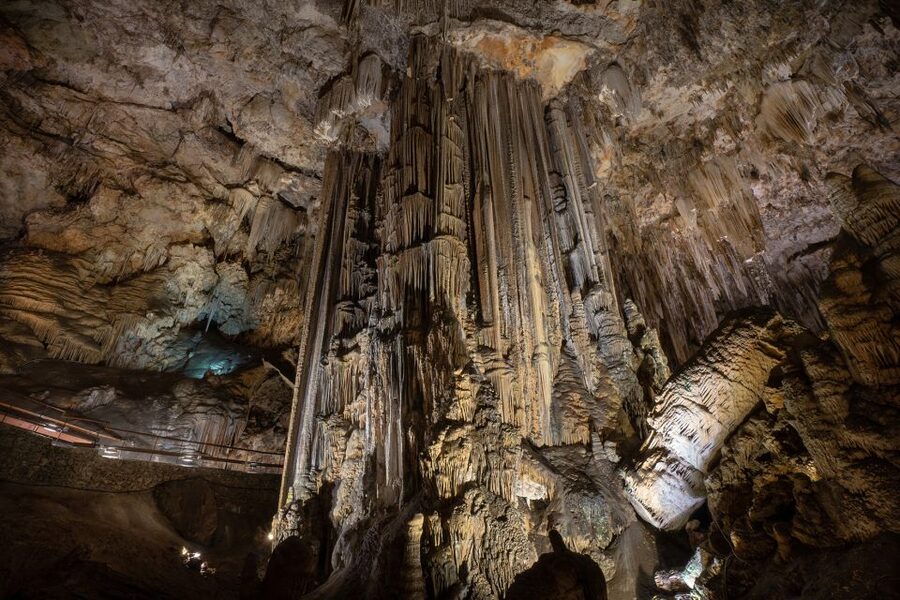
The Nerja Caves are not a quick peek into a small grotto. They open into enormous chambers filled with towering formations, high ceilings, and passages shaped over vast stretches of time. The Cataclysm Room is the main event, home to the world’s largest column, formed where a stalactite and stalagmite met.
I like the freedom to move at your own pace, rather than being tied to a guide’s walking speed. I also like the value: the $18 ticket includes the caves, museum, and 360 degree virtual reality room. The main drawback is practical rather than scenic: the audio guide is a phone app, and you need to download it properly before entering.
In This Review
- Key points to know before you go
- What the Nerja Caves experience is really like
- Entering the huge underground chambers
- The Cataclysm Room and the world’s largest column
- Cave paintings, archaeology, and what you cannot see
- The Museum of Nerja adds the missing human story
- The 360 degree virtual reality room
- How to handle the audio guide without frustration
- Stairs, temperature, and practical comfort
- Choosing the best time to visit
- Gardens, views, food, and parking
- Is the $18 price good value?
- Who should book this experience?
- Should you book the Nerja Caves ticket?
- FAQ
- What does the Nerja Caves ticket include?
- Is the audio guide available in English?
- Do I need to download an app for the audio guide?
- Can I visit the caves with a wheelchair?
- Can I see the prehistoric cave paintings inside?
- How long is the Nerja Caves visit?
- Is the ticket refundable?
Key points to know before you go
- The Cataclysm Room is the highlight: Expect the largest public chamber, tall ceilings, and the world’s largest cave column.
- The audio guide uses your phone: Download the app with Wi-Fi before arrival and bring earbuds or headphones.
- The cave art is not easy to see: Lighting ancient paintings can damage them, so the artwork described in the audio is generally not visible inside.
- Allow more than 30 minutes if you can: A quick walk is possible, but you can spend one to two hours studying the formations.
- The museum and virtual reality room add real value: They explain the site and prehistoric life beyond what you see underground.
- Prepare for stairs: The route is unsuitable for wheelchair users and people with mobility limits, with a particularly long climb on the way out.
What the Nerja Caves experience is really like
Your visit begins at the cave complex near Nerja and Maro, in Andalusia. The ticket is valid for one day, with entry based on the available starting time you select. Pre-booking is useful because it gives you a planned entry rather than leaving you to buy a ticket at the gate.
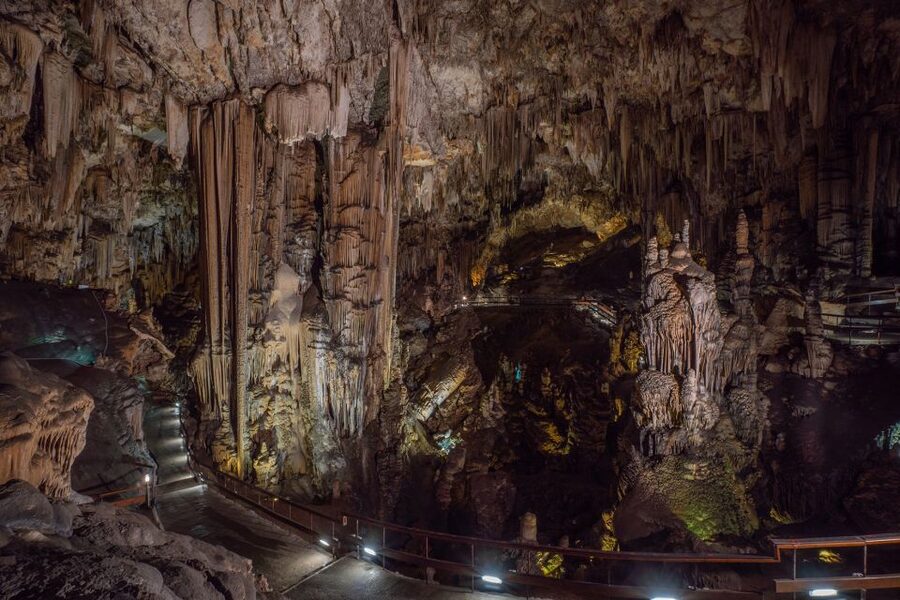
The cave visit itself is self-guided. You follow a marked route through the public chambers while listening to commentary on your phone. Numbered stations match the audio, so keep an eye out for them. They are easy to miss if you are concentrating only on the rock formations.
This setup works well for a natural site. You can stop beneath a large formation, let other people pass, or replay a section without holding up a group. The quiet also matters. Several languages may be playing around you, but with earbuds you can listen privately and enjoy the cave without a guide speaking over the natural hush.
The audio is available in English, Spanish, German, Arabic, Chinese, French, Dutch, Italian, Japanese, Korean, Norwegian, Polish, Portuguese, Russian, Swedish, and other listed languages. A children’s audio guide is available in Spanish and English.
More Nerja and Frigiliana trips:
- Nerja: Guided Kayak Tour Nerja Cliffs and Maro Waterfall
★ 4.7 · 2,916 reviews - From Málaga: Caves of Nerja, Nerja and Frigiliana Day Tour
★ 4.7 · 2,187 reviews - Nerja: Cliffs of Maro-Cerro Gordo Guided Kayak Tour
★ 4.5 · 923 reviews
Entering the huge underground chambers
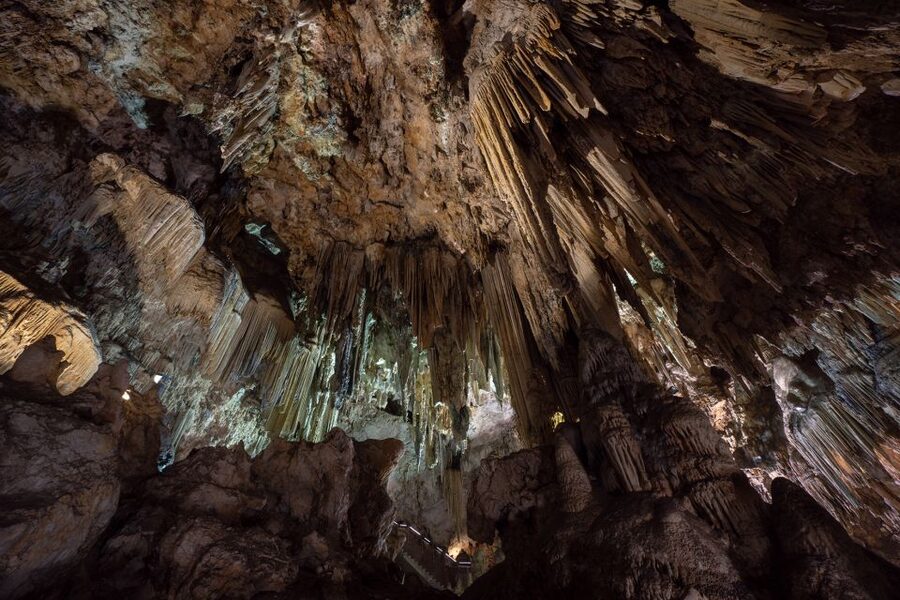
The first impression is scale. Nerja is not simply a room with a few attractive stalactites. The route leads through spaces where the ceiling rises high above the walkways and the formations become increasingly dramatic.
Stalactites hang from the ceiling, stalagmites rise from the floor, and some have joined over time. The audio explains how these shapes formed, turning what might otherwise be a pretty walk into a basic lesson in geology. You are looking at a natural laboratory, with archaeological, geological, and biological finds connected to the cave system.
The walkways are marked and equipped with handrails and lighting. Still, the lighting is intentionally subdued. That helps preserve the atmosphere and protects sensitive material, but it can make some sections feel dim. Watch your footing, especially while looking up.
You will want to take photographs, but the cave is not arranged like a bright museum display. Some formations are easier to appreciate with your eyes than through a phone camera. Give yourself time to notice the smaller details around the enormous central features.
The Cataclysm Room and the world’s largest column
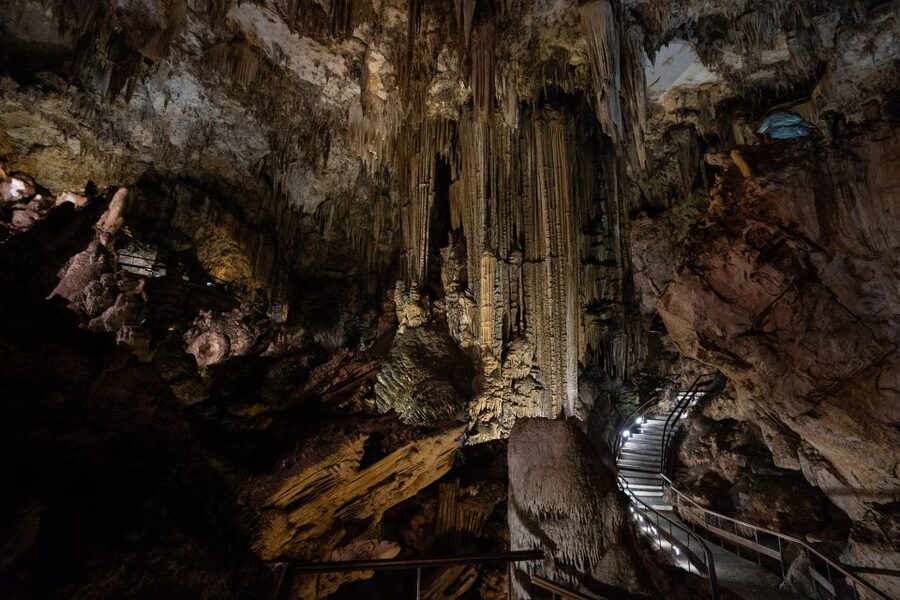
The Cataclysm Room is the largest and highest chamber open to the public. It is the point where the cave’s size becomes most impressive. High ceilings and huge rock forms make it hard to judge distances, and the space feels more like an underground hall than a conventional cave passage.
The famous column is created by a stalactite growing down from above and a stalagmite rising from below. Their meeting produced one continuous formation. It is described as the largest column in the world, and it gives the room a clear focal point.
The audio guide helps here because it gives context to the formations rather than leaving you to guess what you are seeing. I recommend stopping at the relevant numbered station, listening all the way through, then looking again. The information is easier to absorb when you are standing in front of the feature being described.
A short visit can take less than 30 minutes, particularly if you walk steadily. I would not plan it that way unless your schedule is tight. People who pause for photographs and listen to the audio can spend around an hour, while a slower visit may last closer to two hours.
Cave paintings, archaeology, and what you cannot see
The caves have been explored and excavated since their discovery in 1959. Some areas remain closed to the public, helping protect the underground environment and archaeological material.
The audio refers to prehistoric paintings, which may date to the time of Neanderthals and are sometimes described as among the oldest known examples. Do not expect to stand beside clearly lit wall paintings during the public route. The artwork is difficult or impossible to see in the dark chambers because lighting it can contribute to its deterioration.
That can feel disappointing if the paintings are a major reason for your visit. The museum is the better place to learn about the cave art and the people connected with the site. I would treat the underground visit as a geological spectacle first, then use the museum to add the human story.
This distinction makes the museum more important than it might sound on the ticket description. The caves show you the physical setting. The museum helps explain how the site was discovered, studied, and understood.
A few more Nerja outings worth comparing
- Málaga: Picasso Birthplace Museum Ticket & City Audio Guide
★ 4.1 · 158 reviews - Malaga: Centre Pompidou Malaga Ticket and City Audio Guide
★ 3.4 · 36 reviews - Ronda Self-Guided Audio Tour with Andalucia Travel Expert
★ 4.5 · 26 reviews - Malaga: City Bike Rental with Self-Guided Cycling Route
★ 4.7 · 21 reviews
The Museum of Nerja adds the missing human story
The Museum of Nerja is included with admission and is worth scheduling rather than skipping. It provides a clearer setting for the archaeological material, cave discoveries, and ancient artwork discussed during the audio tour.
If you are interested in human evolution, archaeology, or the way scientists piece together evidence from a site, give the museum plenty of time. One visitor allowed around two hours for the museum alone, although your own pace will depend on how closely you read and view the displays.
The museum also helps solve one of the cave visit’s limits. The underground route is dark, and preservation rules restrict what can be illuminated. In the museum, you can gain a more complete picture of the art and the people who once used the caves.
If you arrive without a car, a red train connects the museum and cave area for a few euros, according to the practical information available at the site. Check the current operating details before relying on it, since transport arrangements can change.
The 360 degree virtual reality room
After the cave and museum, the virtual reality room gives you a different way to picture the distant past. The 360 degree presentation places you in a first-person reconstruction of life on Earth 35,000 years ago.
This is not a replacement for the real cave. It is a short, technology-based interpretation that helps connect the dark chambers with the people and animals who lived in the prehistoric world. For families, it gives children another way to engage with the subject after the quieter geological walk.
The virtual reality room is included in the $18 price, which makes it a useful addition rather than an expensive extra. Several people find it one of the most memorable parts of the visit. If you are deciding how much time to allow, do not leave immediately after the cave. The extra attractions are part of what makes the ticket good value.
How to handle the audio guide without frustration
The audio guide is one of the best parts of the ticket, but it requires a little preparation. It is not necessarily a traditional handheld audio device with earphones. You should expect to use an app on your own phone.
Download the required app before arriving, ideally while connected to reliable Wi-Fi. The phone signal may not be strong enough once you are inside, and an incomplete download can leave you walking through the cave without commentary.
Bring your own earbuds or headphones. The audio is not intended to play loudly on a phone speaker, and shared cave silence is much more pleasant than a collection of phones speaking different languages at once. Test the app before you enter so you know how to start the commentary and adjust the volume.
The numbered stops are important. If the audio seems out of order, check that you are standing at the matching station. The system is simple once it is running, but the instructions are not always obvious at first.
Stairs, temperature, and practical comfort
This is not a suitable outing for wheelchair users or people with significant mobility problems. There are stairs and uneven transitions, and the exit includes roughly 100 steps straight upward. Even able-bodied visitors should expect a physical walk rather than a flat museum route.
Wear comfortable shoes with a secure grip. You will spend much of the visit looking around, but you still need to pay attention to the floor and handrails.
Bring water and a light jacket, as the official advice suggests. Conditions inside can feel warm and humid, and some people find they do not need a sweater. Others appreciate an extra layer, especially when standing still for the audio. A light jacket is the safest compromise.
The dim lighting is part of the conservation effort, but it means you should not rush while using stairs. Keep your phone secure, and avoid walking while staring at the screen.
Choosing the best time to visit
Early morning is a smart choice if you want a calmer visit. The caves have timed entry, which helps manage numbers, but the experience is still more relaxed when you arrive early. You are more likely to listen without feeling pressed along by people behind you.
Later visits can work too, but give yourself enough time for the museum and virtual reality room before facilities close. Arriving near the final entry time may mean you can see the cave but have less time for the other included attractions.
A visit can work well on a rainy day because so much of it is underground. In warm weather, the cave offers a change from the coast, though the interior can feel humid rather than cool.
Gardens, views, food, and parking
The cave complex has gardens, a children’s play structure, and a café or terrace restaurant with broad views toward Nerja and the Mediterranean. These extras make it easier to turn the ticket into a half-day outing instead of a quick underground stop.
The play area is useful for families whose children need a break after the cave. The terrace is also a pleasant place to sit after walking the stairs and listening to the commentary.
If you drive, check the parking arrangements and payment instructions before leaving. Parking may not be free, and the exit procedure is not always obvious. One practical point is that you may need to pay at a reception booth rather than simply following signs at the car park exit.
If you walk from Nerja, the route can take about 45 minutes, with a steep hill near the roundabout for Maro. Road signs may be more reliable than a map pin for the final approach. The red train can be a more convenient option if it is operating.
Is the $18 price good value?
At $18 per person, this is a strong-value admission for a major natural attraction. You get entry to the cave, a multilingual audio guide, the Museum of Nerja, and the virtual reality room. The price is especially fair if you use all three parts rather than treating the cave as a 30-minute walk-through.
The value depends partly on your pace. A fast visitor who skips the museum and virtual reality presentation will still see an impressive cave, but will get less from the ticket. If you listen carefully, take photographs, visit the museum, and stay for the virtual presentation, the price covers a substantial outing.
The ticket is non-refundable, so check your date and plans before booking. It is valid for one day, with available starting times shown when you check availability.
Who should book this experience?
I would recommend the Nerja Caves to anyone interested in geology, archaeology, prehistoric life, or large-scale natural sights. It also suits families, provided everyone can manage the stairs. The children’s audio guide, play structure, and virtual reality room give younger visitors more than one way to enjoy the site.
It is a good choice for independent sightseers who dislike fixed group tours. You control the pace, language, pauses, and amount of commentary. The tradeoff is that you must manage the phone app yourself.
I would think twice if you have limited mobility, dislike stairs, or want to see clearly lit prehistoric paintings. The public route does not provide an easy-access visit, and the cave art is not plainly visible underground.
Should you book the Nerja Caves ticket?
Book it if you want a major natural attraction with more than one layer. The enormous Cataclysm Room and world-famous column are the main draw, while the audio guide, museum, and virtual reality room give the visit useful context.
Download the audio app before you go, bring earbuds, arrive early if possible, and allow at least an hour if your schedule permits. If you can handle the stairs, this is one of the most worthwhile stops around Nerja for $18.
FAQ
What does the Nerja Caves ticket include?
It includes entry to the Nerja Cave, a mobile audio guide, a children’s audio guide in Spanish and English, entry to the Museum of Nerja, and access to the virtual reality room.
Is the audio guide available in English?
Yes. The audio guide is available in English, Spanish, German, Arabic, Chinese, French, Dutch, Italian, Japanese, Korean, Norwegian, Polish, Portuguese, Russian, and Swedish.
Do I need to download an app for the audio guide?
Yes. The audio guide uses a mobile app. Download it before entering, preferably with Wi-Fi, and bring earbuds or headphones for comfortable listening.
Can I visit the caves with a wheelchair?
No. The experience is not suitable for wheelchair users or people with mobility impairments. The route includes many stairs, including about 100 steps on the way out.
Can I see the prehistoric cave paintings inside?
The paintings described by the audio guide are difficult or impossible to see inside the cave because lighting them can damage them. The Museum of Nerja offers a better way to learn about the cave art.
How long is the Nerja Caves visit?
The ticket is valid for one day. The cave route can take less than 30 minutes if you walk quickly, but you can spend about an hour or up to two hours if you stop for the audio, photographs, and formations. Extra time is useful for the museum and virtual reality room.
Is the ticket refundable?
No. This activity is non-refundable. Check your date and starting time carefully before booking.
More Entrance Tickets in Nerja
- From Málaga: Skip-the-Line Nerja Cave and Frigiliana
★ 4.2 · 28 reviews - Caminito del Rey: Guided Tour and Entry Ticket
★ 4.6 · 11,286 reviews - Málaga: Museo Picasso Málaga Entry Ticket
★ 4.4 · 11,138 reviews - Caminito del Rey: Entry Ticket
★ 4.8 · 4,710 reviews
Just added around Nerja
- From Nerja/Almunecar: Sierra Nevada and Alpujarra day trip★ 4.0 · 3 reviews
- Frigiliana: Private walking tour★ 3.0 · 4 reviews
- Nerja and Frigiliana from Málaga: the mountain and the sea★ 3.3 · 5 reviews
- Private Nerja and Caves Day Trip from Malaga★ 5.0 · 6 reviews
- From Nerja/Almunecar: Ronda Day Trip with Hotel Pickup★ 4.1 · 6 reviews
- Mythological and Historical Tour of Almuñecar★ 4.5 · 9 reviews
- From Málaga: Cliffs of Maro-Cerro Gordo Guided Kayaking Tour★ 3.8 · 11 reviews
- From Málaga: Frigiliana Hiking Tour with Wine & Appetizers★ 4.7 · 12 reviews
Entrance Tickets, compared.




Picasso Museum Guided Tour with Skip-the-Line Ticket
Read our review →Browse the lists this tour appears in