
Reviewed · PICASSO MUSEUMS AND ART
Paint your own Picasso
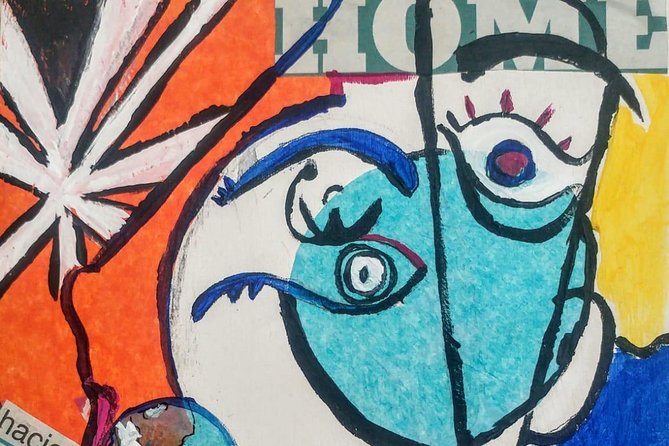
Picasso’s birthplace is a fitting place to try his art, and this two-hour workshop turns that idea into something you can carry home. You’ll begin with Picasso’s life, influences, and cubist methods, then use guided exercises to create your own self-portrait in his spirit. Silvia, Javi, and Thomas are praised for patient, friendly teaching.
I especially like the small group size, capped at nine, and the freedom to experiment without needing art training. I also like that the studio doubles as an art gallery, giving the class a genuine creative setting rather than a standard tourist room. The main consideration is that the activity is short, so you get an accessible introduction to Picasso rather than a full art course.
In This Review
- Key points to know before booking
- What the two-hour Picasso workshop is really about
- Starting with Picasso’s life and ideas
- From simple exercises to a Picasso-style portrait
- Why the small group size helps
- A calm studio, not a rushed attraction
- Location in central Malaga
- Before or after the Picasso Museum?
- What you take home
- Price, timing, and practical value
- Who should choose Paint Your Own Picasso?
- Should you book it?
- FAQ
- How long does Paint Your Own Picasso last?
- How much does the experience cost?
- Where does the workshop meet?
- Where does the activity end?
- Is the workshop offered in English?
- How many people can join the workshop?
- Is the activity suitable for beginners?
- Can I cancel for a full refund?
Key points to know before booking
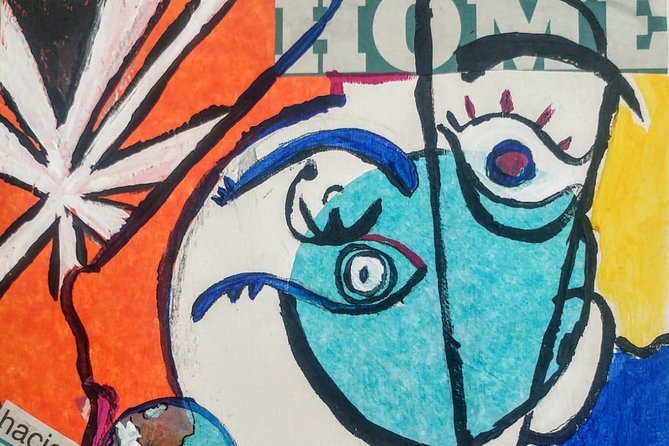
- A practical introduction to cubism: You learn about Picasso’s life, influences, and techniques before putting the ideas to work.
- Your own painting goes home with you: The finished self-portrait becomes a personal Malaga souvenir.
- Friendly instruction for beginners: You do not need previous art experience, and children as young as 7 and 9 have taken part successfully.
- Small groups make a difference: The maximum is nine participants, allowing room for questions and individual help.
- A useful pairing with the Picasso Museum: Take the workshop before the museum for extra context, or afterward while the ideas are fresh.
- Lagunillas adds a local post-class walk: The nearby neighborhood is known for graffiti-covered walls, photographs, and small bars.
What the two-hour Picasso workshop is really about
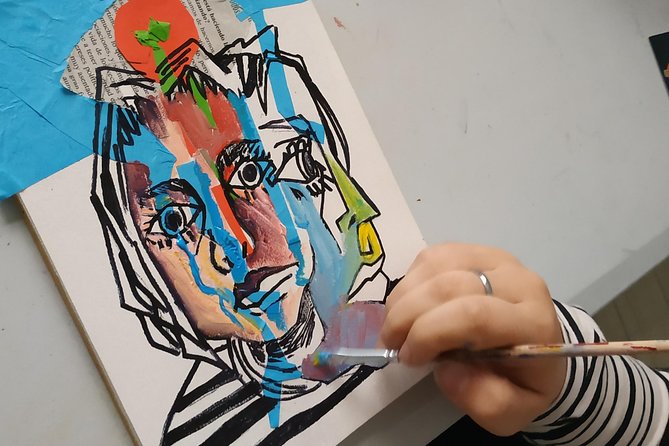
This is not a formal drawing lesson, and it is not a guided museum visit. It is a hands-on art class built around Picasso’s ideas, with enough background to help you understand what you are doing.
That balance matters. Picasso’s work can seem puzzling when you first encounter it. Faces appear from several angles at once, familiar objects break into shapes, and color may seem to ignore ordinary rules. Here, you first get a plain explanation of the person and the art, then try some of those principles yourself.
The class takes place at El Retorno de Lilith, at Calle Cobertizo del Conde, 6, in central Malaga. The studio is also an art gallery, which gives the setting a more personal feel than a large classroom. You are surrounded by art while making your own, but the focus remains on your project.
The activity is offered in English. The instructors named in the feedback include Silvia, Javi, and Thomas. Their teaching style is a major part of the experience: patient, encouraging, and willing to adjust the guidance to the person in front of them.
More Picasso and museum visits in Malaga:
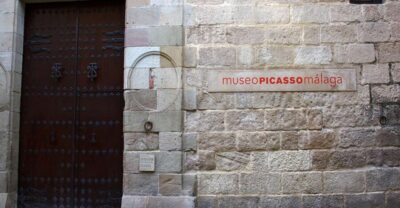
- Málaga: Museo Picasso Málaga Entry Ticket
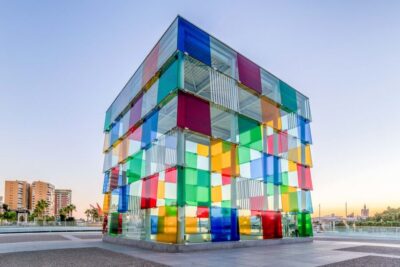
★ 4.4 · 11,138 reviews - Málaga: Center Pompidou Málaga Ticket
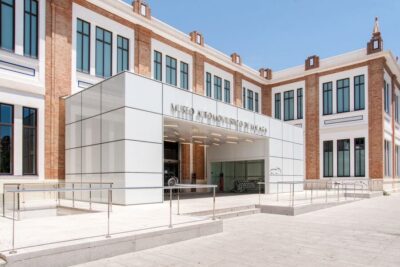
★ 4.3 · 656 reviews - Málaga: Museo del Automóvil y la Moda Ticket
★ 4.8 · 584 reviews
Starting with Picasso’s life and ideas
The workshop begins with an introduction to Picasso. Depending on the session, this may include a slide presentation or video covering his life, influences, and development as an artist.
That opening is more useful than it may sound. If you have just visited the Picasso Museum, it helps organize what you have seen. If you have not had time for the museum, it gives you a basic frame for the painting exercise. One participant particularly valued the film because it offered a way to learn about Picasso without making a museum visit first.
You will also hear about cubism and the artistic choices behind it. The purpose is not to copy one famous Picasso painting line for line. Instead, you learn to look at a face or figure in a less literal way, breaking it into forms and exploring several viewpoints.
I like this approach because it removes some pressure. You are not being tested on art history, and you are not expected to produce a museum-quality work. The lesson gives you just enough background to make the practical work feel connected to Picasso rather than like a random painting exercise.
From simple exercises to a Picasso-style portrait
The practical section unfolds in several stages. The exact order may vary, but the experience includes exercises that help you explore shapes, techniques, and cubism-inspired ideas before you make the final image.
This staged format is good for beginners. You are not handed a blank canvas and told to create a masterpiece. Instead, the instructor breaks the work into manageable steps and offers advice as you go.
You have room to play with the process. That freedom came through repeatedly in the experience: the teaching is structured, but the final result is your own. Silvia, Javi, and Thomas are described as encouraging rather than strict, which is important if you arrive convinced that you cannot paint.
The class is suitable for an absolute novice, but it is not only for beginners. If you already paint, the Picasso theme gives you a different way to think about portraiture and proportion. One participant with no prior art experience was surprised by the result, while another who wanted to practice more art afterward found the class inspiring.
The self-portrait is the natural centerpiece. You create a face influenced by Picasso’s cubist style, using the ideas introduced at the start. It is a playful task, but it also shows why Picasso’s work can be so freeing. A crooked line or unexpected color does not automatically mean you have made a mistake.
Why the small group size helps
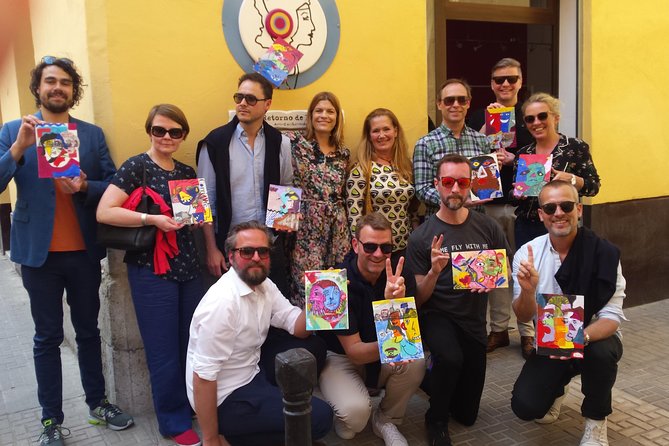
The maximum group size is nine. That is small enough for the instructor to move around the room, answer questions, and give personal suggestions.
This matters most during the painting stage. A large class can leave beginners waiting for help, especially when everyone reaches the difficult part at once. Here, the pace is more manageable, and the instructor can encourage you without taking over your work.
The group may include people from different countries and age groups. One session had eight participants, while another went ahead with only one person. That flexibility can make the atmosphere relaxed and social without turning the activity into a loud group performance.
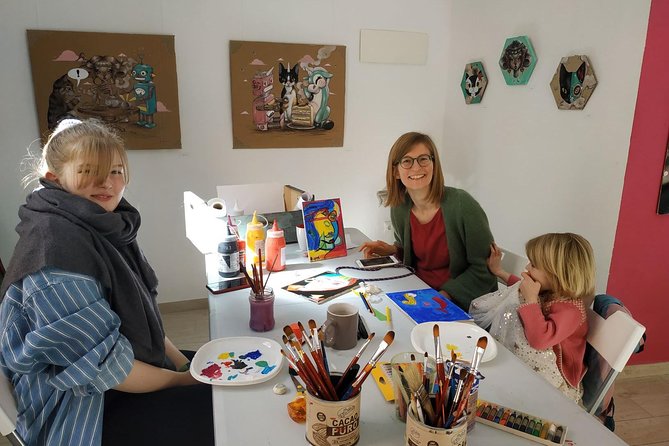
Families can also make good use of the format. A parent attended with a 9-year-old daughter, and another family included children aged 7 and 11. The art-loving child may take to it immediately, while the less enthusiastic child still has a clear activity to follow. The format is not restricted to serious art students.
The class has also worked well for couples and solo participants. A two-person English session combined instruction with plenty of room to experiment. If you are alone, the workshop can still run, though the minimum number of participants requirement means a scheduled session could be canceled if that minimum is not reached.
A few more Malaga outings worth comparing
- Málaga: Alcazaba and Roman Theatre Guided Tour With Entry
★ 4.8 · 5,792 reviews - From Malaga and Costa del Sol: Gibraltar Tour
★ 4.4 · 4,483 reviews - Malaga: Teatro Flamenco Malaga Live Flamenco Show
★ 4.7 · 4,254 reviews - From Málaga: Ronda+Setenil de las Bodegas with Little Train
★ 4.6 · 4,115 reviews
A calm studio, not a rushed attraction
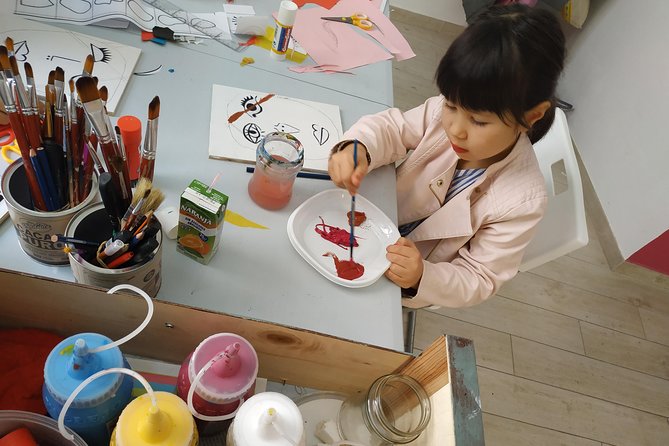
The mood here is part of the appeal. The studio has been described as light-filled, quaint, tranquil, and welcoming. Those qualities suit an activity that asks you to slow down and concentrate.
You will spend about two hours in one place, so comfort matters. This is not a quick stop squeezed between major sights. It gives you a quieter change of pace after museums, shopping, or a long morning on Malaga’s streets.
The class also has a social side. You may work alongside a mix of ages and nationalities, but the shared task gives everyone an easy way to start talking. You do not need to be outgoing. The painting itself creates natural conversation.
A small practical note: refreshments were expected by at least one participant, but the offering was only a cup of tea. Treat that as a minor extra, not as a food stop. Eat beforehand if you need a proper break, and book the activity for a time when you can give it your full attention.
Location in central Malaga
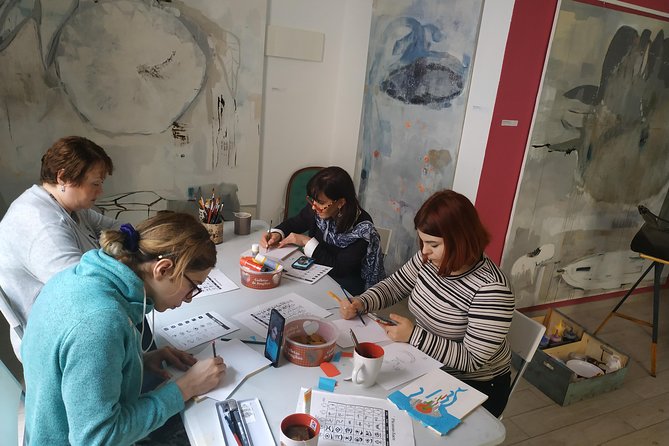
The meeting point is El Retorno de Lilith, Calle Cobertizo del Conde, 6, in Malaga’s Centro district. The activity begins and ends at this address, so you do not need to arrange a separate return transfer.
The studio’s central location makes it easy to pair with other sights, but parking can be awkward. Street parking near the studio was reported as difficult, so if you are arriving by car, plan ahead and look for a parking garage rather than counting on finding a space outside.
The area around the studio is worth seeing on foot after class. The provider recommends a walk through Lagunillas, a neighborhood with walls covered in graffiti. This gives you a chance to take photographs and stop at some of the local bars.
That post-class walk fits the theme nicely. You have just spent two hours looking at shape, color, and visual expression. Lagunillas gives you a chance to keep looking at Malaga’s street art instead of moving straight to the next major sight.
The port area is also described as a short walk away, with restaurants and cafes. The precise walking time is not provided, so use the address rather than relying on a fixed estimate. If you have a cruise stop or a tight sightseeing schedule, allow enough time for the class and your journey to the next point.
Before or after the Picasso Museum?
The workshop works in either order, but I would choose the workshop first if your schedule allows.
Creating a cubism-inspired portrait gives you a simple set of questions to bring into the museum. How is the face divided? Which features are shown from different angles? How do color and shape change the mood? You may look at Picasso’s paintings with more patience once you have tried to solve similar problems yourself.
Taking the class after the museum has its own appeal. You can arrive with fresh images in your mind and try to make sense of techniques you have just seen. Several participants combined the workshop with a museum visit, and the two activities support each other well.
There is no need to be an art expert before you arrive. The class supplies a basic introduction, and the practical work makes the ideas easier to remember than a list of dates and movements.
What you take home
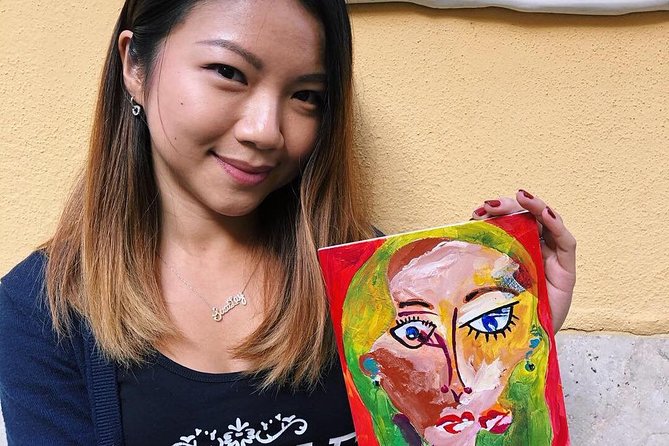
The final painting is the most obvious souvenir, but its value is personal rather than commercial. You are not buying a print from a shop. You are taking home something made during your time in Malaga, with all its odd lines and unexpected choices intact.
You may be surprised by the result. The instructors guide you toward a finished self-portrait, and several participants found the outcome better than they expected. That does not mean every painting will look identical or polished. The point is to create a Picassian work that reflects your own choices.
For families, it is a useful keepsake because children can take part in the same core project as adults. For couples, the paintings can become a shared memory. For solo visitors, the artwork offers a physical reminder of a day spent doing something rather than only seeing something.
The experience can also encourage you to keep painting. One participant arrived hoping to speak some Spanish during the class and left inspired to do more art. You should not expect a full set of ongoing lessons, but two focused hours can be enough to get you started.
Price, timing, and practical value
The price is $47.07 per person for approximately two hours. That is not the cheapest way to spend an afternoon in Malaga, but it includes instruction, the art activity, and a finished piece to take home.
I see the value in the personal format. You are paying for time with an artist, materials for a guided project, and an experience tied directly to Malaga’s most famous modern artist. It is more substantial than a quick craft session, though less extensive than a multi-day art course.
The class is also a good choice when the weather is poor or when you need a break from sightseeing. Two hours indoors can reset your energy, especially during a longer stay. It gives you a clear activity with a beginning, middle, and end.
The booking pattern suggests that people often reserve about 13 days ahead. That is useful if your dates are fixed, especially if you want a small group or need to fit the class around a cruise stop. Confirmation arrives when you book, and you receive a mobile ticket.
Free cancellation is available up to 24 hours before the start time for a full refund. Changes or cancellations inside that window are not accepted for a refund. Since the activity requires a minimum number of participants, a cancellation by the provider leads to a different date or experience, or a full refund.
Who should choose Paint Your Own Picasso?
I would choose this for anyone who wants to do something creative in Malaga rather than move from one sight to another. It is especially well suited to:
- First-time painters who want patient guidance
- Families with children who can follow a shared art project
- Couples looking for a hands-on activity
- Solo visitors who enjoy meeting a small group
- Museum fans who want more context for Picasso
- People who like taking home a handmade souvenir
I would think twice if you want a serious technical course in drawing, anatomy, or traditional painting. The class is built around Picasso’s ideas and a finished cubist-style portrait, not a long progression of formal skills.
I would also check your schedule carefully if you are arriving by cruise ship or have a fixed departure. The class lasts about two hours, and finding nearby street parking may be hard. Public transportation is nearby, so that may be simpler than driving.
Should you book it?
Book it if you want a friendly, low-pressure way to connect with Picasso and make something of your own. The strongest reasons are the small group, the encouraging instructors, the clear introduction to cubism, and the painting you take home.
I would book it before the Picasso Museum when possible, then follow the class with a museum visit or a walk through graffiti-covered Lagunillas. That combination gives you both the background and the hands-on experience.
Skip it only if you prefer passive sightseeing or want advanced art training. For most curious beginners, families, and culture-minded visitors, $47.07 buys a useful two hours, a personal souvenir, and a fresh way to look at Malaga’s most famous artist.
FAQ
How long does Paint Your Own Picasso last?
The activity lasts approximately two hours.
How much does the experience cost?
The listed price is $47.07 per person.
Where does the workshop meet?
It begins at El Retorno de Lilith, Calle Cobertizo del Conde, 6, Distrito Centro, 29013 Málaga, Spain.
Where does the activity end?
The workshop ends back at the meeting point.
Is the workshop offered in English?
Yes. The experience is offered in English.
How many people can join the workshop?
The maximum group size is nine participants.
Is the activity suitable for beginners?
Yes. Most participants can take part, and the workshop has welcomed people with no previous art experience as well as families with children.
Can I cancel for a full refund?
Yes. You can cancel at least 24 hours before the local start time for a full refund. Cancellations or changes made less than 24 hours in advance are not accepted for a refund.
Just added around Malaga
- San Miguel Cemetery Tour of Malaga★ 5.0 · 3 reviews
- A Self-Guided Tour of Ancient Malaga’s History★ 4.5 · 3 reviews
- MALAGA: ULTIMATE FLAMENCO & TAPAS TOUR★ 5.0 · 3 reviews
- Private Winery Tour and Visit to Ronda★ 5.0 · 3 reviews
- Ronda and Setenil from la Costa del Sol★ 3.8 · 3 reviews
- From Nerja/Almunecar: Sierra Nevada and Alpujarra day trip★ 4.0 · 3 reviews
- From Seville: Ronda and Setenil de Las Bodegas Private Tour★ 5.0 · 3 reviews
- Private tour in Malaga from Costa del Sol★ 4.5 · 3 reviews
Picasso Museums and Art, compared.
Picasso Museum Guided Tour with Skip-the-Line Ticket
Read our review →
Skip the Line: Malaga Automobile and Fashion Museum Entrance Ticket
Read our review →
Picasso Birthplace Museum Ticket & City Audio Guide
Read our review →
Browse the lists this tour appears in