
Reviewed · MALAGA CATHEDRAL AND OLD TOWN
Night theatrical visit to the English cemetery
Málaga’s English Cemetery takes on a different character after sunset. Behind locked gates, actors bring its buried stories to life, from Captain Kritschman’s shipwreck to Robert Boyd’s unfair execution and Mary Ann’s secrets. I like the dramatic setting and the way the performance connects cemetery history with Málaga’s wider past. I also like the modest $23 price for a full 90-minute visit. The main catch is simple but important: this experience is in Spanish only, and you cannot leave once the gates close.
I love that this is more than a walk among tombs. It explains why non-Catholics were once buried on the beach, exposed to wild animals, and how the cemetery founded in 1831 changed that custom. Arrive 15 minutes early, since late entry is not allowed.
In This Review
- Key points to know before booking
- Why Málaga’s English Cemetery makes a strong night setting
- The opening: meet at the cemetery entrance
- Captain Kritschman and the story of the shipwreck
- Robert Boyd’s unfair execution
- Mary Ann and the cemetery’s stone angel
- How the theatrical format changes the visit
- Spanish language is the decision point
- Is $23 a fair price?
- Who will enjoy this most?
- What to bring and how to plan the evening
- My verdict: book it if the language fits
- FAQ
- How long does the theatrical cemetery visit last?
- What language is the tour in?
- Where does the visit begin?
- Where does the activity end?
- Can I enter after the tour has started?
- Can I leave the cemetery during the visit?
- What is included in the price?
- Can I cancel the booking for a refund?
Key points to know before booking
- A cemetery after dark: You enter the English Cemetery at dusk, after it has closed to the general public.
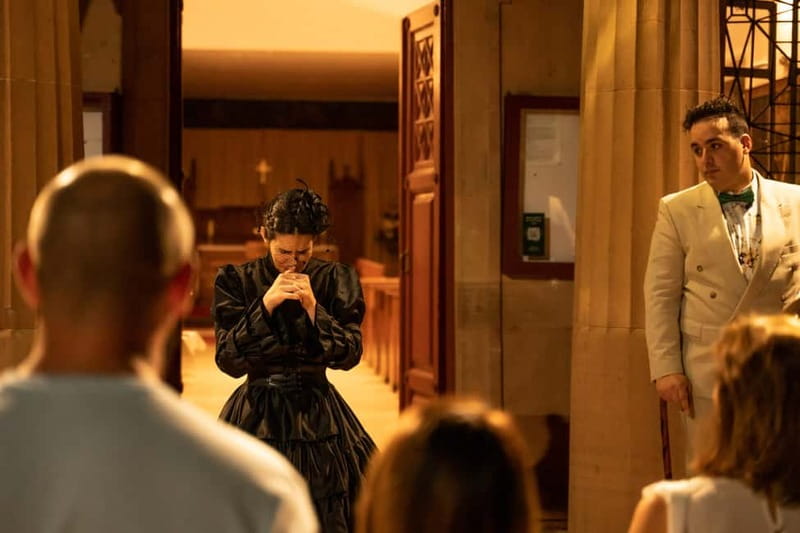
- A theatrical history lesson: Actors portray figures linked to shipwreck, execution, and the cemetery’s most famous sculpture.
- The first Protestant cemetery in the Iberian Peninsula: The visit connects this Málaga site with a major change in burial customs.
- Spanish-language performance: The guide and actors present the full experience in Spanish, not English.
- Ninety minutes behind locked gates: You must arrive early, and you cannot enter or leave after the visit begins.
- Good value at $23: The ticket includes cemetery admission and the special after-hours access.
Why Málaga’s English Cemetery makes a strong night setting
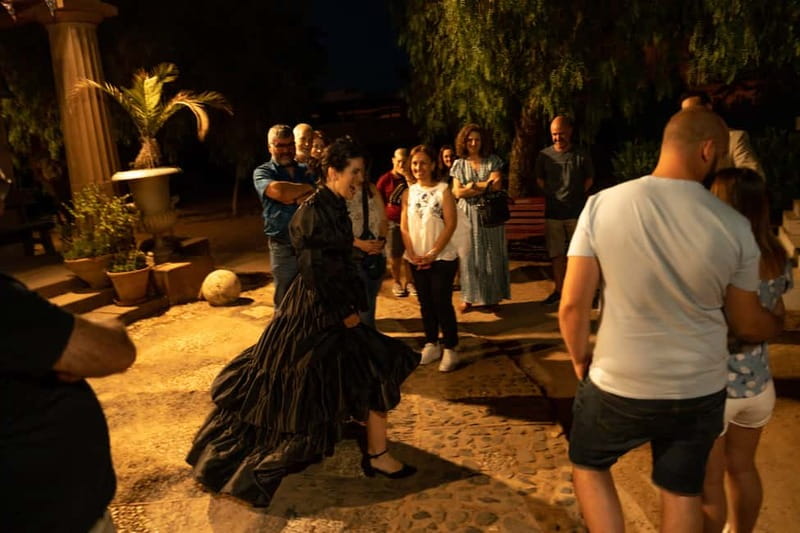
The English Cemetery is not simply a collection of graves. It reflects a time when Málaga was home to people from different religious and cultural backgrounds, yet burial customs drew a sharp line between Catholics and everyone else.
Before the cemetery opened, non-Catholics could not receive a normal burial in a Catholic cemetery. They were buried standing on the beach, where the sea and animals could disturb the remains. That detail gives the visit a grim but useful starting point. You are not just hearing names and dates. You are seeing how religion shaped daily life, death, and public space.
The cemetery was founded in 1831 as the first Protestant cemetery on the Iberian Peninsula. That date matters because it marks a change in Málaga’s civic life. The site gave non-Catholics a permanent place of burial, and the visit presents it as a turning point for both the living and the dead.
At dusk, the subject feels more immediate. The fading light, closed gates, and quiet paths create a setting that no ordinary daytime cemetery visit can match. I would not book this expecting a calm garden stroll or a standard guided tour. The point is atmosphere, performance, and a little theatrical tension.
More old-town walks in Malaga:
- Malaga Bike Tour – Old Town, Marina & Beach
★ 4.7 · 1,150 reviews - From Malaga: Cordoba Day Trip and Mosque-Cathedral
★ 4.5 · 563 reviews - Malaga Tour with Cathedral, Alcazaba and Roman Theatre
★ 4.5 · 548 reviews
The opening: meet at the cemetery entrance
The tour begins at the entrance to the English Cemetery in Málaga. You should arrive at least 15 minutes before the scheduled start, not merely a few minutes early.
That warning is practical rather than fussy. Once the theatrical visit begins, the cemetery gates are locked, and you cannot enter late or leave partway through. If your schedule is tight, allow extra time to reach the entrance and get settled before the performance starts.
The activity lasts about an hour and a half. Starting times change, so you need to check the available departure when booking. The tour finishes back at the same meeting point, outside the cemetery entrance.
The ticket includes admission to the cemetery and access at dusk, when the site is closed to the public. You also use a separate entrance for the activity, which helps avoid the feel of a normal daytime queue.
Captain Kritschman and the story of the shipwreck
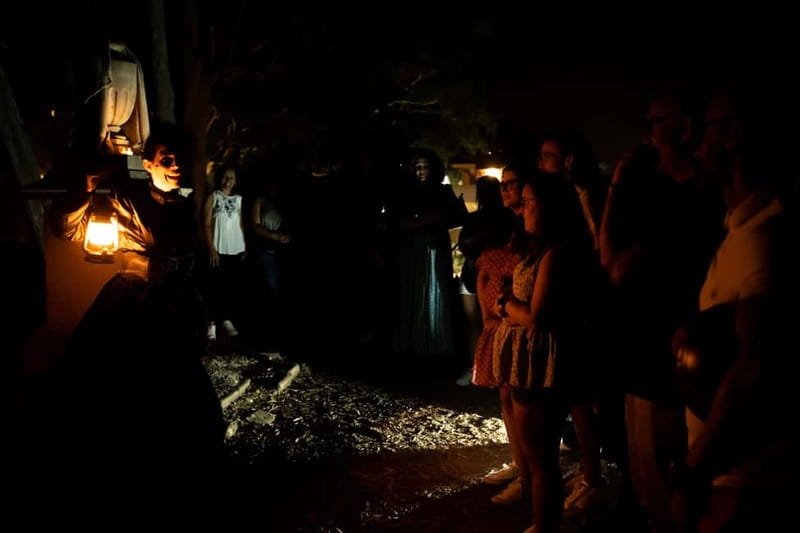
One of the featured stories belongs to Captain Kritschman, whose connection with a major Málaga shipwreck gives the performance its first strong dose of drama.
The available details do not set out every stage of the shipwreck story, so you should not expect a factual lecture with a complete nautical timeline. Instead, the captain’s story forms part of the theatrical thread running through the cemetery. A historical figure is brought into the setting, and the actors use that character to show how death at sea affected Málaga and the people linked to the port.
This is where the format helps. A name on a stone can feel distant. A captain’s story, presented by an actor in the place where death and remembrance meet, gives the history a human face. You are likely to remember the character and the mood more easily than a list of dates.
The visit also uses these stories to show that Málaga was once a meeting point for different cultures. The city’s past was not only about churches, palaces, and monuments. It also involved sailors, foreign residents, religious divisions, accidents, and difficult decisions about how to bury the dead.
Robert Boyd’s unfair execution
The story of Robert Boyd shifts the mood from accident to injustice. His unfair shooting is one of the central episodes used to explain the cemetery’s human history.
This part should appeal to you if you like historical stories with a clear moral question. The experience is not presenting death as a distant fact. It asks you to consider how a person could be condemned and remembered, and how a cemetery preserves the memory of events that official history can flatten.
The word unfair is important here. The performance frames Boyd’s death as an injustice, rather than treating it as a simple biography. That dramatic choice gives the story emotional force, but it also means the tour is designed to make you feel the past, not just memorize it.
If you prefer neutral, academic history with extensive documentation, this may feel too theatrical. If you enjoy historical interpretation that uses characters and suspense, Boyd’s story should be one of the visit’s strongest sections.
A few more Malaga outings worth comparing
- Málaga: Museo Picasso Málaga Entry Ticket
★ 4.4 · 11,138 reviews - Málaga: Alcazaba and Roman Theatre Guided Tour With Entry
★ 4.8 · 5,792 reviews - From Malaga and Costa del Sol: Gibraltar Tour
★ 4.4 · 4,483 reviews - Malaga: Teatro Flamenco Malaga Live Flamenco Show
★ 4.7 · 4,254 reviews
Mary Ann and the cemetery’s stone angel
Mary Ann is linked with the stone angel, described as the cemetery’s most valuable and famous sculpture. Her secrets add a more personal strand to the evening.
The angel gives the performance a visual focus. Instead of moving from grave to grave without a clear thread, you have a particular sculpture to look for and a story connected to it. The visit uses that object to show how art, mourning, and private memory can meet in a cemetery.
You should not assume that the tour reveals every detail in English or provides a written translation. The language is Spanish, and the experience depends on following the guide and actors as they build the story. Still, even visitors with only limited Spanish may recognize the main figures and the physical locations, though understanding the full performance will naturally require a good command of the language.
Mary Ann’s story also helps balance the darker material. The evening is not only about public tragedy, shipwreck, and execution. It includes personal secrets and the emotional meaning attached to a memorial.
How the theatrical format changes the visit
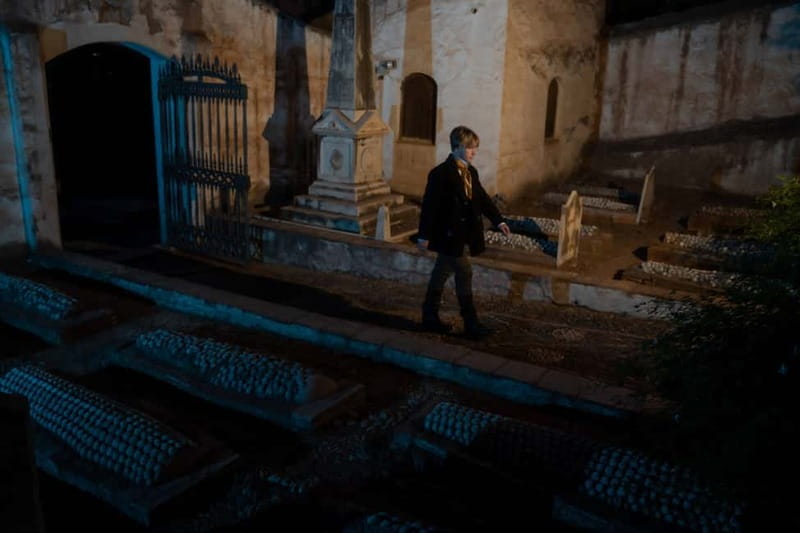
A regular cemetery tour usually asks you to look, listen, and move along with a guide. This experience adds actors who portray people connected to the stories. The result is closer to a short outdoor play set among graves than to a conventional sightseeing walk.
That format has real strengths. It keeps the 90-minute visit moving and gives each part a clear character. The actors help maintain attention, and the stories become easier to picture. The cemetery itself provides the scenery, so the setting is not an artificial stage.
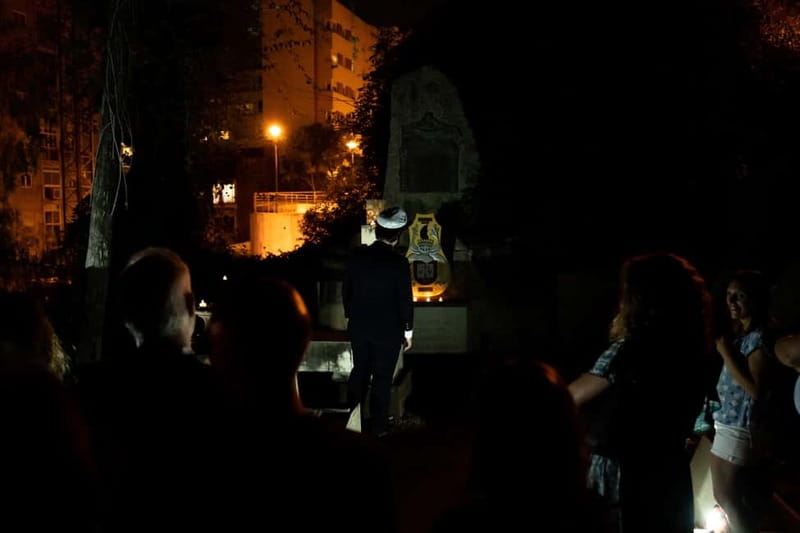
The performance also explains why you are there after dark. Night is not a decorative extra. It supports the tone of stories about wrecks, executions, death, and secrets. You get a controlled theatrical experience in a place that is normally closed at that hour.
There is a tradeoff. The acting and atmosphere may be more important than detailed historical explanation. If you want a full account of every grave, architectural feature, and historical document, a daytime visit or a more traditional tour may suit you better. If you want Málaga history presented with suspense and character, the theatrical approach is a good fit.
Spanish language is the decision point
The most important booking detail is easy to miss if you focus only on the English name of the cemetery. The tour language is Spanish.
That distinction matters because the experience lasts 90 minutes, takes place behind locked gates, and does not allow you to leave once it has begun. You cannot simply enter, discover that the language is wrong, and step out after a few minutes.
I would book this only if you understand Spanish well enough to follow live storytelling and acted scenes. The setting and performances may still be visually clear to someone with limited Spanish, but the main value is in understanding the stories.
The title refers to Málaga’s English Cemetery, not to English narration. Check the language before paying, especially if you are booking for a mixed-language group.
Is $23 a fair price?
At $23 per person, the cost is reasonable for a 90-minute experience that includes admission and special access at dusk. You are paying for more than a standard entrance ticket. The price covers the theatrical presentation, the actors, the live guide, and entry when the cemetery is closed to the public.
I also see value in the focused length. An hour and a half is long enough to develop several stories without taking over your entire evening in Málaga. You can fit it into a broader sightseeing day, provided you allow time to reach the cemetery and arrive early.
The value drops if you cannot follow Spanish. In that case, you may receive the atmosphere but miss much of the historical content. The language question is more important than the relatively modest price.
The booking terms also keep the financial risk manageable. You can cancel up to 24 hours before the activity for a full refund, and you can reserve now and pay later. Those options help if your Málaga plans are still changing, but they do not remove the need to check the language and starting time before booking.
Who will enjoy this most?
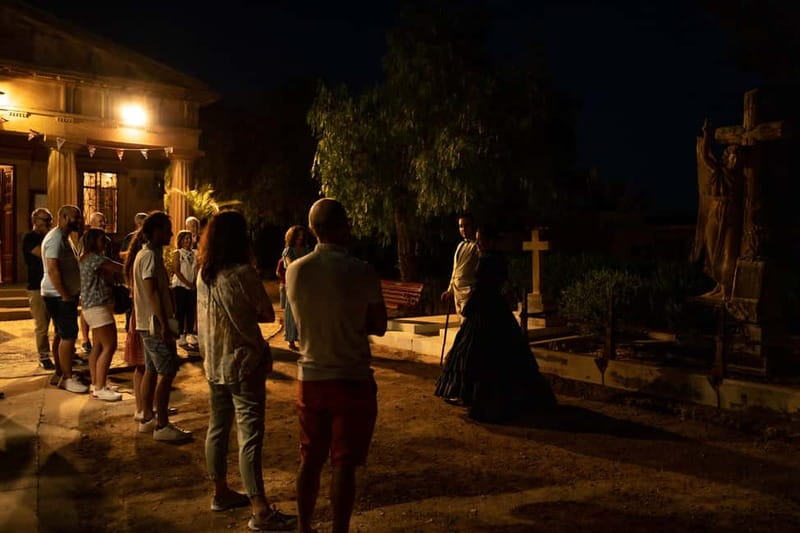
I would recommend this experience to you if you like:
- Historical stories tied to real places
- Performances with actors rather than standard lectures
- Unusual evening activities
- Cemeteries, memorial art, and stories about death
- Spanish-language cultural experiences
- Short tours with a clear start and finish
It is especially suited to adults and older children who can handle a dark subject and a theatrical tone. The supplied information does not give an age recommendation, so you should use your own judgment for younger children.
I would be cautious about booking it for anyone who dislikes enclosed evening activities, cannot follow Spanish, or may need to leave suddenly. The locked-gate rule is firm. Once the visit starts, you cannot exit until it ends.
What to bring and how to plan the evening
Your main preparation is timing. Arrive 15 minutes early at the cemetery entrance, and do not treat the listed start time as the time to begin walking there.
Check the available starting time when you book. The activity takes place at dusk, but the exact hour can change. Since the tour ends at the entrance where it begins, you do not need to arrange a second pickup point.
Wear something suitable for a 90-minute walking visit. The information provided does not specify the path, terrain, or accessibility arrangements, so you should contact the provider if you have mobility concerns or need detailed access information.
The provider is Historia Viva Málaga. The activity includes a live Spanish-speaking guide and actors who present the cemetery’s stories. No separate transport, meal, or additional service is listed, so plan to make your own way to the entrance.
My verdict: book it if the language fits
I would book the Night Theatrical Visit to the English Cemetery if you understand Spanish and want an unusual Málaga evening built around real local stories. The combination of a 1831 Protestant cemetery, dusk access, actors, shipwreck, execution, and memorial sculpture gives the visit a clear identity.
The strongest reasons to go are the setting and the performances. The stories of Captain Kritschman, Robert Boyd, and Mary Ann give the evening a human focus, while the cemetery explains an important change in how Málaga treated non-Catholics after death.
I would skip it if you need English narration, dislike theatrical presentations, or want the freedom to leave early. The Spanish-only format and locked gates are not minor details. For the right audience, though, $23 buys a distinctive 90-minute look at Málaga’s past, with enough drama to make the cemetery’s history stick with you.
FAQ
How long does the theatrical cemetery visit last?
The activity lasts approximately 1.5 hours.
What language is the tour in?
The live guide and theatrical experience are in Spanish.
Where does the visit begin?
It begins at the entrance to the English Cemetery in Málaga.
Where does the activity end?
The visit ends back at the meeting point, at the English Cemetery entrance.
Can I enter after the tour has started?
No. You must arrive 15 minutes early because entry is not possible after the visit begins.
Can I leave the cemetery during the visit?
No. Once the visit starts, you cannot enter or leave because the cemetery gates are locked.
What is included in the price?
The ticket includes entrance to the English Cemetery and access at dusk when it is closed to the public.
Can I cancel the booking for a refund?
Yes. You can cancel up to 24 hours in advance for a full refund. You can also reserve now and pay later.
Just added around Malaga
- San Miguel Cemetery Tour of Malaga★ 5.0 · 3 reviews
- A Self-Guided Tour of Ancient Malaga’s History★ 4.5 · 3 reviews
- MALAGA: ULTIMATE FLAMENCO & TAPAS TOUR★ 5.0 · 3 reviews
- Private Winery Tour and Visit to Ronda★ 5.0 · 3 reviews
- Ronda and Setenil from la Costa del Sol★ 3.8 · 3 reviews
- From Nerja/Almunecar: Sierra Nevada and Alpujarra day trip★ 4.0 · 3 reviews
- From Seville: Ronda and Setenil de Las Bodegas Private Tour★ 5.0 · 3 reviews
- Private tour in Malaga from Costa del Sol★ 4.5 · 3 reviews
Malaga Cathedral and Old Town, compared.


Malaga Tour with Cathedral, Alcazaba and Roman Theatre
Read our review →
Cathedral, Alcazaba, Roman Theater Walking Tour
Read our review →
Skip-the-Line Malaga Cathedral Tickets with Tour
Read our review →
Seville Day Trip with Cathedral Entrance from Malaga
Read our review →
Browse the lists this tour appears in