
Reviewed · RONDA TOURS
Guided Tour of Ronda
Ronda’s great surprise is how much beauty fits into a compact hilltop city. In about two hours, this private walk takes you from old gardens and Spain’s oldest bullring to the New Bridge, cliffside viewpoints, churches, and quiet corners most easily missed on your own. The gorge does plenty of the storytelling.
I like the private format, especially for a family or group of friends. One fee covers up to 15 people, and a good guide can shape the walk around your questions. I also like the route’s strong photo appeal: the New Bridge appears from several angles, with gardens, old stonework, and the gorge filling your camera.
The main consideration is reliability. Two serious scheduling failures appear among the small set of ratings, including one last-minute cancellation and one booking that was not recorded. The company apologized and refunded both customers, but if you are driving a long way for this walk, confirm the appointment before setting out.
In This Review
- Key points to know before booking
- Why Ronda works so well with a local guide
- Alameda del Tajo and the first look over the gorge
- The bullring and Ronda’s unusual place in bullfighting
- The New Bridge from three useful angles
- Jardines de Cuenca and the classic bridge photograph
- Arco de Felipe V and the old entrance to Ronda
- Palacio de Salvatierra and Ronda’s grander side
- Plaza Duquesa de Parcent and the heart of the old city
- Plaza de María Auxiliadora and the long-distance view
- Iglesia de Nuestra Señora de la Paz
- Mirador de Aldehuela and an efficient ending
- What the guides add to the walk
- Price, group size, and the reliability question
- Who should book this Ronda walk?
- Should you book it?
- FAQ
- Where does the tour start?
- Where does the tour end?
- How long does the tour last?
- Is this a private tour?
- How much does the tour cost?
- Is the tour offered in English?
- Are attraction tickets included?
- Is the tour suitable for most people?
- Can I cancel for a full refund?
- How far in advance is the tour usually booked?
Key points to know before booking
- The New Bridge gets several viewing angles, not just one quick stop beside the road.
- A private guide covers up to 15 people for $240.30, making the price much better for a full group than for one or two people.
- The route includes nine main sights, from Alameda del Tajo to Mirador de Aldehuela.
- The tour is built around history and photographs, with time at churches, gardens, the bullring, and gorge viewpoints.
- Guides named in past bookings include Juan, Manuel Aviles Bravo, Marta, Alfredo, and Elena, though a particular guide is not guaranteed.
- The walk ends near Plaza de España, an area with many restaurants, useful for continuing your afternoon.
Why Ronda works so well with a local guide
Ronda is not a city you simply tick off by walking to one famous bridge. Its setting is dramatic, but the town’s story is spread across plazas, churches, old gates, gardens, noble houses, and viewpoints. A guide gives those pieces an order and explains why they matter.
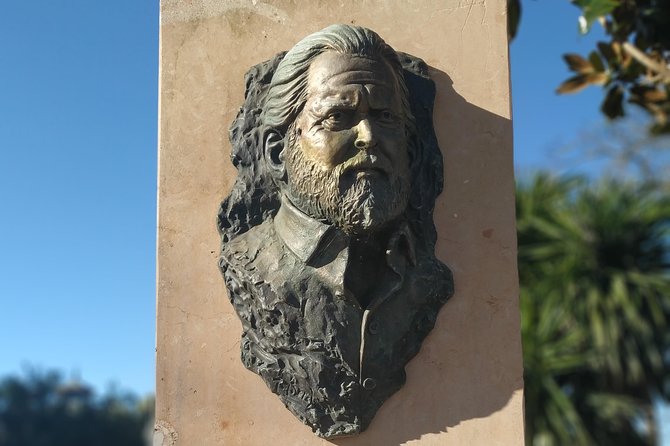
This tour begins at Plaza de la Merced, then crosses much of the historic center before finishing at the bust of Antonio Ríos Rosas near Plaza de España. That point-to-point design is useful. You are not sent back to the starting place, and the finish puts you close to places to eat.
The walk is listed at about two hours. That is enough for a well-organized introduction, not enough for a slow visit inside every monument. You should think of it as a city orientation with focused stops, rather than a full museum tour.
The private setup is the strongest practical feature. If you are booking for 10 or 15 people, $240.30 works out to about $16 per person for the whole group. For two people, it is a much bigger spend, so the value depends heavily on your party size and how much you want personal attention.
The tour is offered in English, with mobile ticketing. Most people can take part, and service animals are allowed. The available details do not promise a fully step-free route, so anyone concerned about slopes, stairs, or uneven surfaces should ask before booking.
More Ronda and Setenil day trips:
- From Málaga: Ronda+Setenil de las Bodegas with Little Train
★ 4.6 · 4,115 reviews - From Malaga: Ronda and Setenil Guided Tour Day Trip
★ 4.5 · 3,072 reviews - From Malaga: Ronda and Setenil Tour with Scenic Train
★ 4.8 · 2,895 reviews
Alameda del Tajo and the first look over the gorge
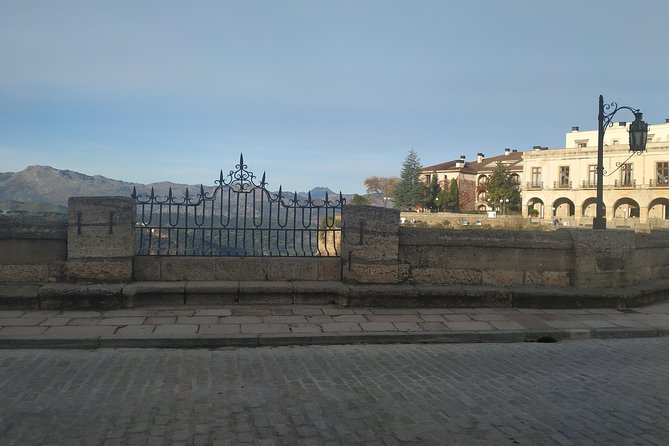
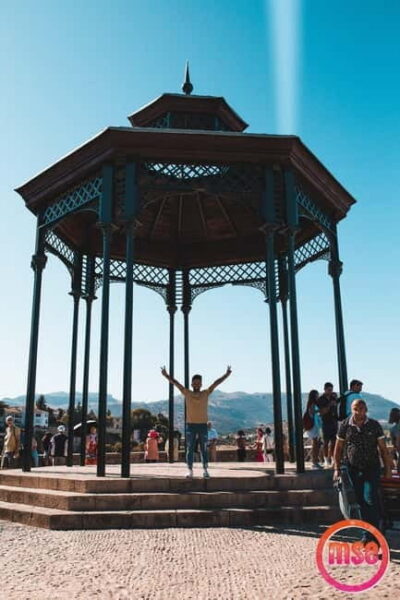
The opening stop is Alameda del Tajo, a park with gardens dating back about 200 years. Its viewpoints give you an early sense of Ronda’s unusual position above the surrounding countryside.
This is a smart beginning. You start with open views and green space before moving into tighter streets and historic buildings. Take a moment here to get your bearings. The guide can place Ronda’s cliffs and surrounding mountains in context, while you get the first of many good photographs.
The stop lasts about 10 minutes and admission is free. It is short, so do not expect a long garden visit. Its value is the view and the introduction to Ronda’s physical setting.
The bullring and Ronda’s unusual place in bullfighting
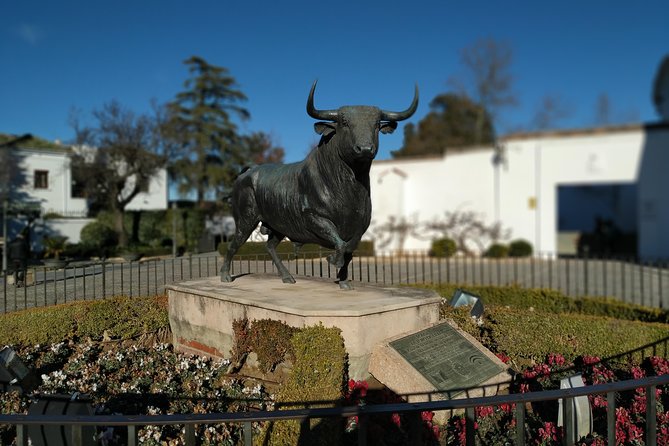
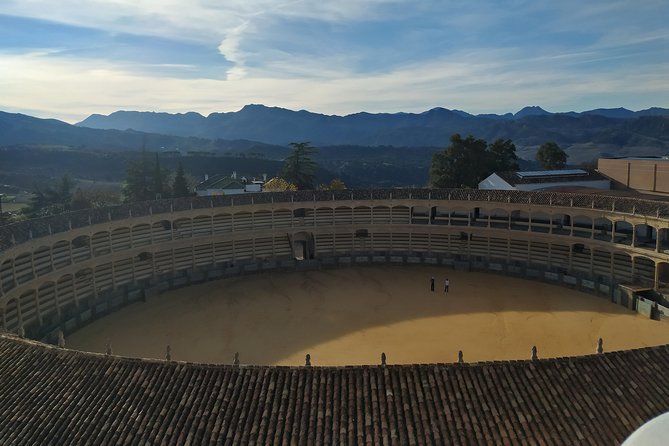
The walk continues around Ronda’s historic bullring, described as the oldest in Spain. Here, the guide explains the development of modern bullfighting and the way figures such as Ernest Hemingway and Orson Welles became attached to Ronda.
This section should appeal even if you have no interest in attending a bullfight. The point is not simply the arena itself. It is the way Ronda’s image was shaped by bullfighting, writers, filmmakers, and visitors who turned the town into a symbol of old Andalusia.
Admission to the bullring is not included in the tour details, so treat this as an exterior and historical stop unless you arrange entry separately. The experience focuses on the surroundings and the story, not on a guaranteed indoor visit.
The New Bridge from three useful angles
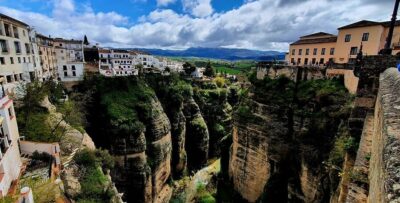
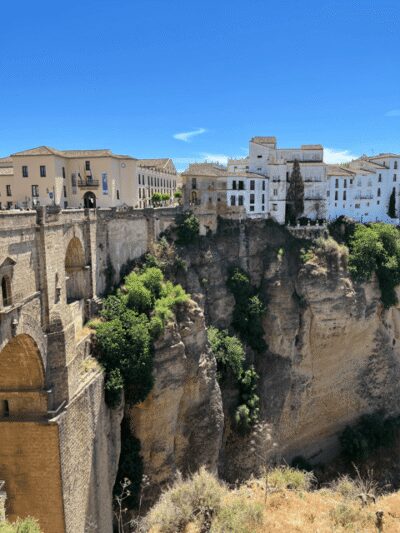
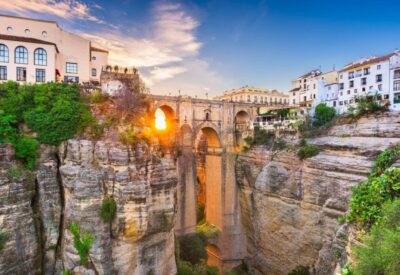
The Puente Nuevo, or New Bridge, is Ronda’s famous symbol. Completed in 1793, it spans the gorge between the older parts of the city and is the visual reason many people come here.
A quick visit to the bridge itself can feel flat if you only stand on the roadway and look outward. This route makes a better choice by examining it from several angles. You see how the stone structure sits in the gorge, then get different compositions from the surrounding gardens and viewpoints.
The formal stop is about 10 minutes and free. That is enough for an explanation and a few photographs, but you will want to use later stops for additional views. The bridge appears again from Jardines de Cuenca and Mirador de Aldehuela, so the route builds a fuller picture instead of spending the entire visit in one spot.
A few more Malaga outings worth comparing
- Málaga: Museo Picasso Málaga Entry Ticket
★ 4.4 · 11,138 reviews - Málaga: Alcazaba and Roman Theatre Guided Tour With Entry
★ 4.8 · 5,792 reviews - From Malaga and Costa del Sol: Gibraltar Tour
★ 4.4 · 4,483 reviews - Malaga: Teatro Flamenco Malaga Live Flamenco Show
★ 4.7 · 4,254 reviews
Jardines de Cuenca and the classic bridge photograph
Jardines de Cuenca is one of the most rewarding stops for photographs. These hanging gardens offer views toward the New Bridge, the gorge, the House of the Moorish King, and the Old Bridge.
The 15-minute stop is among the longer pauses on the route, and that makes sense. You need time to walk to the viewing points, frame the bridge, and listen without feeling rushed. The gardens also change the angle of the city. From here, Ronda feels less like a collection of streets and more like a town built along the edges of a great cut in the rock.
The name House of the Moorish King can be misleading if you expect a single, fully explained palace visit. In this experience, it is part of the view and the surrounding story. The tour details do not include an interior ticket, so do not count on going inside.
Arco de Felipe V and the old entrance to Ronda
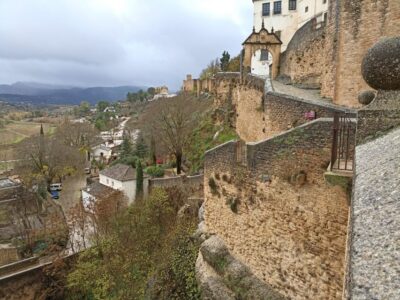
The Arco de Felipe V marks the entrance through the Old Bridge area. The gate was built in the 16th century, and it gives the walk a useful change of pace after the big gorge views.
This is a small stop, about five minutes, but it connects the city’s geography with its defensive past. Once you pass through the arch, you have a natural frame for the Church of Father Jesus. It is a good example of how the guide uses architecture as a camera view, not just as a date to memorize.
Because this is a brief outdoor visit, I would not book the tour expecting long historical lectures at every stop. The rhythm is quicker: see a place, hear its key story, take a photo, and keep moving.
Palacio de Salvatierra and Ronda’s grander side
The Palacio de Salvatierra brings you face to face with an 18th-century facade described as one of the finest in Ronda. Its ironwork, wooden entrance, noble coat of arms, and colonial details point to a period when local families displayed wealth and status through their homes.
The stop lasts about five minutes. Admission is not included, and the tour information does not promise interior access. That is not a major problem if you appreciate facades, but it matters if you want a palace visit.
Look closely rather than rushing past. The details are the point here: the forged metal, the doorway, and the heraldic decoration. A local guide can explain what you are seeing much faster than a sign or a guidebook photograph.
Plaza Duquesa de Parcent and the heart of the old city
Plaza Duquesa de Parcent is presented as Ronda’s most important square. Archaeological remains were found here, and three Catholic churches show how central this area has been over time.
The City Hall and the Church of Santa María de la Encarnación are the main visual anchors. This is where the tour shifts from dramatic scenery to civic and religious life. You get a better sense of Ronda as a working historic city, not just a postcard perched above a gorge.
The stop lasts around 10 minutes and is free. That gives you enough time to examine the square and ask questions, but not enough for a detailed church interior tour. If a particular church matters to you, ask the guide what can be visited after the walk.
Plaza de María Auxiliadora and the long-distance view
Known locally as El Campillo, Plaza de María Auxiliadora has one of the broadest views on the route. From its viewpoint, you may see the Sierra de Grazalema, the Hoya del Tajo, and the archaeological site of Acinipo in the distance.
The gardens also contain two pinsapo firs, trees of particular interest in the area. That small botanical detail adds variety to the stop. You are not simply looking at another bridge view.
The stop is about 10 minutes and free. On a clear day, this may be one of the best places to understand how isolated Ronda feels from the surrounding countryside. Visibility will affect what you can see, so keep your expectations sensible. The guide can identify the distant features, but weather controls the panorama.
Iglesia de Nuestra Señora de la Paz
This small church is included for its colorful facade and Baroque interior decoration. It is dedicated to the Virgin of Peace, the patron saint of Ronda.
After several outdoor viewpoints, the church offers a more intimate stop. The scale is part of its appeal. You are looking at a compact place of worship with local importance rather than a grand cathedral designed to overwhelm you.
The stop lasts about 10 minutes, but the details do not specify whether interior admission is included or guaranteed. Ask the guide if you want to go inside. The schedule may allow only a look at the exterior if the church is closed.
Mirador de Aldehuela and an efficient ending
The final viewpoint is Mirador de Aldehuela. From here, you can see the New Bridge, Old Bridge, Jardines de Cuenca, House of the Moorish King, and Plaza de España in one broad sweep.
This is a strong finish because it lets you connect the stops you have just visited. You can recognize the bridge from another angle, pick out the gardens, and understand how the old city sits around the gorge.
The visit ends near Plaza de España, close to many restaurants. That makes the route practical for lunch or an afternoon of independent exploring. You will not finish at the original meeting point, so plan your onward movement from the plaza rather than assuming you need to walk back across town.
What the guides add to the walk
The best part of this experience depends on the individual guide. Past bookings have included Juan, Manuel Aviles Bravo, Marta, Alfredo, and Elena. The available information does not guarantee one of them, but it does show the style to expect when the match is good: local knowledge, clear explanations, flexibility, and a willingness to answer questions.
Manuel Aviles Bravo was especially praised for explaining Ronda’s history and geology, taking personal interests into account, and discussing Holy Week processions from personal experience. Juan was described as kind and helpful while covering the city’s main sights. Marta was noted for taking visitors to special locations, while Alfredo was appreciated for his local knowledge and enthusiasm. Elena was praised for making time for questions and explaining the history of Spain and the region.
Those details matter because Ronda can be interpreted in several ways. You may care most about geology, architecture, religious traditions, bullfighting, photography, or local life. Tell the guide early. A private tour gives you a better chance of getting the emphasis you want.
Price, group size, and the reliability question
At $240.30 per group of up to 15, this is priced for private groups rather than solo sightseers. A group of 15 pays roughly $16 each. A group of six pays about $40 each. For one or two people, the same flat fee is harder to justify unless personal guiding is a top priority.
The two-hour length also affects the value. You are paying for a focused introduction, not a full-day excursion or a package with transport and attraction tickets. The route includes free outdoor stops, while at least the Palacio de Salvatierra has no admission included.
I would confirm the booking directly before making a long drive. One booking was not recorded because of a system problem, leaving the party waiting for 45 minutes. Another tour was canceled about 50 minutes before departure because the guide went to the hospital. The company apologized and refunded both bookings, but a refund does not recover a wasted drive or lost holiday time.
Free cancellation is available up to 24 hours before the start time. Changes or cancellations inside that window are not accepted for a refund. Keep that deadline in mind if your plans in Malaga or elsewhere are still moving.
Who should book this Ronda walk?
I would choose this tour for a private group that wants a fast, well-organized introduction to Ronda and values a local English-speaking guide. It suits people who want the major views, a little context at each historic stop, and a route that ends near restaurants.
It is also a good match for photographers. The New Bridge is seen from multiple angles, and the gardens and viewpoints create more variety than a simple bridge visit. Families and groups with mixed interests may like the flexible private format.
I would think twice if you want long interior visits, museum time, or a slow architectural study. The schedule is tight, several stops last only five or 10 minutes, and admission is not built into the price. I would also be cautious if you are making a special two-hour drive solely for this appointment. Confirm it first.
Should you book it?
Book this walk if your group is large enough to make the flat price sensible and you want Ronda explained by a local rather than seen as a string of viewpoints. The route covers the city’s essential visual drama, while stops such as Plaza Duquesa de Parcent, the bullring, and Iglesia de Nuestra Señora de la Paz add substance.
For two people, compare the cost with a small-group or public walk. For a larger party, the math improves quickly. The guide quality appears capable of making the experience special, but the booking problems mean you should verify the appointment before traveling. With that safeguard, this is a strong two-hour introduction to one of Andalusia’s most striking towns.
FAQ
Where does the tour start?
The tour starts at Pl. de la Merced, 1, 29400 Ronda, Málaga, Spain.
Where does the tour end?
It ends near the Busto de Antonio Ríos Rosas at Plaza de España, close to many restaurants.
How long does the tour last?
The tour lasts approximately two hours.
Is this a private tour?
Yes. Only your group participates, and the price covers up to 15 people.
How much does the tour cost?
The listed price is $240.30 per group of up to 15 people.
Is the tour offered in English?
Yes. English is one of the offered languages.
Are attraction tickets included?
The listed outdoor stops have free admission. Admission is not included for the Palacio de Salvatierra, and the tour details do not promise interior entry to every church or building.
Is the tour suitable for most people?
Most people can participate. Service animals are allowed, and the meeting area is near public transportation.
Can I cancel for a full refund?
Yes, if you cancel at least 24 hours before the experience start time. Cancellations or changes made less than 24 hours before the start time are not refunded.
How far in advance is the tour usually booked?
The experience is booked about 40 days in advance on average.
Just added around Malaga
- San Miguel Cemetery Tour of Malaga★ 5.0 · 3 reviews
- A Self-Guided Tour of Ancient Malaga’s History★ 4.5 · 3 reviews
- MALAGA: ULTIMATE FLAMENCO & TAPAS TOUR★ 5.0 · 3 reviews
- Private Winery Tour and Visit to Ronda★ 5.0 · 3 reviews
- Ronda and Setenil from la Costa del Sol★ 3.8 · 3 reviews
- From Nerja/Almunecar: Sierra Nevada and Alpujarra day trip★ 4.0 · 3 reviews
- From Seville: Ronda and Setenil de Las Bodegas Private Tour★ 5.0 · 3 reviews
- Private tour in Malaga from Costa del Sol★ 4.5 · 3 reviews
Ronda Tours, compared.
Ronda+Setenil de las Bodegas with Little Train
Read our review →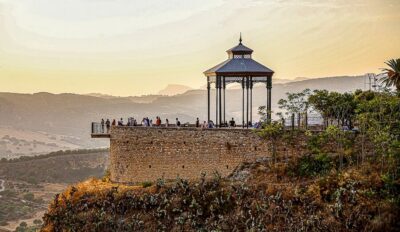
Guided Walking Tour with English or Spanish Guide
Read our review →Browse the lists this tour appears in