
Reviewed · MALAGA CATHEDRAL AND OLD TOWN
English Cemetery Tour
Málaga’s English Cemetery is a quiet city of graves, terraces, gardens, and stone symbols. This tour brings its stories into focus, from Robert Boyd’s tragic fate to the sinking of the frigate Gneisenau. You’ll also learn why the Angel of Anna is one of the cemetery’s most memorable works.
I like the way the tour links individual graves to Málaga’s wider past, rather than treating the cemetery as a collection of old stones. I also like the practical focus on funerary symbolism, which helps you read crosses, angels, poppies, and memorials for yourself. The main drawback is the terrain: slopes and terraces make this a poor choice for wheelchair users or anyone with limited mobility.
In This Review
- Key points to know
- Why Málaga’s English Cemetery is worth your time
- Starting at the entrance gate
- Walking the terraces and courtyards
- Robert Boyd and the frigate Gneisenau
- Learning to read angels, crosses, and poppies
- Finishing at Casa del Guarda
- What the $11 price really covers
- Who should book this cemetery walk
- Booking flexibility and meeting details
- Should you book the English Cemetery Tour?
- FAQ
- Where does the English Cemetery Tour begin?
- How long does the guided walk last?
- Is the cemetery entrance included?
- What language is the tour conducted in?
- Is food included?
- Is the tour suitable for wheelchair users?
- What should I bring?
- Can I cancel my booking?
Key points to know
- Spain’s first English cemetery: Visit a distinctive Protestant burial ground with a cultural story tied to Málaga.
- Robert Boyd and the Gneisenau: Hear two tragic stories that give the cemetery an emotional center.
- A lesson in stone symbols: Learn how angels, Celtic crosses, red poppies, and benches carry meaning.
- A Spanish-speaking guide: Guides such as Loli explain the site in a friendly, lively way.
- About two hours on foot: The visit begins and ends at the cemetery, with no food included.
- Sloping ground: Wear solid shoes and bring water. The route is not suitable for wheelchair users.
Why Málaga’s English Cemetery is worth your time
Many visitors come to Málaga for the major sights, food, and sea views. The English Cemetery offers a different look at the city. It is a place where the past is recorded in graves, memorials, gardens, and small details that are easy to miss without guidance.
The cemetery was created by living people for the dead, but the tour keeps its attention on both. You hear about the people buried there, the families connected to Málaga, and the customs expressed through stone. That makes the visit feel less like a walk through a burial ground and more like a lesson in how a city remembers.
I especially like that the tour does not rely only on famous names. Robert Boyd is an important part of the story, but the guide also points you toward symbols and ordinary memorial details. The result is useful even if you have little interest in cemetery architecture. You leave with a better sense of how to interpret old graves elsewhere in Spain and Europe.
The setting also helps. The route moves through terraces and courtyards, giving the visit a changing rhythm. You are not simply standing in one large field of tombs while a guide talks. You walk, pause, look closely, and move on to another part of the cemetery.
More old-town walks in Malaga:
- Malaga Bike Tour – Old Town, Marina & Beach
★ 4.7 · 1,150 reviews - From Malaga: Cordoba Day Trip and Mosque-Cathedral
★ 4.5 · 563 reviews - Malaga Tour with Cathedral, Alcazaba and Roman Theatre
★ 4.5 · 548 reviews
Starting at the entrance gate
The tour begins at the entrance to Cementerio Inglés de Málaga. Look for the guides with blue umbrellas. That detail matters, since the meeting point is at the cemetery itself and the umbrella gives you an easy visual marker.
The opening explanation covers the cemetery’s beginnings and the difficult circumstances behind its creation. This introduction is important because it gives the rest of the visit a frame. Without it, the cemetery might seem like a pleasant old garden with interesting graves. With it, you understand why this place became part of Málaga’s cultural and heritage story.
The guide then sets out the questions that will shape the walk. Who was the first person buried here? Who was William Mark? What is the meaning of the memorial bench and the red poppy? These questions keep the visit moving and give you details to watch for as you walk.
The tour is conducted in Spanish. Some material is presented in its original language, so you should choose this experience only if you can follow spoken Spanish comfortably. For Spanish speakers, the live format allows the guide to explain symbols and stories in a natural way rather than reducing the visit to a printed label.
Walking the terraces and courtyards
The main part of the visit takes you across different terraces and courtyards. These changes in level are part of the cemetery’s character, but they also affect comfort. You should wear comfortable shoes with a good grip, especially if you plan to visit in warm weather or after rain.
The guide explains different types of burials and points out prominent figures and families connected with Málaga. This is where the cemetery becomes a record of social life. Names on stone are not treated as isolated facts. They help show who had a role in the city and how different communities became part of Málaga’s story.
I like this section because it gives you several ways to look. You can follow the story of a particular person, study the design of a grave, or compare the burial styles found in different parts of the site. If you enjoy architecture, there is material to examine. If you prefer human stories, the guide supplies those too.
The courtyards and terraces also make this a slower, more reflective stop than a standard city tour. You are asked to look closely, but the visit does not appear to depend on lengthy standing in one place. The full route lasts about two hours, which is enough time to cover the key areas without turning the cemetery into an all-day commitment.
Robert Boyd and the frigate Gneisenau
The stories of Robert Boyd and the sinking of the frigate Gneisenau give the tour its strongest dramatic moments. Both are presented as tragedies connected with the cemetery and Málaga’s past.
Robert Boyd’s story is especially important because his name appears in the cemetery’s central narrative. The guide explains the circumstances around him and helps place his grave within the wider events of the city. You are not simply shown a name and an inscription. You are given a reason to remember it.
The Gneisenau story adds another human element. A shipwreck can sound like a distant historical event, but in a cemetery it takes on a more personal meaning. The tour connects loss at sea with the memorial culture found on land.
I appreciate the balance here. The guide does not need to fill every minute with solemn tales. The tragic stories are set alongside garden details, family histories, and symbolic art. That variety keeps the visit from becoming heavy, while still giving it emotional weight.
A few more Malaga outings worth comparing
- Málaga: Museo Picasso Málaga Entry Ticket
★ 4.4 · 11,138 reviews - Málaga: Alcazaba and Roman Theatre Guided Tour With Entry
★ 4.8 · 5,792 reviews - From Malaga and Costa del Sol: Gibraltar Tour
★ 4.4 · 4,483 reviews - Malaga: Teatro Flamenco Malaga Live Flamenco Show
★ 4.7 · 4,254 reviews
Learning to read angels, crosses, and poppies
The cemetery’s funerary symbolism is one of the best reasons to book a guided visit. You may notice an angel, cross, bench, or flower on your own, but the guide explains what these images can communicate.
The Angel of Anna receives special attention. It is described as one of the cemetery’s most beautiful angels, and the tour uses it to show how sculpture can express grief, affection, faith, and memory. You learn to look at the figure rather than merely photograph it.
Celtic crosses add another visual layer. Their shape and decoration make them easy to notice, but the tour gives you a way to place them within the cemetery’s wider mix of traditions. The red poppy and memorial bench provide smaller examples of how remembrance can take different forms.
This is the kind of information that stays useful after the tour. When you visit another cemetery, you can look for repeated signs and ask what the people who commissioned them wanted to say. One Spanish-speaking guide, Loli, is praised for making this material approachable, attentive, and fun. Her style, as described in the experience information, suits a subject that could otherwise feel formal or difficult.
The tour also helps you interpret images on tombs. That matters because funerary art often uses visual language rather than long explanations. Once you know what to look for, an old cemetery becomes easier to understand.
Finishing at Casa del Guarda
The walk ends back near the entrance, at the place called Casa del Guarda. Returning to the starting area makes the route simple and keeps you from needing a separate meeting point afterward.
This final stop provides a natural moment to gather the main ideas: the cemetery’s beginnings, its notable people and families, the tragedies linked with it, and the symbols that appear across its grounds. Since the tour ends where it starts, you can leave directly for the rest of your Málaga plans.
There is no food included, so plan accordingly. The cemetery visit is focused on walking and interpretation, not on refreshments or a meal. Bring water, particularly if you are visiting during a hot part of the day.
An umbrella is also listed among the recommended items. It can help with sun as well as rain, and the blue umbrellas used by the guides make the meeting point easier to find.
What the $11 price really covers
At $11 per person, the tour is priced as an inexpensive cultural visit. The cemetery entrance is included, so you are paying for both access and a live explanation of the site.
That is good value if you care about context. You can walk past graves and memorials without knowing why they matter, but the tour gives you names, stories, and a method for reading the symbols. The guide’s interpretation is the part that turns a quiet cemetery into a meaningful Málaga stop.
The price is less compelling if you only want a quick look around or do not understand Spanish. The tour’s main benefit comes from the spoken stories and explanations, not from a long list of included extras. There is no food, transport, or separate activity bundled into the cost.
The advertised duration is listed as one day for availability purposes, while the actual guided walk is about two hours. Use the two-hour walking time when planning your day. Check the available start times before booking, since the schedule can affect how easily you fit it between other Málaga plans.
Who should book this cemetery walk
I would recommend this tour to you if you enjoy unusual city sights, local history, architecture, or memorial art. It is especially useful if you have already seen Málaga’s best-known attractions and want something quieter and more specific.
Spanish speakers should get the most from the live commentary. The guide’s explanations cover stories and visual details that are difficult to understand from a short sign or a self-guided stroll.
This is also a good choice for curious travelers who like to ask questions about symbols. The Angel of Anna, Celtic crosses, the red poppy, and the memorial bench give the visit a clear visual focus.
I would be cautious if you dislike uneven ground, have trouble with slopes, or need step-free access. The cemetery includes terraces and slopes and is not suitable for wheelchair users or people with mobility impairments. Comfortable shoes are not just a suggestion here.
The activity is also not designed for party groups or people seeking a food-based outing. Pets are not allowed, and the rules prohibit weapons, drones, alcohol, drugs, food, and drinks in the vehicle. The simplest approach is to arrive with water, an umbrella, and clothing suited to a two-hour outdoor walk.
Booking flexibility and meeting details
You can cancel up to 24 hours before the tour for a full refund. The reserve-now, pay-later option is useful if your Málaga schedule is still changing, since you do not need to pay at the time of booking.
The guides meet you with blue umbrellas at Cementerio Inglés de Málaga. Arrive ready to walk rather than expecting a vehicle-based experience. The tour begins at the gate, moves through the terraces and courtyards, and returns to Casa del Guarda by the entrance.
Because the language is Spanish, make sure that suits you before reserving. Some content is shown in its original language, which may add interest but is another reason to choose the tour for its Spanish commentary.
Should you book the English Cemetery Tour?
Book it if you want a two-hour visit that combines personal tragedies, cemetery art, and Málaga’s cultural past for $11. The strongest reasons are the Robert Boyd and Gneisenau stories, the detailed look at funerary symbolism, and the chance to see the Angel of Anna with proper context.
Skip it if you need wheelchair access, cannot manage sloping terraces, or want a tour in English. For the right visitor, this is an inexpensive way to see a quieter side of Málaga and learn how to read the city’s memorials in stone.
FAQ
Where does the English Cemetery Tour begin?
The tour begins at Cementerio Inglés de Málaga, at the entrance gate. Guides can be identified by their blue umbrellas.
How long does the guided walk last?
The guided sightseeing walk lasts about two hours. It begins and ends at Cementerio Inglés de Málaga.
Is the cemetery entrance included?
Yes. Cemetery entrance is included in the $11 per person price.
What language is the tour conducted in?
The live tour guide speaks Spanish. Some content is shown in its original language.
Is food included?
No. Food is not provided on the tour. You should bring water for the walk.
Is the tour suitable for wheelchair users?
No. The cemetery has slopes and terraces, and the activity is not suitable for wheelchair users or people with mobility impairments.
What should I bring?
Bring comfortable shoes, an umbrella, and water. The route takes place on foot across sloping cemetery grounds.
Can I cancel my booking?
Yes. You can cancel up to 24 hours in advance for a full refund. A reserve-now, pay-later option is also available.
Just added around Malaga
- San Miguel Cemetery Tour of Malaga★ 5.0 · 3 reviews
- A Self-Guided Tour of Ancient Malaga’s History★ 4.5 · 3 reviews
- Ronda and Setenil from la Costa del Sol★ 3.8 · 3 reviews
- MALAGA: ULTIMATE FLAMENCO & TAPAS TOUR★ 5.0 · 3 reviews
- Private Winery Tour and Visit to Ronda★ 5.0 · 3 reviews
- From Nerja/Almunecar: Sierra Nevada and Alpujarra day trip★ 4.0 · 3 reviews
- From Seville: Ronda and Setenil de Las Bodegas Private Tour★ 5.0 · 3 reviews
- Private tour in Malaga from Costa del Sol★ 4.5 · 3 reviews
Malaga Cathedral and Old Town, compared.


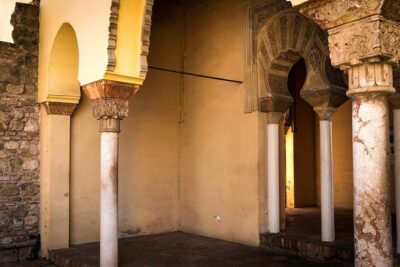
Malaga Tour with Cathedral, Alcazaba and Roman Theatre
Read our review →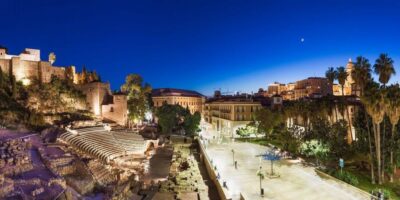
Cathedral, Alcazaba, Roman Theater Walking Tour
Read our review →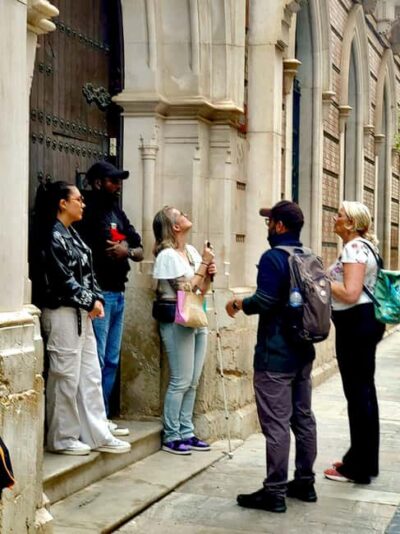
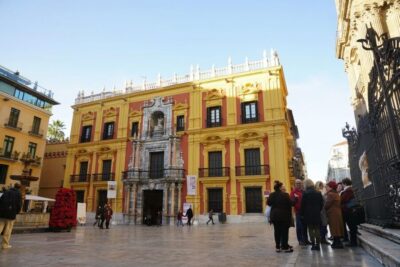
Skip-the-Line Malaga Cathedral Tickets with Tour
Read our review →
Seville Day Trip with Cathedral Entrance from Malaga
Read our review →
Browse the lists this tour appears in