
Reviewed · TAPAS AND WINE TOURS
Tour around the Central Market of Malaga
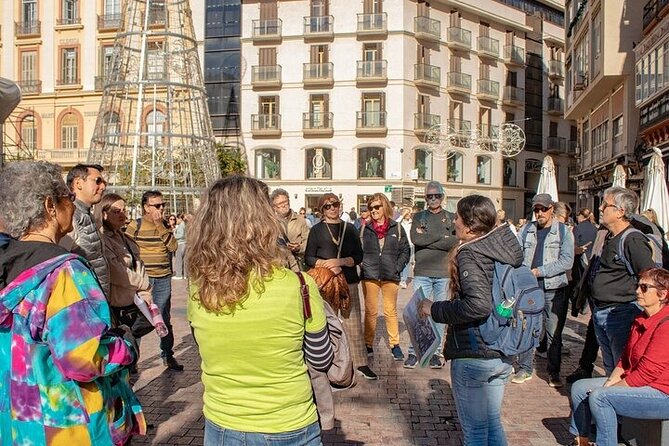
Malaga’s best stories are often found away from the postcard sights. This two-hour walk leads you through old lanes, religious landmarks, long-running shops, flamenco territory, and the Central Market of Atarazanas, giving you a useful look at how local customs shape daily life. I especially like the explanations of Malaga’s unusual coffee vocabulary and the way the route connects the city’s Muslim, Catholic, artistic, and commercial past. The main consideration is that this is a walking and storytelling tour, not a food tasting or market-shopping experience.
I like the small group limit of 20, which should make it easier to hear the guide in narrow streets. I also like the practical start and finish: you begin near the Guadalmedina River and end at the market entrance, so you can continue exploring or stop for food afterward. The tour is led by an accredited local guide, and Lourdes is specifically praised for making the experience warm and well informed.
In This Review
- What this Malaga walk does especially well
- Why the Central Market is the right finishing point
- Starting beside the Guadalmedina River
- Mapas y Compañía, where old streets meet new Malaga
- The neo-Gothic church and Malaga’s religious character
- Plaza de la Constitución and Malaga’s coffee code
- Pasaje de Chinitas and the sound of flamenco
- Calle Larios, Malaga’s grand commercial spine
- Plaza de Félix Sáenz and the old department store facade
- The ship-shaped corner at Sagasta Street
- Atarazanas Market, Muslim shipyards, and local food culture
- Is $17.80 a fair price?
- Who should book this walk?
- Should you book the Central Market of Malaga tour?
- FAQ
- How long does the Malaga Central Market walking tour last?
- Where does the tour begin?
- Where does the tour finish?
- Is food or drink included?
- How much does the tour cost?
- How large is the tour group?
- Can I cancel for a full refund?
What this Malaga walk does especially well
- It links everyday customs to real places, from Malaga’s coffee orders to Holy Week churches and traditional shops.
- The route covers lesser-known corners, including Pasaje de Chinitas, Sagasta Street, and the old commercial quarter.
- You finish at Atarazanas Market, a useful place to continue your day with food, produce, and local atmosphere.
- The price is modest at $17.80, especially for a two-hour introduction led by a professional local guide.
- It works for a wide range of ages and abilities, with no demanding physical activity described.
- The route mixes old and new Malaga, including Muslim street patterns, neo-Gothic architecture, the Thyssen Museum facade, and modern shops.
Why the Central Market is the right finishing point
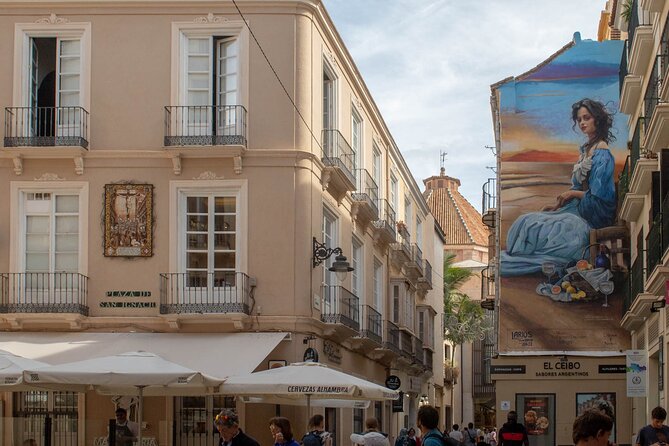
Many city walks finish at a major square and leave you wondering what to do next. This one ends at the main entrance of the Central Market of Atarazanas, which is more useful. You can go inside, look at the food stalls, or use the market as a landmark for the next part of your day.
Atarazanas also gives the route a clear sense of place. The market occupies the site of former Muslim shipyards, and the guide explains how the building connects to the city walls, maritime activity, architecture, and present-day shopping. That combination helps you see Malaga as more than a resort city.
The market stop lasts about 15 minutes, so do not expect a full market tour or a guided meal. Food and drinks are not included. Still, the location is well chosen. You finish in one of the city’s most practical areas, close to the Atarazanas metro station and within reach of bus connections.
More Tapas and Wine Tours in Malaga
- Malaga Wine & Tapas Small Group Guided Tour
★ 5.0 · 1,972 reviews - From Malaga: Caminito del Rey/White Village Tour & Tapas
★ 4.9 · 1,361 reviews - Málaga: Wine & Tapas Tour
★ 4.8 · 1,039 reviews
Starting beside the Guadalmedina River
The meeting point is Plaza Enrique García-Herrera, at number 20, in central Malaga. The opening section looks toward the Guadalmedina River and the Puente de los Alemanes, then turns toward churches and brotherhoods connected with Malaga’s Holy Week traditions.
This is a smart way to begin because it introduces a side of Malaga that may not be obvious during a first visit. Holy Week is not treated simply as a religious event here. It is tied to local identity, public space, brotherhoods, processions, and the visual customs that shape the city’s calendar.
You also pass the Unicaja Museum of Popular Arts and Customs. The museum dates from the 1960s and was created to present the city’s archaeological and ethnographic past. You do not enter as part of the tour, but the exterior and its purpose give the guide a chance to explain how Malaga preserved and presented its local traditions.
I would arrive a little early at this meeting point. The tour uses a mobile ticket, and the starting area is served by public transport and nearby bus routes. Public parking is available at the departure point, although central Malaga is easier to handle if you arrive by train, metro, or bus.
Mapas y Compañía, where old streets meet new Malaga
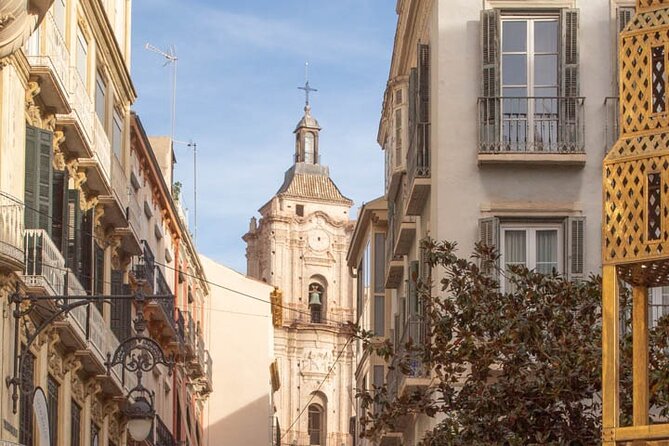
The walk continues along Calle Compañía and nearby lanes. This section focuses on small businesses, artistic details, and streets with Muslim-era origins. You may see displays involving fans, wickerwork, flamenco dresses, and other objects linked to local crafts and customs.
The original bookstore called Mapas y Compañía is one of the more distinctive stops. Its name and setting give the guide a natural way to talk about maps, imagination, travel, and the layers of the old quarter. The tour does not treat shopping as the main event, but these businesses help you notice how traditional trades and cultural imagery remain part of the streetscape.
You also see how newer cultural buildings can fit into an older setting. The facade of the Malaga branch of the Thyssen Museum is used as an example of modern design placed among streets with much older roots. I like this part because it avoids presenting Malaga as a museum frozen in time. The city is still changing, and the route points out where that change is visible.
This stop lasts about 10 minutes. It is brief, so expect an introduction rather than time to browse every shop.
The neo-Gothic church and Malaga’s religious character
One church on the route is a neo-Gothic building completed in 1920 from a design by architect Fernando Guerrero Strachan. Its basilica plan has three naves, giving the guide a chance to explain the building’s shape and place in the historic center.
The supplied details do not specify an interior visit, so you should think of this as an architectural and cultural stop rather than a guaranteed church tour. That distinction matters if you are hoping to spend time inside every religious building.
Still, the church adds useful balance to the walk. Malaga’s traditions are not only found in markets and shopping streets. Churches, convents, brotherhoods, and Holy Week customs remain part of the city’s public identity, and the guide connects those elements to the neighborhoods you are walking through.
Same base, a completely different kind of day:
- Málaga: Caminito del Rey Guided Tour with Transportation
★ 4.8 · 12,183 reviews - Caminito del Rey: Guided Tour and Entry Ticket
★ 4.6 · 11,286 reviews - Málaga: Museo Picasso Málaga Entry Ticket
★ 4.4 · 11,138 reviews - From Málaga & Costa del Sol: Caminito del Rey Guided Tour
★ 4.7 · 7,488 reviews
Plaza de la Constitución and Malaga’s coffee code
Plaza de la Constitución is one of the key stops, with about 15 minutes for the guide to explain its changing names and political past. The square has reflected Spain’s social and political shifts, so it works as a compact lesson in how public places acquire new meaning over time.
The most entertaining subject here is Malaga’s coffee language. A cloud is not a weather report, and the city has several particular ways to order coffee depending on the amount of milk and coffee you want. The guide also talks about chocolate, a useful detail for anyone planning a cafe stop later.
You get views toward the Cathedral and hear about nearby streets and squares, including Plaza Uncibay and Calle Granada. Picasso’s connection with Malaga also enters the story, as do familiar leisure spots such as El Pimpi and La Campana.
This is one of the most useful sections for a first visit because it gives you a map of the center in human terms. Instead of only learning street names, you learn which places connect to art, nightlife, food, and local habits. The drawback is that a 15-minute stop cannot explain every square and landmark in detail. Think of it as a well-chosen orientation rather than a full city lecture.
Pasaje de Chinitas and the sound of flamenco
Pasaje de Chinitas is a very short stop, around five minutes, but it carries plenty of cultural weight. The passage was associated for more than a century with flamenco singers and dancers who developed their duende, the emotional force and artistic spirit linked with the performance.
The value here comes from context. Malaga’s flamenco story is not presented only as a stage show for visitors. It is tied to bars, taverns, artists, and the narrow passage itself. You will not receive a flamenco performance as part of the tour, so book this walk for explanation and atmosphere, not live entertainment.
Because the stop is brief, you may want to return later if the passage interests you. The route gives you the background; your own evening plans can take the subject further.
Calle Larios, Malaga’s grand commercial spine
Calle Larios takes about 15 minutes. Built between 1887 and 1891, it became the city’s main street and remains a central route for shopping, art, and entertainment.
The guide points out details that are easy to miss when you are focused on the shops. These include Casa Mira, an old pharmacy tradition in which master formulas are still prepared, and traces of the former relationship between the street and the sea. The route encourages you to look up and around, not only straight ahead at storefronts.
I find this kind of stop valuable because it explains why the street feels different from the smaller lanes around it. Its scale and commercial purpose were planned, while nearby streets retain older patterns. You see Malaga’s growth through its buildings and businesses rather than through a list of dates.
The stop is short enough to keep the walk moving. If you want to shop, photograph every facade, or visit a business, plan to return after the tour.
Plaza de Félix Sáenz and the old department store facade
At Plaza de Félix Sáenz, the focus shifts to the former Almacenes de Félix Sáenz. Its facade reflects the commercial and cultural life of Malaga, and the guide explains its history and renovation.
The square also works as a meeting place in the modern city. People use it while shopping, eating, and spending time in the center. The guide points out sculptures and small corners that may be easy to pass without noticing.
This five-minute stop is not about seeing a long list of monuments. It is about reading the city’s public spaces. A square can be a transport point, a shopping address, an architectural setting, and a social gathering place at the same time.
The ship-shaped corner at Sagasta Street
At Sagasta Street number 5, on the corner of Herrería del Rey, you see a narrow 1925 building designed to fit its corner in a shape resembling a ship’s keel.
It is the sort of small architectural detail that rewards a slower pace. You might walk past it without realizing that the unusual shape was a deliberate response to the site. The guide gives you a reason to pause and look at the building as an object, not just as part of the background.
The stop lasts about five minutes. It is a quick visual note, but it adds variety after the larger streets and squares.
Atarazanas Market, Muslim shipyards, and local food culture
The final 15-minute stop explains the Central Market of Atarazanas, including the products and stalls found inside, the old Muslim walls, and the shipyards that once occupied this location.
This is where the tour’s themes come together. The market is a working commercial space, but its setting carries traces of earlier Malaga. The guide also points out architectural and artistic elements, along with traditional and newer businesses in the surrounding streets.
Food and drinks are not included, so budget separately if you want to eat or shop. That is not a weakness for everyone. Some people prefer to choose their own stall and spend time at their own pace after the guide finishes. The walk gives you orientation first, then leaves the market open for independent exploration.
The official end is at C. Atarazanas, number 9, at the market’s main entrance. From there, you can continue through the center without needing a taxi or hotel transfer.
Is $17.80 a fair price?
At $17.80 per person, this is an inexpensive introduction to central Malaga. You receive about two hours with a professional local guide, and the route covers architecture, religion, flamenco, coffee customs, commerce, art, and the market district.
The value is strongest if you want local explanation rather than entry tickets. No food, drinks, hotel pickup, or attraction admissions are included. You are paying for the guide’s interpretation and for a planned route through places you might otherwise pass without understanding.
The group can include up to 20 people. That is still small enough for a city walk, though the experience may feel less personal when the group reaches its maximum. The guide is accredited, and Lourdes has been specifically praised for her warm and well-informed approach.
The tour is booked an average of 82 days ahead, which suggests you should reserve early if your Malaga dates are fixed. Free cancellation is available until 24 hours before the local start time. If the minimum group size is not reached and the operator cancels, you are offered another date or experience, or a full refund.
Who should book this walk?
I would choose this tour for a first or second day in Malaga. It gives you street orientation, cultural context, and several ideas for later, including the market, coffee customs, flamenco locations, and central squares.
It also suits you if you prefer gentle sightseeing. The experience is described as suitable for people of different ages and physical abilities, and most people can participate. Service animals are allowed. The route is still a two-hour city walk, so comfortable shoes remain sensible.
You may want something else if your main goal is a food tour, a museum visit, a private guide, or a live flamenco show. You will hear about food and flamenco, but neither is included as a formal tasting or performance.
Should you book the Central Market of Malaga tour?
Book it if you want a low-cost, easy introduction to Malaga that takes local customs seriously. The strongest parts are the coffee vocabulary, Holy Week connections, flamenco setting at Pasaje de Chinitas, small architectural details, and the finish at Atarazanas Market.
Skip it if you want extended time inside churches, a meal, or a long visit at any single attraction. For most people looking to understand the center before exploring it alone, the $17.80 price makes sense. Reserve ahead if your schedule is firm, and keep the rest of your day open for the market and nearby streets.
FAQ
How long does the Malaga Central Market walking tour last?
The tour lasts approximately two hours.
Where does the tour begin?
It begins at Plaza Enrique García-Herrera, 20, in Malaga’s Centro district.
Where does the tour finish?
It finishes at the main entrance of the Central Market of Atarazanas, at C. Atarazanas, 9.
Is food or drink included?
No. Food and drinks are not included in the tour price.
How much does the tour cost?
The listed price is $17.80 per person.
How large is the tour group?
The maximum group size is 20 travelers.
Can I cancel for a full refund?
Yes. You can cancel for a full refund up to 24 hours before the experience start time. Cancellations or changes made less than 24 hours before the start time are not refunded or accepted.
Just added around Malaga
- San Miguel Cemetery Tour of Malaga★ 5.0 · 3 reviews
- A Self-Guided Tour of Ancient Malaga’s History★ 4.5 · 3 reviews
- MALAGA: ULTIMATE FLAMENCO & TAPAS TOUR★ 5.0 · 3 reviews
- Private Winery Tour and Visit to Ronda★ 5.0 · 3 reviews
- Ronda and Setenil from la Costa del Sol★ 3.8 · 3 reviews
- Private tour in Malaga from Costa del Sol★ 4.5 · 3 reviews
- From Nerja/Almunecar: Sierra Nevada and Alpujarra day trip★ 4.0 · 3 reviews
- From Seville: Ronda and Setenil de Las Bodegas Private Tour★ 5.0 · 3 reviews
Tapas and Wine Tours, compared.
Taste of Malaga Tour : Tapas, History and Local Customs
Read our review →
Malaga Organic Vineyard and Winery Six Wines Tapas and Transfer
Read our review →
Organic Vineyard Tour with 6 Wines, Tapas & Transfer
Read our review →
Málaga Evening Tapas Crawl Tour by Food Lover Tour
Read our review →Browse the lists this tour appears in