
Reviewed · WALKING TOURS
Private walking tour
Malaga’s story comes together quickly on this private two-hour walk. In a short stretch, you’ll move from a Roman port gate and a 2,000-year-old theater to the Moorish Alcazaba, Picasso’s birthplace, and an unfinished cathedral. I like the route’s range, and I like that guide Elmira brings history to life with humor, local stories, and a sense of daily Malaga.
The private format is another strong point. Your group can include up to 10 people, so you can ask questions and set the pace more easily than on a large group walk. The main caution is time: the Alcazaba, Picasso’s birthplace, and Malaga Cathedral cost extra if you enter, and trying to see all three inside a two-hour tour would make the walk feel rushed.
In This Review
- Key points at a glance
- Starting at Malaga’s old port gate
- Gardens, government buildings, and 155 plant varieties
- Climbing into the Alcazaba
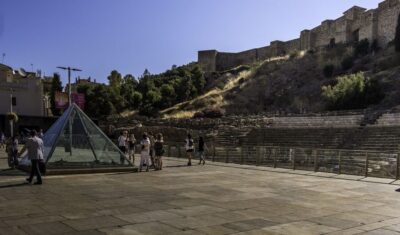
- The Roman theater beneath the fortress
- Picasso’s Malaga at Plaza de la Merced
- The church linked to Picasso’s baptism
- Malaga Cathedral and the city’s layered faith
- Plaza de la Constitución and the twelve grapes
- Calle Marqués de Larios and the final walk
- How Elmira shapes the experience
- Is $101.27 good value for up to 10 people?
- Who should book this Malaga walk?
- Should you book it?
- FAQ
- How long does the private Malaga walking tour last?
- How many people can join the private tour?
- What language is the tour offered in?
- Are admission tickets included?
- Where does the tour finish?
- Can I cancel for a full refund?
Key points at a glance
- Roman beginnings: Start near the former port gate known as the Dark Door and learn how Malaga got its name and symbols.
- A compact history lesson: The route links Roman, Moorish, Christian, and modern Malaga in one central walk.
- Elmira’s storytelling: Expect history, culture, humor, and space for questions, with a guide praised for making the city feel personal.
- Optional landmark visits: The Alcazaba costs 3.50 euros, Picasso’s birthplace costs 3.50 euros, and the cathedral costs 7 euros, all paid separately.
- A useful city-center finish: The walk ends on Calle Marqués de Larios, a practical place for continuing into Malaga’s shops, squares, and old center.
- Good for small groups: The price is $101.27 for up to 10 people, making the cost more attractive when shared by several people.
Starting at Malaga’s old port gate
The walk begins at the Estatua del Biznaguero in the Jardines de Pedro Luis Alonso, near the center of Malaga. The tour description also refers to the meeting place as the Dark Door, an old port gate from Roman times. Since both names appear in the meeting information, I would confirm the exact meeting point before setting out.
That small bit of planning matters, especially if you are arriving from a cruise ship or have a tight schedule. One account describes Elmira meeting a group as they came off a ship, but ship pickup is not listed as a standard feature, so you should not assume it is included.
At the opening stop, you get a quick introduction to Malaga’s past. The old gate offers a useful starting point because this city grew around its position by the sea. You’ll hear about the meaning of Malaga’s name and the symbols connected with the city.
I like beginning with this kind of broad orientation. Instead of starting with a famous monument and treating it as an isolated sight, the guide first explains how Malaga developed and why its location mattered. It gives the rest of the walk a clearer frame.
More Walking Tours in Malaga
- Málaga: 3-Hour Complete Walking Tour with Tickets
★ 4.5 · 976 reviews - Málaga: Cathedral, Alcazaba, Roman Theater Walking Tour
★ 4.7 · 315 reviews - Malaga Private Walking Tour, Alcazaba & Catamaran Cruise
★ 5.0 · 159 reviews
Gardens, government buildings, and 155 plant varieties
The route continues through a park containing more than 155 varieties of exotic plants. The guide points out unusual plant facts as you walk, giving the stop a change of pace after the opening history lesson.
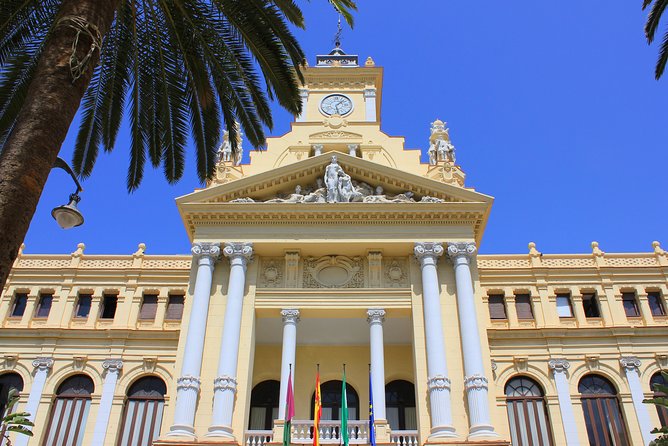
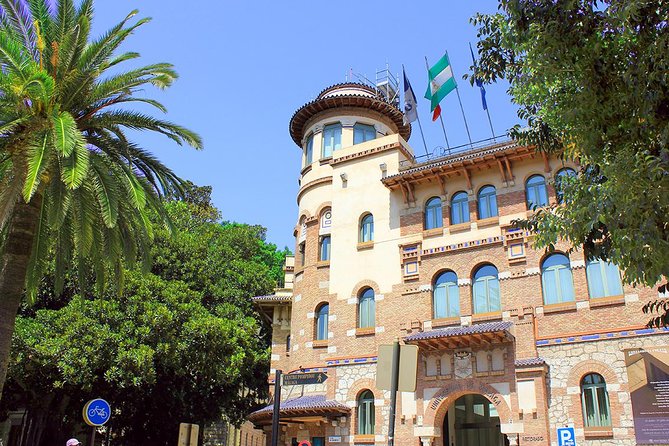
This is not just a transfer between major sights. The park also gives you a look at Malaga’s civic architecture. Along the alley, you’ll see buildings constructed about 100 years ago, including the Town Hall, the Malaga city university, and the National Bank of Spain.
For me, this is the sort of stop that helps a city feel lived in. Malaga is not only Roman ruins and postcard landmarks. Its public buildings, gardens, and formal streets show how the city shaped itself in more recent times.
The park section should also be comfortable for anyone who wants a little breathing room between monuments. Still, this is a walking tour, not a garden visit with time to linger over every plant. If you want photographs or a long look at the buildings, tell the guide early so you can judge how much time remains.
Climbing into the Alcazaba
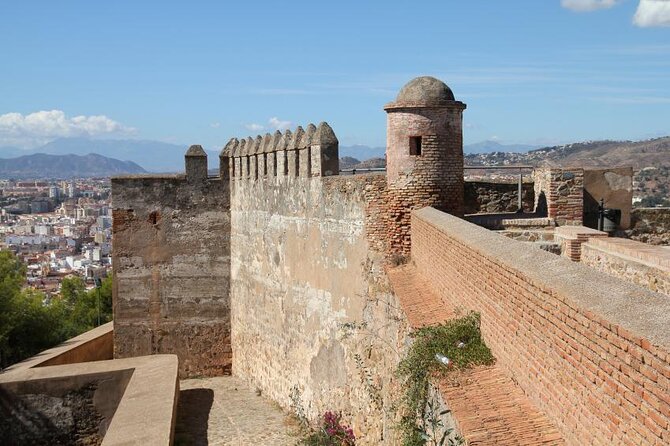
The Alcazaba is the biggest historical stop on the route. Built by the Arabs about 1,000 years ago, this hilltop fortress introduces you to Malaga’s Moorish period and to the long conflict between Moors and Christians.
Elmira also tells legends connected with the Alcazaba. That mix of documented events and local stories can make the fortress easier to remember than a string of dates. The walk includes discussion of the eight-century struggle between Muslim and Christian powers in Spain.
The practical issue is the climb. Going up and back down normally takes about 40 minutes. That is a large share of a two-hour tour, so you should decide before arrival if entering the fortress is a priority.
Admission costs 3.50 euros and is not included in the tour price. The itinerary information marks one part as admission ticket free while also giving the separate ticket price, so I would treat the 3.50 euros as the expected entry cost and confirm current access details with the guide.
You need a moderate level of physical fitness for this route, particularly if you visit the Alcazaba. The climb can be worthwhile, but you should wear shoes suited to walking and avoid planning the tour as a leisurely flat stroll.
If you are visiting Malaga for the first time, I would give the Alcazaba priority over the other optional entries. It adds a major chapter to the city’s story and helps explain the relationship between Malaga’s Roman, Moorish, and Christian remains.
The Roman theater beneath the fortress
Near the Alcazaba, you’ll see Malaga’s 2,000-year-old Roman theater. It was discovered by accident, which gives the site an appealing sense of surprise. The stop focuses not only on the theater itself but also on how Roman society worked.
You’ll learn where women and men sat and what social status meant for actors in Roman times. Those details turn the theater from a pile of ancient stone into a place where rules, class, entertainment, and public life met.
The theater is an efficient stop because it complements the Alcazaba without taking you far away. First you hear about Moorish power on the hill, then you look down toward an earlier Roman presence. Malaga’s long timeline is especially clear here.
No separate admission charge is provided for this stop in the tour details. If entering or viewing a particular section requires a ticket, ask Elmira at the start of the walk. The supplied information clearly lists separate prices for the Alcazaba, Picasso’s birthplace, and the cathedral, but not for the Roman theater.
Same base, a completely different kind of day:
- Málaga: Caminito del Rey Guided Tour with Transportation
★ 4.8 · 12,183 reviews - Caminito del Rey: Guided Tour and Entry Ticket
★ 4.6 · 11,286 reviews - Málaga: Museo Picasso Málaga Entry Ticket
★ 4.4 · 11,138 reviews - From Málaga & Costa del Sol: Caminito del Rey Guided Tour
★ 4.7 · 7,488 reviews
Picasso’s Malaga at Plaza de la Merced
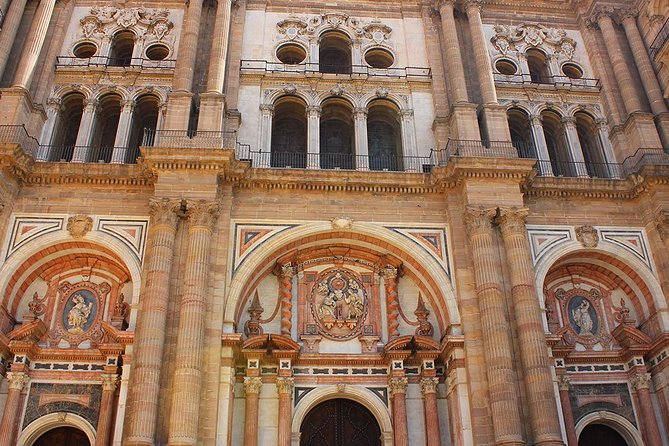
Plaza de la Merced shifts the focus from ancient and medieval Malaga to the city’s most famous modern artist. The square is home to Picasso’s birthplace and a monument to him.
You’ll hear about Picasso’s birth and childhood in Malaga. That local connection adds something important to the usual Picasso story. Before he became a major international artist, he was a child born in this Andalusian city, and the square helps put that early life on the map.
The plaza also contains an obelisk dedicated to the death of a Spanish revolutionary. The stop therefore combines art, politics, and public memory in one open space.
You can choose to enter Picasso’s birthplace. The visit takes about 15 minutes and costs 3.50 euros, not included in the tour price. Inside, you can see works of art and personal possessions.
I would consider this entry if Picasso is a main reason you came to Malaga. If your interests are more focused on architecture and medieval history, the exterior explanation may be enough, especially since the Alcazaba climb already uses a good part of your time.
The private format helps here. You can ask Elmira to explain more about Picasso, his family, or the political monument rather than simply moving on with a large group.
The church linked to Picasso’s baptism
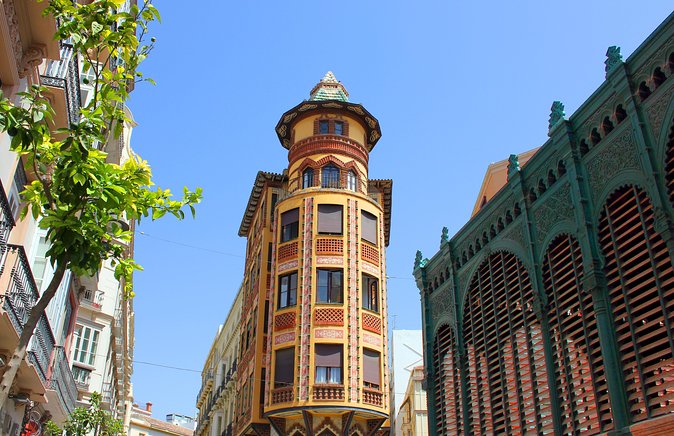
Another stop is the church where Picasso was baptized. The church is also known for its sculptures and religious paintings, which local tradition connects with answered wishes.
This is a small but meaningful link between the artist and his hometown. You are not just seeing a church because it is old or ornate. You are seeing a place tied to Picasso’s earliest life, before his career took him far beyond Malaga.
The note about paintings that grant wishes reflects local belief rather than a historical claim you need to accept. I like that the stop leaves room for both art and tradition. You can look at the church as a religious site, a Picasso connection, or a place where local customs continue.
The tour details do not provide an entry fee or a set visit length for this church. That means the amount of time spent there may depend on the group’s interests and the day’s schedule.
Malaga Cathedral and the city’s layered faith
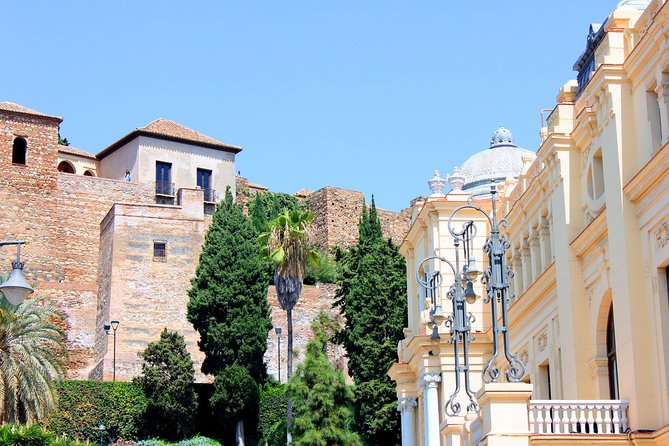
Malaga Cathedral is described as the city’s great architectural prize, although I would avoid expecting a finished building. It remains unfinished, and that incompleteness is part of its character.
The cathedral combines several architectural styles and includes part of an earlier Muslim mosque. That makes it a strong stop for understanding how Malaga changed after Christian rule replaced Muslim rule. The building carries more than one period of the city’s past.
An interior visit normally takes 20 to 30 minutes. Admission is 7 euros and is not included in the tour price. Add that to the optional Alcazaba and Picasso entries, and your extra admission costs could total 14 euros per person if you visit all three.
For a two-hour walk, you probably need to choose. The cathedral may appeal most if you care about religious art, architecture, and the city’s transition from mosque to Christian cathedral. If you want views and fortress walls, choose the Alcazaba. If Picasso is your main interest, select his birthplace.
The private arrangement makes these choices easier. You can discuss your priorities with Elmira instead of following a fixed group decision.
Plaza de la Constitución and the twelve grapes
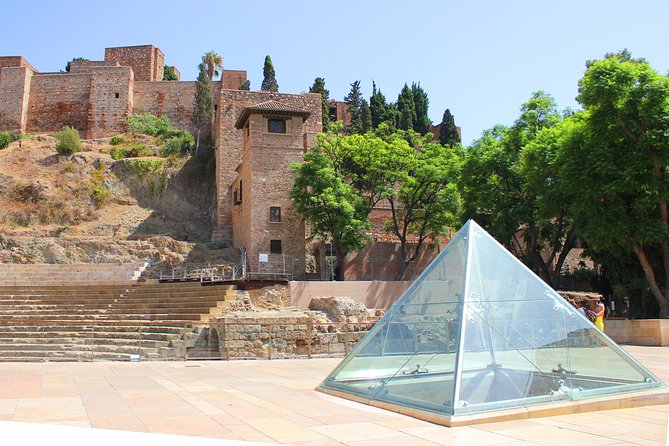
The main square connects the port with the heart of central Malaga. It also carries some darker and more practical history. The square was once used for bullfights and executions.
Today, its best-known tradition is tied to New Year’s Eve. When the clock strikes midnight, people eat 12 grapes and make a wish, one grape for each chime. The custom gives the square a strong connection to everyday Spanish celebration.
I appreciate this kind of detail because it shows how a public place changes use over time. The same square can hold punishment, entertainment, civic life, and holiday ritual. You get a better feel for Malaga when the guide explains not only what a building is, but also how people use it.
Calle Marqués de Larios and the final walk
The tour ends on Calle Marqués de Larios, Malaga’s main street. It links the center with the port and offers a natural place to continue your day.
The street has a playful reputation as a paradise for women with a husband’s credit card. Elmira also tells the story of its founder and explains how the city was disinfected at the expense of older architecture.
That final detail gives the route a human scale. City improvement is rarely a simple story of progress. New streets can make a city cleaner, more connected, and easier to move through, while also changing or removing older parts of the built environment.
Ending on Larios Street is useful because you are not dropped at an isolated attraction. You finish in the center, close to shopping, squares, the port, and other parts of old Malaga.
How Elmira shapes the experience
The strongest thread running through this walk is Elmira’s delivery. Her approach combines historical information with local culture, humor, and stories about city life.
She is described as precise when answering questions, professional, motivating, and passionate about Malaga. That matters on a route with many periods and subjects. The tour moves from Roman social rules to Moorish fortifications, Picasso’s childhood, church tradition, New Year customs, and urban development.
I also like that the experience does not stop at facts. Elmira may suggest sharing a drink in a local bar, but you should understand this as part of the personal experience described by one group, not as a promised inclusion in the price.
The English-language offering makes the tour accessible to English speakers. The French-language feedback also suggests Elmira has been able to connect with people beyond a single language group, though English is the language specifically listed for this experience.
Is $101.27 good value for up to 10 people?
At $101.27 per group, the price works out to about $10 per person if 10 people join. For a private walk, that is appealing. A group of two pays much more per person, but gains the ability to ask questions freely and shape the visit around personal interests.
The value depends on how you use the two hours. If you treat it as a guided orientation and choose one main paid monument, the price is reasonable for a private introduction to central Malaga. If you expect admission to every major sight, the extra tickets will raise the total.
The tour is often booked well ahead, with an average booking point of 46 days in advance. That suggests you should reserve early if your schedule is fixed, particularly during a cruise visit or a short stay.
Free cancellation is available if you cancel at least 24 hours before the start time. Changes or cancellations inside that window are not accepted for a refund, and the cut-off follows local Malaga time.
Who should book this Malaga walk?
I would recommend it to first-time visitors who want the city explained rather than simply photographed. It also fits families, couples, and small groups who value conversation and want to choose which optional interiors matter most.
It is especially useful for a short stay. In two hours, you get a working map of central Malaga and a list of places to revisit at your own pace.
You should think twice if you want a slow museum-style tour or a long, detailed visit inside every monument. The route covers a lot, and the Alcazaba climb can take about 40 minutes by itself.
Also consider your walking ability. The tour requires moderate physical fitness, and the fortress adds an uphill section. If you prefer a flat route, ask about skipping the Alcazaba entry and spending more time on the central streets and squares.
Should you book it?
Book this tour if you want a personal introduction to Malaga with a guide who uses stories, humor, and local connections. The best features are the private format, the broad historical range, and Elmira’s warm, engaging way of explaining the city.
Before booking, confirm the exact meeting point, decide which paid monument matters most, and allow for extra admission charges. If you accept that the two hours are a fast overview rather than a full visit to every sight, this is a strong way to get your bearings and choose what to explore next.
FAQ
How long does the private Malaga walking tour last?
The tour lasts approximately two hours.
How many people can join the private tour?
The private activity is available for one group of up to 10 people.
What language is the tour offered in?
The experience is offered in English.
Are admission tickets included?
No. The Alcazaba costs 3.50 euros, Picasso’s birthplace costs 3.50 euros, and Malaga Cathedral costs 7 euros. These fees are not included in the tour price.
Where does the tour finish?
The walk ends on Calle Marqués de Larios in central Malaga.
Can I cancel for a full refund?
Yes, if you cancel at least 24 hours before the experience begins. Cancellations or changes made less than 24 hours before the start time are not accepted for a refund.
Just added around Malaga
- San Miguel Cemetery Tour of Malaga★ 5.0 · 3 reviews
- A Self-Guided Tour of Ancient Malaga’s History★ 4.5 · 3 reviews
- MALAGA: ULTIMATE FLAMENCO & TAPAS TOUR★ 5.0 · 3 reviews
- Private Winery Tour and Visit to Ronda★ 5.0 · 3 reviews
- Ronda and Setenil from la Costa del Sol★ 3.8 · 3 reviews
- From Nerja/Almunecar: Sierra Nevada and Alpujarra day trip★ 4.0 · 3 reviews
- From Seville: Ronda and Setenil de Las Bodegas Private Tour★ 5.0 · 3 reviews
- Private tour in Malaga from Costa del Sol★ 4.5 · 3 reviews
Walking Tours, compared.
Caminito del Rey Gorge Route Guided Walking Tour
Read our review →
Ardales: Caminito del Rey & El Gaitanejo Guided Walking Tour
Read our review →
Guided Walking Tour with English or Spanish Guide
Read our review →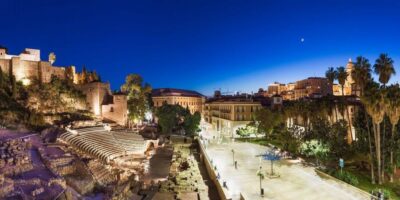
Cathedral, Alcazaba, Roman Theater Walking Tour
Read our review →
Malaga Private Walking Tour, Alcazaba & Catamaran Cruise
Read our review →
Guided Walking Tour of the Old Town of Frigiliana
Read our review →Browse the lists this tour appears in