
Reviewed · PICASSO MUSEUMS AND ART
Malaga: Picasso Museum Small Group Art Expert Guide
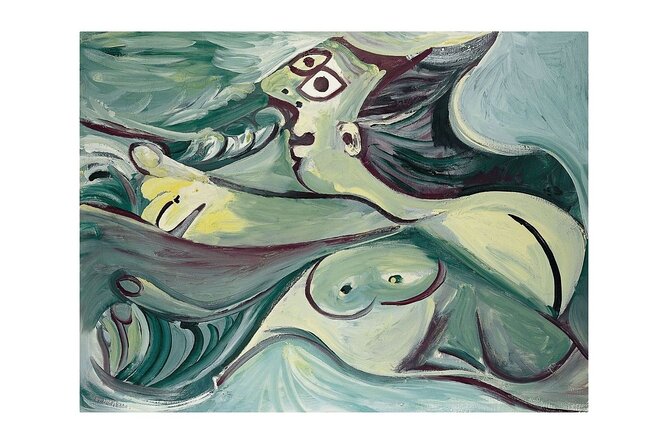
Picasso’s Málaga museum is less about ticking off famous paintings and more about seeing how one artist kept changing course. Guide Mónica leads a compact English tour through works from Picasso’s family collection, linking paintings, sculpture, prints, and ceramics to the artist’s long career.
I like the small group limit of 10, which gives you a fair chance to hear the explanation and ask questions. I also like the clear format: one focused hour with Mónica, followed by time to explore the temporary exhibitions and museum spaces at your own speed. The main caution is that this is not a greatest-hits tour. Picasso’s best-known masterpieces are generally elsewhere, so you should come ready for a broader and more personal view of his work.
In This Review
- Key points to know before you book
- Why Picasso in Málaga feels different
- Meeting Mónica at the Palacio de Buenavista
- The opening courtyard introduction
- Following Picasso’s changing styles in one hour
- Why the famous paintings may be missing
- What happens after the guided hour
- Is $54.01 a fair price?
- Who will get the most from this tour?
- A practical plan for the visit
- Should you book the Picasso Museum tour?
- FAQ
- Where does the tour meet?
- How do I recognize the guide?
- What language is the tour offered in?
- How long does the guided visit last?
- Is museum admission included?
- How large is the group?
- What can I do after the guided portion?
- Is the museum near public transportation?
- What is the cancellation policy?
Key points to know before you book
- Málaga connection: The museum is in Picasso’s birthplace, inside the Palacio de Buenavista in the city center.
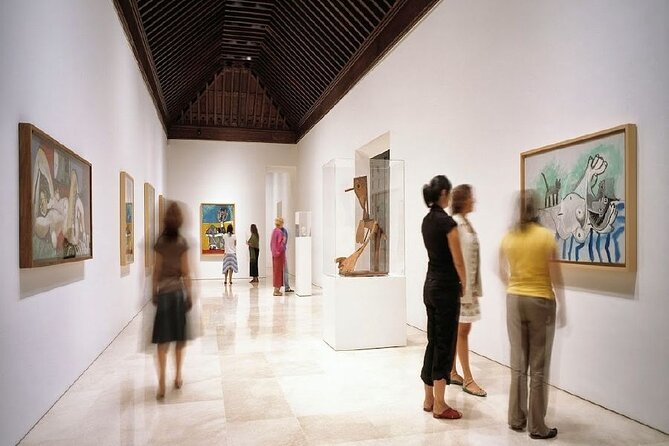
- A guided career survey: Mónica explains Picasso’s changing styles, techniques, family portraits, and artistic development.
- Private-family perspective: Much of the collection comes from the Picasso family and includes works the artist did not sell during his lifetime.
- Small English-language group: The maximum is 10 people, creating a more personal setting than a large gallery walk.
- One hour with optional extra time: The guided portion lasts about an hour, but you can stay to see temporary exhibitions, the garden-cafeteria, shop, and bookstore.
- Meet carefully: Mónica waits at the museum’s main entrance with a blue fan and her guide card.
Why Picasso in Málaga feels different
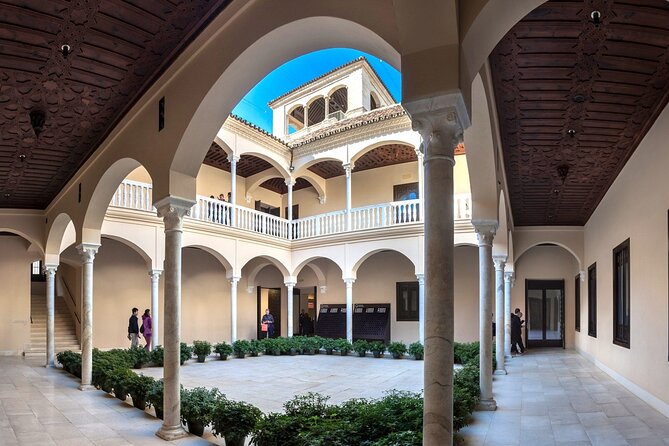
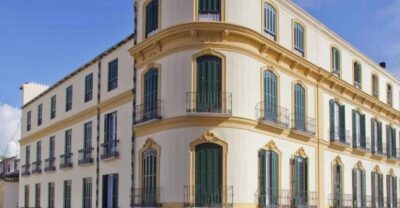
Málaga is not just a convenient place to see Picasso. It is his birthplace, and the museum occupies the Palacio de Buenavista, a historic building on Calle San Agustín in the city center. That setting gives the visit a useful sense of place before you even begin looking closely at the art.
The collection also has a particular character. It was drawn from the Picasso family’s private holdings, including works that Picasso never sold during his lifetime. That means you should not expect a wall of the paintings most often reproduced in textbooks and posters.
Instead, you get a look at the range of his work over more than 80 years. Paintings are joined by sculptures, prints, and ceramics. This matters because Picasso is often reduced to Cubism, distorted faces, and a few famous names. A guided visit can show you how broad his working life really was.
I find this approach more useful than simply standing before one celebrated picture and trying to guess what makes it important. You can follow his movement between styles and media, then consider how his experiments built on one another.
More Picasso and museum visits in Malaga:
- Málaga: Museo Picasso Málaga Entry Ticket
★ 4.4 · 11,138 reviews - Málaga: Center Pompidou Málaga Ticket
★ 4.3 · 656 reviews - Málaga: Museo del Automóvil y la Moda Ticket
★ 4.8 · 584 reviews
Meeting Mónica at the Palacio de Buenavista
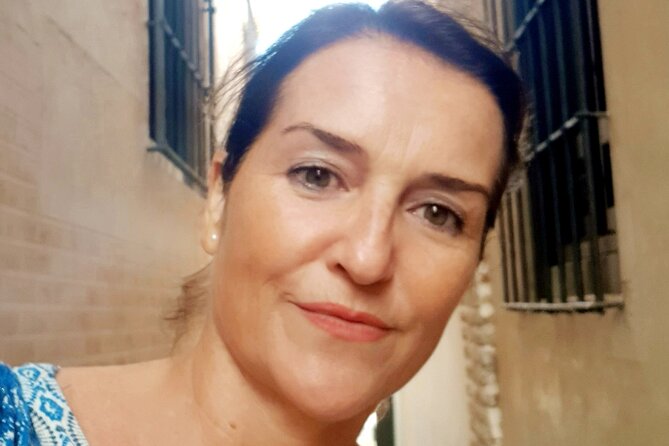
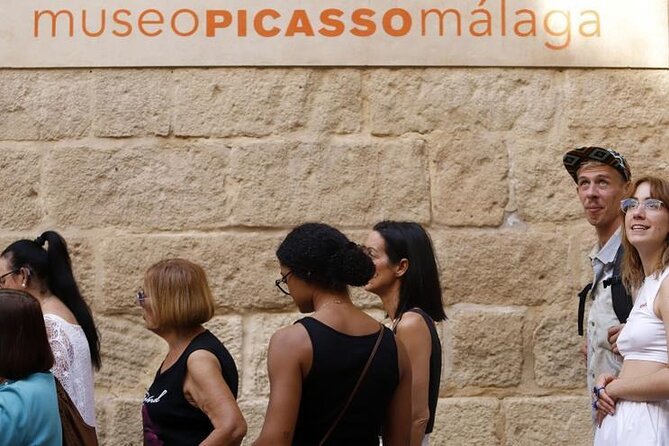
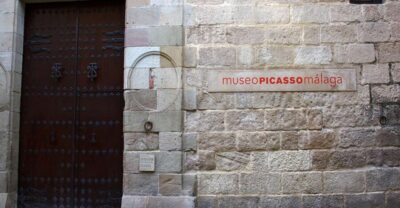
The meeting point is the main entrance of the Museo Picasso Málaga, Palacio de Buenavista, at Calle San Agustín 8. Mónica says to look for her blue fan and guide card. She also appears in the tour photographs, which can make the meeting easier in a busy city-center street.
The tour returns to the same point at the end. You do not need to arrange a separate ride or find a second location, and the museum is near public transportation. The experience is offered in English, and confirmation is provided when you book.
Arrive with enough time to identify the entrance and guide. One booking problem was linked to a missed meeting, with the customer and guide giving different accounts of what happened. I cannot resolve that situation, but it is a good reason to save the meeting details, watch for Mónica at the main door, and contact the operator promptly if you cannot find the group.
The maximum group size is 10 people. That is small enough for questions to feel natural, though the actual size can vary. One past description refers to a group of 12, so I would treat the stated 10-person limit as the intended arrangement rather than a guarantee that every past departure followed it exactly.
The opening courtyard introduction
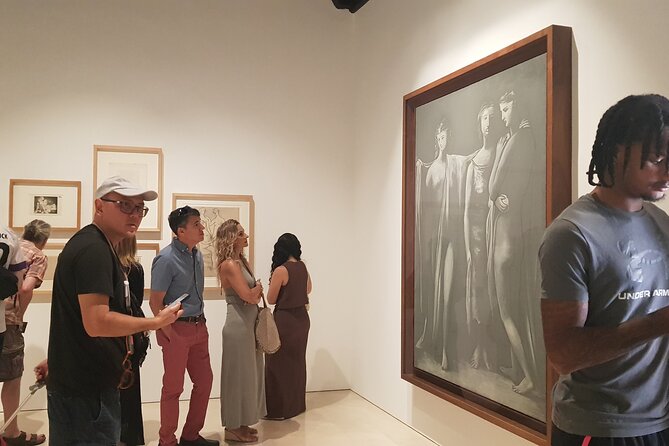
The visit begins with a short introduction in the courtyard. This is a sensible start. Picasso’s art can feel confusing if you walk into the galleries without a basic map of his life and working methods.
Mónica uses the opening to set up the museum and the artist. The aim is not to burden you with a long lecture before the art begins. It is to give you enough background to understand why the works are arranged as they are and how the different periods connect.
That context is especially useful if Picasso is not your favorite artist. One review makes clear that the guide helped turn a difficult subject into something an eight-year-old could follow. That suggests Mónica adjusts her explanations rather than assuming everyone arrives with a formal art background.
You should still expect art discussion, not a general sightseeing walk. The best fit is someone who wants help looking at paintings and understanding Picasso’s development, but who does not want a long academic seminar.
Following Picasso’s changing styles in one hour
The core of the experience is a visit through the permanent collection. Mónica provides a synthesis of Picasso’s work, techniques, and styles. The value is in the connections between the pieces.
You may see how his treatment of people changes, how family portraits fit into his wider work, and how different materials affect what he could do. The collection’s mix of paintings, sculpture, prints, and ceramics helps you compare his choices instead of viewing his career as a series of isolated periods.
A guide can also explain why works have been grouped together. That organization is not always obvious in an art museum. With help, a room of strange angles and broken forms becomes part of a larger discussion about Cubism, Picasso’s life, and the way he challenged conventional ideas of representation.
Mónica’s style appears to be especially strong at this point. She is described as clear, polite, enthusiastic, and easy to follow, with just the right amount of detail for people who are interested but not expert in art. She also answers questions, which is important because Picasso often raises more questions than he settles.
The one-hour limit keeps the visit manageable. You get a guided framework without spending half a day in galleries. Still, an hour goes quickly. If you want time to stop at every work, read every label, and visit the other museum areas, you should plan to stay after the guide finishes.
A few more Malaga outings worth comparing
- Malaga: Picasso Museum Guided Tour with Skip-the-Line Ticket
★ 4.8 · 485 reviews - Skip the Line: Malaga Automobile and Fashion Museum Entrance Ticket
★ 4.5 · 379 reviews - Málaga: Carmen Thyssen Museum Ticket
★ 4.6 · 245 reviews - Málaga: Picasso Birthplace Museum Ticket & City Audio Guide
★ 4.1 · 158 reviews
Why the famous paintings may be missing
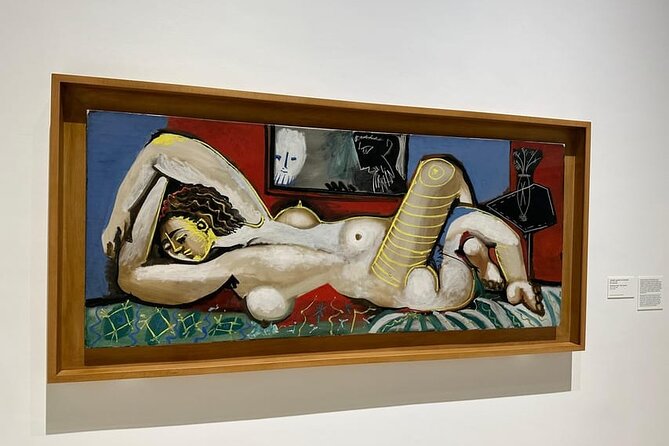
This is the most important expectation to set. You will not necessarily see Picasso’s most famous paintings here.
Many of his best-known works are held by major museums or private collections elsewhere. The Málaga collection focuses on works connected to the Picasso family, including pieces that remained unsold during his lifetime. Those works may be less familiar, but that does not make the visit unimportant.
Think of it as a chance to see the artist’s range rather than a display of greatest hits. You might find the paintings less immediately recognizable, but the combination of lesser-known pieces and Mónica’s explanations can make the larger story easier to grasp.
If you are visiting only to see one iconic Cubist painting, check the museum’s current display before booking. If you want to understand Picasso’s changing interests and working habits, this format makes more sense.
One rating of 3 out of 5 raised exactly this concern, while the guide’s response explained the family-collection focus. That exchange gives you a fair picture of the tradeoff: the museum can offer breadth and intimacy, but not every famous image associated with Picasso.
What happens after the guided hour
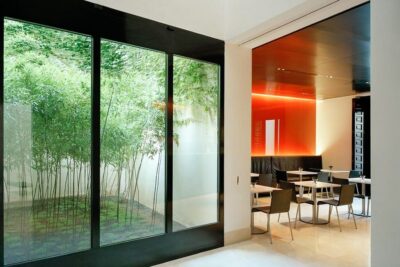
At the end of the guided portion, Mónica lets you continue on your own. You can look at the temporary exhibitions, visit the archaeological site, sit in the garden-cafeteria, browse the shop, or spend time in the bookstore.
This makes the one-hour tour more flexible than the headline duration suggests. You receive a structured introduction, then decide how much longer the museum deserves. One review says about two hours is enough to gain a sense of Picasso’s scope and legacy. That is a reasonable planning guide if you want to stay for a while after the tour.
The optional extra time is also useful if the group pace is faster or slower than your own. During the guided hour, you follow Mónica’s route. Afterward, you can return to a work that caught your attention, move through a temporary show, or simply take a break.
The garden-cafeteria and bookstore are not part of the guided art explanation, but they give you a way to extend the visit without adding another activity to your schedule. The shop may also appeal if you want a book or small souvenir connected to Picasso.
Is $54.01 a fair price?
At $54.01 per person, this is not the cheapest way to enter an art museum. The value rests on the guide, the small group, and the time you save trying to make sense of the collection alone.
You are paying for about one hour of guided interpretation, with admission included. If you already know Picasso’s career well and prefer to read labels quietly, the extra cost may not feel worthwhile. You can probably see more at your own pace without a guide.
I think the price makes better sense for a short stay in Málaga, a first visit to the museum, or anyone who wants a clear explanation in English. A focused tour can prevent you from wandering through rooms without understanding how the pieces relate.
The small group also matters. A 10-person maximum is more personal than a large museum group, and the format leaves room for questions. You are not buying private access, but you are getting a closer guide-to-group ratio than a standard crowded walk.
The activity is often booked about 13 days ahead, so do not leave it until the last minute if your Málaga dates are fixed. Free cancellation is available up to 24 hours before the start time. A cancellation made inside that window is not refunded, and late changes are not accepted.
Who will get the most from this tour?
I would recommend it most strongly to:
- First-time Picasso visitors who want help with the major periods and ideas.
- People with limited time in Málaga who want a one-hour introduction.
- Families, including children old enough to discuss pictures and stories.
- Art lovers interested in less familiar works and different media.
- Visitors who prefer a small English-language group.
- Anyone who wants to ask questions rather than rely only on wall labels.
It is less suitable if you want a long, slow museum study or only want to see Picasso’s most famous paintings. It is also not a broad Málaga city tour. The focus stays on the museum and the artist.
The physical demand should be moderate, according to the activity details. Service animals are allowed, and the museum is near public transportation. No special mobility details are provided, so you should contact the provider directly if you need precise information about access inside the museum.
A practical plan for the visit
Before you go, decide how much time you want beyond the guided hour. If your schedule is tight, the tour gives you a useful overview and gets you back to the city center after roughly an hour. If you like museums, allow about two hours so you can continue independently.
Bring your questions. Picasso’s changing styles, family portraits, Cubism, and the relation between his personal life and art all appear in the tour’s subject matter. Mónica’s explanations are designed to be clear, and several ratings specifically praise her ability to explain difficult ideas in an understandable way.
Do not measure the museum only by the number of famous paintings you recognize. Ask yourself if you want a broader look at Picasso’s working life. The family-collection angle is the reason to come, but it is also the reason the museum may feel different from a major Picasso retrospective.
A microphone and headphones were used for one group, which can help you hear in gallery spaces. Equipment may vary, so do not assume it is guaranteed, but the small group should still help with communication.
Should you book the Picasso Museum tour?
Book it if you want a clear, personal introduction to Picasso and value a guide who can connect his life, techniques, family portraits, Cubism, and later work. Mónica’s strong points are her preparation, friendly manner, and ability to explain art without making the visit feel like a lecture.
Before booking, accept two limits: the guided part lasts only about an hour, and the museum is not built around Picasso’s most famous masterpieces. If those conditions suit you, the $54.01 price is reasonable for a small English-language group with admission included.
If you are mainly hunting for iconic paintings, visit the museum’s current collection information first. If you want to see a less familiar side of Picasso and leave Málaga with a better sense of how his art changed, this tour is a sound choice.
FAQ
Where does the tour meet?
The meeting point is at the main entrance of Museo Picasso Málaga, Palacio de Buenavista, Calle San Agustín 8, in Málaga’s central district.
How do I recognize the guide?
Guide Mónica says she carries a blue fan and her guide card. Her picture is also included with the activity information.
What language is the tour offered in?
The tour is offered in English.
How long does the guided visit last?
The guided portion lasts approximately one hour.
Is museum admission included?
Yes. Admission to Museo Picasso Málaga is included.
How large is the group?
The activity states a maximum of 10 people.
What can I do after the guided portion?
You can continue independently through the temporary exhibitions, archaeological site, garden-cafeteria, shop, and bookstore.
Is the museum near public transportation?
Yes. The meeting point is near public transportation.
What is the cancellation policy?
You can cancel up to 24 hours before the start time for a full refund. Cancellations or changes made less than 24 hours before the experience are not accepted for a refund.
Just added around Malaga
- San Miguel Cemetery Tour of Malaga★ 5.0 · 3 reviews
- A Self-Guided Tour of Ancient Malaga’s History★ 4.5 · 3 reviews
- MALAGA: ULTIMATE FLAMENCO & TAPAS TOUR★ 5.0 · 3 reviews
- Private Winery Tour and Visit to Ronda★ 5.0 · 3 reviews
- Ronda and Setenil from la Costa del Sol★ 3.8 · 3 reviews
- From Nerja/Almunecar: Sierra Nevada and Alpujarra day trip★ 4.0 · 3 reviews
- From Seville: Ronda and Setenil de Las Bodegas Private Tour★ 5.0 · 3 reviews
- Private tour in Malaga from Costa del Sol★ 4.5 · 3 reviews
Picasso Museums and Art, compared.
Picasso Museum Guided Tour with Skip-the-Line Ticket
Read our review →
Skip the Line: Malaga Automobile and Fashion Museum Entrance Ticket
Read our review →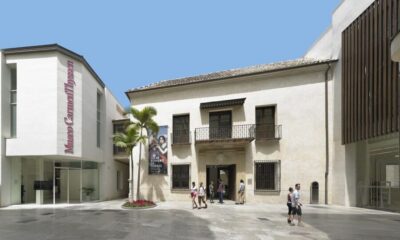
Picasso Birthplace Museum Ticket & City Audio Guide
Read our review →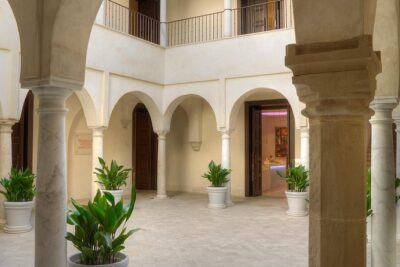
Browse the lists this tour appears in