
Reviewed · CITY SIGHTSEEING TOURS
Antequera Monumental with entrance tickets to dolmens and town
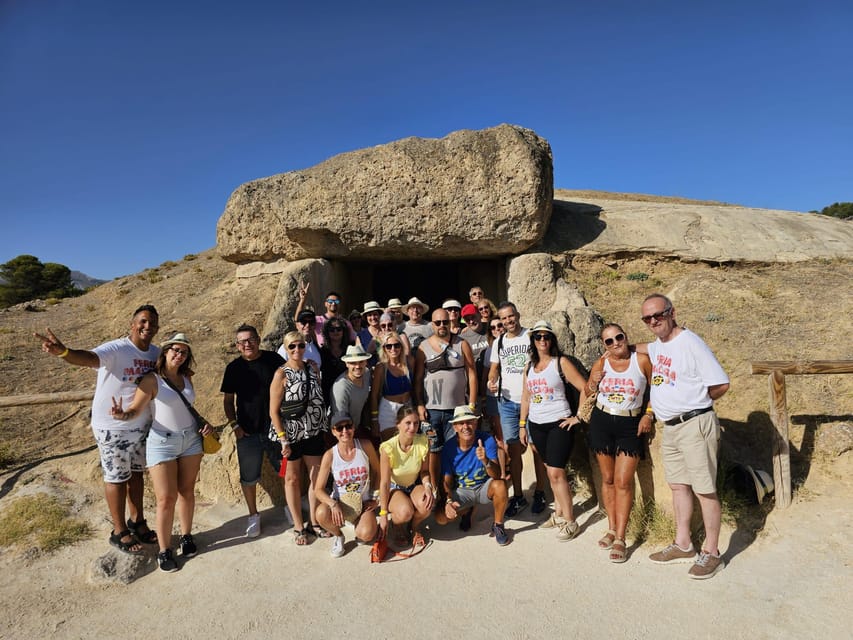
Antequera’s great surprise is hidden in plain sight: its 6,000-year-old dolmens, including Menga, described as Europe’s largest. This three-hour visit joins those prehistoric burial chambers to a guided walk through the old town, so you get two very different sides of the city in one outing.
I like the clear story the tour tells, from the archaeological museum and ancient tombs to churches, castle walls, and Roman remains. I also like the price: at $31 per person, it can be good value if you want entrance arrangements and a guide without paying for a full-day excursion.
The main caution is reliability. The experience has received a mixed overall score, with several excellent reports but also one cancellation and one case where the guide did not appear. The tour is in Spanish, and you must move between the dolmens and Plaza del Coso Viejo on your own.
In This Review
- Key points to know before booking
- Why Antequera’s dolmens deserve your first hour
- The museum gives the monuments a human scale
- Moving from the dolmens to Plaza del Coso Viejo
- San Sebastian and the center of Andalusian roads
- Climbing to the upper town and the Arch of the Giants
- Roman baths beside the castle walls
- What $31 buys you
- Language, guide quality, and the reliability question
- Who will enjoy this three-hour route
- Should you book Antequera Monumental?
- FAQ
- Where does the tour begin?
- How long is the experience?
- Do I travel with the group between the dolmens and the old town?
- What language is the tour in?
- Which admissions are included?
- Is parking available near the second meeting point?
Key points to know before booking
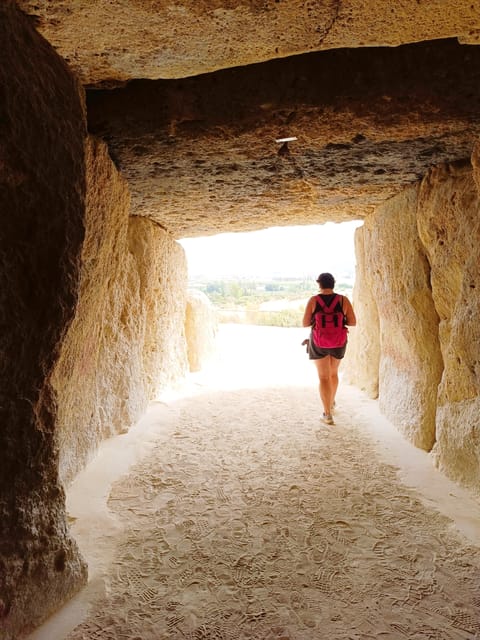
- Menga and Viera are the main event: You enter the mortuary galleries of two prehistoric dolmens at a UNESCO World Heritage archaeological site.
- The tour has two separate meeting points: Begin at the dolmen museum, then make your own way to Plaza del Coso Viejo for the town walk.
- The old town portion lasts 105 minutes: Expect churches, viewpoints, narrow streets, the Arch of the Giants, Alcazaba, and Roman baths.
- The tour is conducted in Spanish: Some material is presented in its original language, so basic Spanish will help.
- Sandra is a name worth requesting if available: A French-language review specifically praised her discovery tour of Antequera and its charms.
- Allow time for parking and the transfer: The suggested parking area is the Llano de la Moraleda, a short walk from Plaza del Coso Viejo.
Why Antequera’s dolmens deserve your first hour
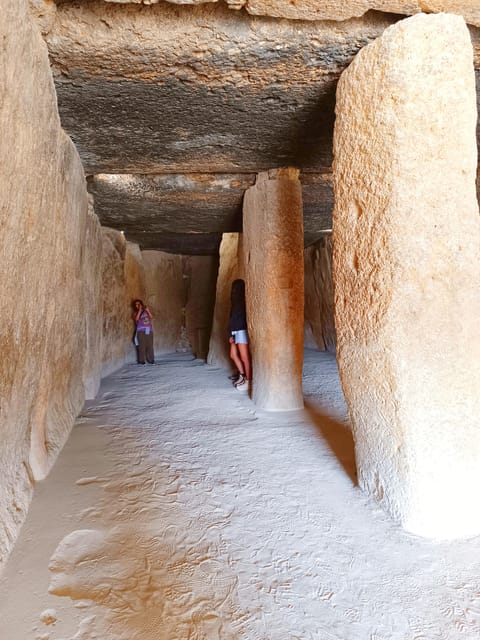
The tour begins at the Archaeological Site of the Dolmens of Antequera. You meet the guide at the reception desk of the site museum, collect your tickets, and start with an introduction before entering the prehistoric monuments.
This order makes sense. The museum gives you a basic frame for what you are about to see, rather than sending you directly into a dark stone chamber with no context. You then enter the mortuary galleries of the Menga and Viera dolmens, both connected with burial practices from more than 6,000 years ago.
Menga is the star. It is described as the largest dolmen in Europe, and its scale is striking because the builders worked with huge stones long before modern machinery. The point is not simply to admire the size of the blocks. A good explanation should help you think about the labor, planning, beliefs, and community needed to create such a structure.
Viera offers a different experience. Its gallery gives you another view of how these monuments were designed as burial spaces. Seeing both matters because you can compare their forms instead of treating the site as a single ancient monument.
The dolmens are not just old stones beside a road. They are a necropolis, a place tied to death and ritual, and the guide’s introduction is meant to explain why this location mattered to the people who built it. You should expect the subject to be archaeological and solemn rather than theatrical.
The first section is scheduled for about one hour. That is enough for an organized introduction and entry into the two dolmens, but it is not a long archaeological seminar. If prehistoric monuments are your main reason for coming to Antequera, you may wish you had extra time to study the museum displays on your own.
More Antequera and El Torcal days:
- From Málaga: Caminito del Rey & Antequera: Dolmens and free time
★ 4.9 · 605 reviews - Antequera: Dolmens and El Torcal Tour with Transfer
★ 4.8 · 124 reviews - Guided tour of the Dolmens and El Torcal
★ 5.0 · 94 reviews
The museum gives the monuments a human scale
The archaeological museum is part of the opening visit, and its role is important. Large megalithic stones can leave you impressed but puzzled. Museum material helps connect the structures to the people who made and used them.
You will meet the guide at the museum reception, not at the town square. That detail matters because the first part begins at the dolmen complex and the second part begins elsewhere. Check the starting point carefully when booking, especially if you are arriving by car or public transport.
The included entrance is a practical benefit. You do not need to arrange separate admission to the dolmen visit, and the tour combines the museum with the monuments in one compact block. Other entrance fees are not included, so do not assume every interior mentioned during the town walk comes with a separate ticket.
The archaeological setting is also a good reason to start early in your Antequera plans. Once you have seen Menga and Viera, later sights in the old town feel less isolated. The city becomes part of a much longer story rather than just another collection of Andalusian buildings.
Moving from the dolmens to Plaza del Coso Viejo
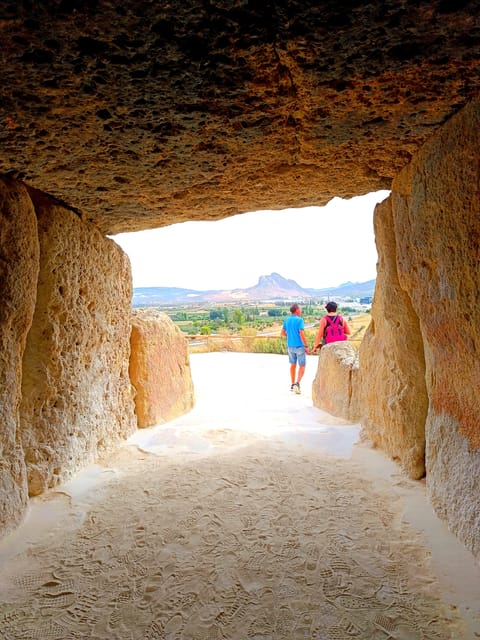
After the first visit, the group does not stay together for a guided transfer. Each person makes their own way to Plaza del Coso Viejo, where the historic center tour continues.
The transfer is listed as about 10 minutes, but the practical time depends on how you are moving and how quickly you find the next meeting point. This is the one part of the schedule that requires your attention. Do not wander off for lunch or begin sightseeing elsewhere unless you are certain you can return on time.
For drivers, parking is suggested at Llano de la Moraleda, behind the convent of the Discalced Carmelite nuns. It is only a few minutes on foot from Plaza del Coso Viejo, which makes that area useful for the second half of the tour. The information provided does not give a parking price or guarantee spaces, so treat it as a location tip rather than a reservation.
Plaza del Coso Viejo is beside an equestrian sculpture and provides a natural reset between the two sections. The dolmens feel open and archaeological. The square puts you into the built city, where the guide can explain how Antequera developed around its religious buildings, routes, and hilltop defenses.
San Sebastian and the center of Andalusian roads
From the square, the guide leads you toward Plaza de San Sebastian. This is presented as the center of Andalusian roads, a useful clue to Antequera’s geographic importance.
The main stop here is the Church of San Sebastian. The guided entrance is included, so you can look at the interior details while hearing how the church fits into the city’s story. The appeal is not limited to decoration. Churches in Spanish towns often reveal how civic life, religion, and local power were organized, and San Sebastian gives the walking tour an interior pause after the open plazas and streets.
The town portion lasts about 105 minutes in total. That sounds generous, but the route covers a lot: San Sebastian, the upper town, viewpoints, narrow streets, the Arch of the Giants, the Alcazaba, Santa Maria la Mayor, Roman baths, castle walls, and the Convent of the Discalced Carmelite nuns.
You should expect a brisk orientation rather than a slow art-history class. The guide’s job is to connect the pieces and help you understand what you are seeing. If you want to spend long periods inside each church or take careful architectural photographs, three hours may feel tight.
More Antequera sightseeing tours:
- Malaga: City Sightseeing Hop-On Hop-Off Bus Tour
★ 4.0 · 2,619 reviews - From Malaga and Costa del Sol: Gibraltar Sightseeing Tour
★ 3.9 · 1,586 reviews - Malaga: Private City Tour by Eco Tuk Tuk
★ 4.9 · 1,319 reviews - Malaga City Tour 2 Hours Monumental Segway Tour
★ 5.0 · 896 reviews
Climbing to the upper town and the Arch of the Giants
The route heads uphill from the central area. This is where Antequera’s character changes. White houses, historic churches, narrow lanes, and viewpoints come together as you gain height.
The climb is part of the experience, but it is also the main physical consideration. The schedule does not describe the route as difficult, yet the upper town and castle area require walking uphill and then descending. Wear comfortable shoes, and do not treat this as a flat city stroll.
The viewpoints are valuable because they let you see how churches and monuments rise above the white houses. You are not only entering individual buildings. You are also learning how the town is arranged, with the older defensive and religious areas above the lower streets.
The Arch of the Giants marks the way toward the Alcazaba. Its name gives you a sense of scale and ceremony, and passing through it helps connect the modern street to the fortified upper town. The guide can explain the relationship between the arch, the castle area, and the city’s old defenses.
The route also includes the Royal Collegiate Church of Santa Maria la Mayor. Even if the schedule allows only a brief look, its position in the upper town makes it a key part of the city walk. The provided details do not promise a guided interior entrance there, so think of it as a major sight along the route rather than assume a separate ticket is included.
Roman baths beside the castle walls
The Roman baths add another time layer to the walk. After prehistoric dolmens and medieval or early modern churches, you encounter remains from the Roman period.
That sequence is one of the tour’s best qualities. You are not seeing Antequera through a single era. In a short distance, the story moves from prehistoric burial monuments to Roman public life, Christian churches, hilltop defenses, and later convent buildings.
The baths are included in the guided visit, but the information does not specify the exact condition or extent of the remains. Expect an archaeological stop rather than a large reconstructed complex. Their value comes from showing that the area continued to matter long after the dolmens were built.
The route then goes down along the castle walls toward the Convent of the Discalced Carmelite nuns. This descent brings you back toward the old bullring, where the visit ends. Ending there gives you a useful point from which to continue exploring or return to your car at Llano de la Moraleda.
The final stretch is not filler. Walking down the walls gives you another angle on the upper town and helps you understand the defensive position of the Alcazaba. You will also finish near the same general area as the second meeting point, which keeps the logistics manageable.
What $31 buys you
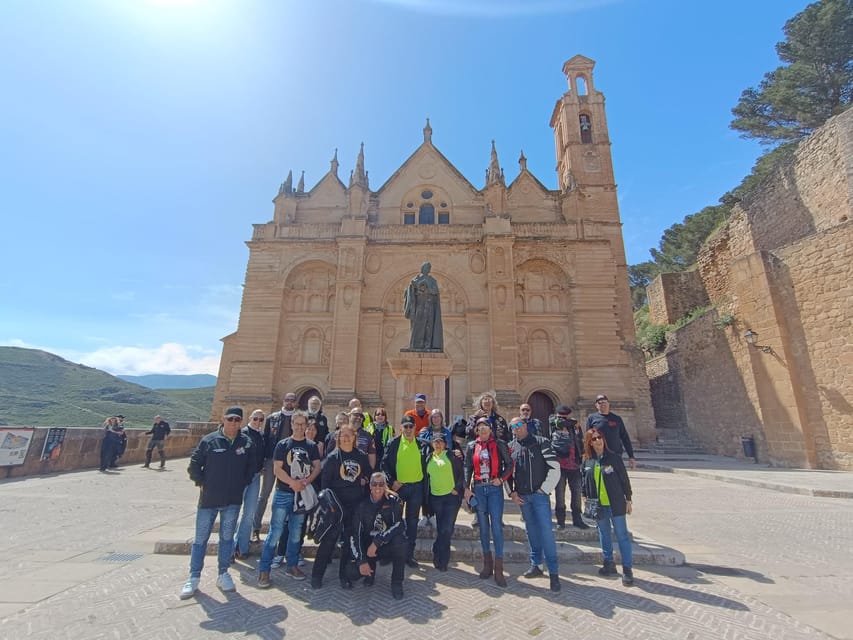
At $31, the value depends on how much use you make of the guide. The price includes the guided dolmen visit, free admission to that archaeological site, the archaeological museum entrance, the San Sebastian church entrance, the Roman baths, and the historic center walk.
That is a solid package for three hours if you would otherwise pay for several admissions and try to connect the sites yourself. The guide also saves you from having to build a route through a hilltop town whose monuments are spread across different levels.
The value is weaker if you want a private, slow-paced visit or extensive time in the museum. The experience is in Spanish, and the itinerary is full. You are paying for a structured introduction to Antequera, not unlimited time at every stop.
Drinks are not included. That is a minor cost, but the tour covers walking and an uphill section, so bring water or plan to buy one before or after the visit. Other entrance fees are also excluded, meaning you should ask the provider exactly which interiors are covered if you want to add more sights.
Language, guide quality, and the reliability question
The live guide speaks Spanish, and some content is shown in its original language. If you understand Spanish, this format should give you the fullest version of the explanations. If you do not, you may still appreciate the monuments, but the tour’s value will depend more on visual interest than on detailed interpretation.
Sandra is the guide name connected with the strongest personal praise in the supplied feedback. If the provider allows guide requests, asking if Sandra is available could be sensible. The information does not guarantee that she leads every departure, so treat her name as a useful possibility, not a promise.
The feedback is mixed overall, with a rating of 3 from six reviews. Two positive experiences specifically point to the guide and the pleasure of discovering Antequera’s charms. One French-language response recommends Sandra, while another Spanish response focuses on Torcal de Antequera rather than clearly describing this exact route.
You should also take the two serious service complaints seriously. One booking was reported as canceled, and another person said the guide never appeared. The stated free-cancellation policy allows you to cancel up to 24 hours before the start for a full refund, and the reserve-now-pay-later option reduces the need to pay upfront. Still, confirm the meeting details close to the date and keep the provider’s contact information available.
Who will enjoy this three-hour route
I would choose this experience if you want an efficient first look at Antequera and prefer a guide to explain the links between its monuments. It suits anyone interested in archaeology, religious architecture, Roman remains, and hilltop towns, especially if you have limited time.
It also works well as a first visit before exploring independently. After the tour, you will know where the dolmens, upper town, Santa Maria, Alcazaba, Roman baths, and old bullring fit together.
Families with older children may like the variety. The dolmens provide a clear sense of age and scale, while the castle and arch add visual drama. Very young children may find the explanations and church stops less engaging, and the uphill walk may be tiring.
I would hesitate to book it if you need an English-language tour, want guaranteed commentary in another language, or dislike changing meeting points. I would also avoid packing another fixed appointment immediately after the tour. The schedule is compact, and the transfer between sections is your responsibility.
Should you book Antequera Monumental?
Book it if you want the dolmens and historic center in one organized visit for $31, and Spanish is suitable for you. The combination is unusually efficient: you begin with Europe’s largest dolmen, enter Menga and Viera, then move through churches, Roman remains, the Arch of the Giants, and the Alcazaba.
Before paying, confirm the starting time, the exact meeting instructions, and whether Sandra is guiding your departure. Plan your own transfer from the dolmen museum to Plaza del Coso Viejo, wear shoes suited to the uphill route, and leave room in your day in case the schedule shifts.
The mixed service record means I would not make this the foundation of a tightly timed travel day. But if you have some flexibility and want a short, well-planned introduction to Antequera’s oldest and most important sights, it offers good value.
FAQ
Where does the tour begin?
You meet the guide at the reception of the museum at the Archaeological Site of the Dolmens of Antequera.
How long is the experience?
The full activity lasts about three hours. The dolmen visit takes about one hour, followed by a transfer of roughly 10 minutes and a 105-minute guided tour of Antequera.
Do I travel with the group between the dolmens and the old town?
No. After the first visit, each person must make their own way to Plaza del Coso Viejo for the second part of the tour.
What language is the tour in?
The live tour guide speaks Spanish. Some content is shown in its original language.
Which admissions are included?
The experience includes the guided dolmen visit, free admission to the dolmen site, guided entrance to the archaeological museum, entrance to San Sebastian Church, and the Roman baths.
Is parking available near the second meeting point?
You can park at Llano de la Moraleda, behind the convent of the Discalced Carmelite nuns. It is described as only a few minutes’ walk from Plaza del Coso Viejo.
More Entrance Tickets in Antequera
- Caminito del Rey: Guided Tour and Entry Ticket
★ 4.6 · 11,286 reviews - Málaga: Museo Picasso Málaga Entry Ticket
★ 4.4 · 11,138 reviews - Caminito del Rey: Entry Ticket
★ 4.8 · 4,710 reviews - Malaga: Hammam Al Ándalus Entry Ticket with Massage
★ 4.7 · 2,498 reviews
Just added around Antequera
- Antequera World Heritage guided tour guide★ 4.8 · 4 reviews
- Antequera Old Town & El Torcal Experience from Málaga★ 3.7 · 5 reviews
- Walking among Ammonites, El Torcal de Antequera★ 5.0 · 17 reviews
- Private Guided Tour to Torcal de Antequera★ 5.0 · 30 reviews
- El Torcal de Antequera Hike with Transfer★ 5.0 · 33 reviews
- Guided visit to the dolmens of Antequera★ 4.3 · 37 reviews
- From Málaga: Guided Hike in El Torcal de Antequera★ 4.9 · 51 reviews
- From Malaga: Torcal de Antequera Hiking Tour★ 4.8 · 58 reviews
City Sightseeing Tours, compared.

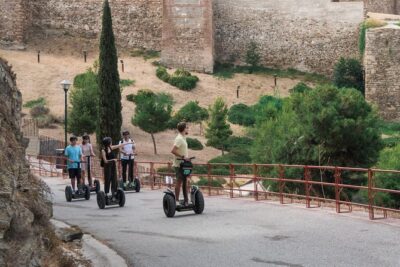
Malaga City Tour 2 Hours Monumental Segway Tour
Read our review →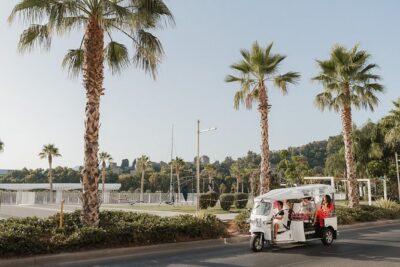
Malaga Expert Tour with Local Guide in Eco Tuk Tuk Private
Read our review →
Highlights, Hidden Gems and Coast Vintage Bike Tour
Read our review →
Browse the lists this tour appears in