
Reviewed · ANTEQUERA TOURS
Guided visit to the dolmens of Antequera
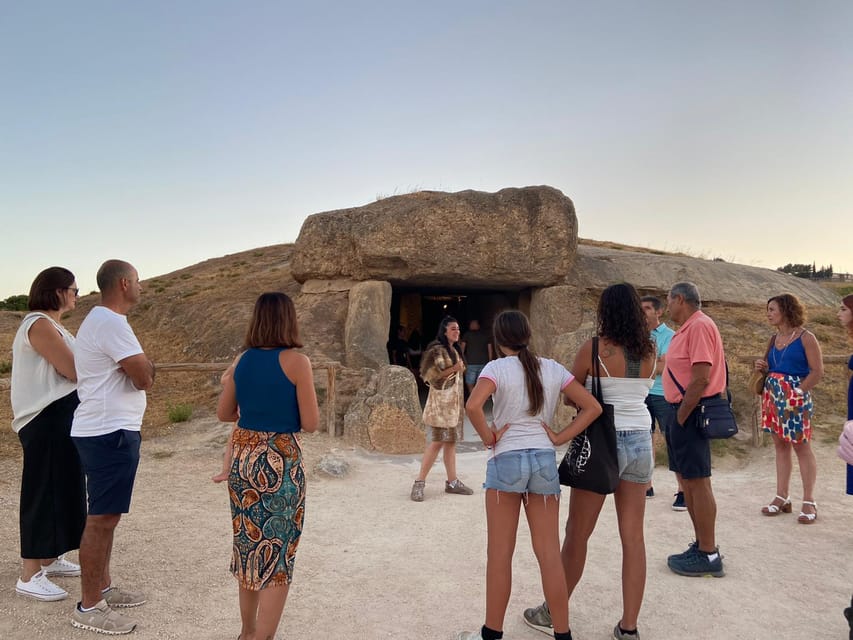
Antequera’s dolmens are not small piles of ancient stones. Menga and Viera are grand funerary monuments, built with huge slabs long before written records. The visit brings you inside their mortuary galleries and places them near the Peña de los Enamorados, one of the area’s most memorable natural landmarks.
I like the compact format and the fact that the museum is part of the experience, not just a ticket desk. I also like that the guide explains both how these megaliths were built and what their funeral rituals meant. The main drawback is the language: the guided visit is in Spanish, and the published timing is slightly unclear, described as one hour in one place and about 75 minutes in the visit outline.
In This Review
- Key points to know before you book
- Why Antequera’s dolmens deserve your time
- Starting at the Dolmen Museum reception
- Entering the Menga dolmen
- Seeing the Viera dolmen and its funerary purpose
- What the Spanish guide adds
- Is $14 good value for one hour?
- The setting beside the Peña de los Enamorados
- Who will enjoy this visit most?
- Booking, timing, and a few practical cautions
- Should you book the Antequera dolmen tour?
- FAQ
- Where does the guided visit begin?
- What monuments are included?
- Is the museum included?
- What language is the tour in?
- How long does the activity last?
- How much does the tour cost?
- Is the site wheelchair accessible?
- Can I cancel for a full refund?
- Is smoking allowed?
Key points to know before you book
- Menga and Viera are both entered, so you see the main funerary chambers rather than only viewing the monuments from outside.
- The Dolmen Museum adds context with its display of funerary offerings and an introduction before you visit the stone galleries.
- The tour is conducted in Spanish, with guide Sandra receiving especially strong praise for clear, lively explanations.
- The setting includes the Peña de los Enamorados, a striking natural reference point across the Vega de Antequera.
- The price is $14 per person, a fair rate if you want interpretation rather than a self-guided visit.
- The visit is wheelchair accessible, and smoking is not allowed.
Why Antequera’s dolmens deserve your time
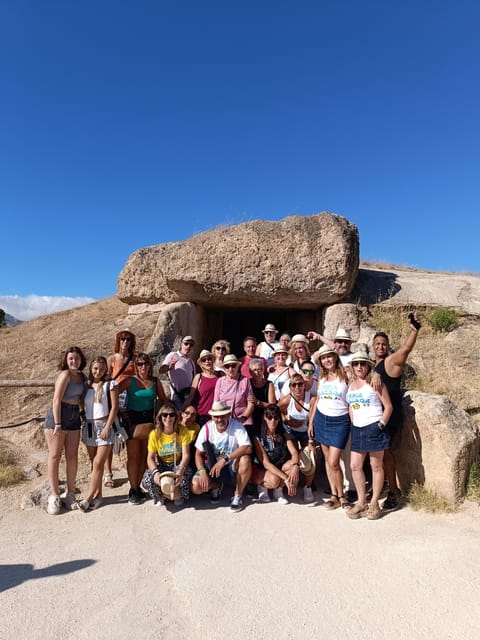
The Dolmens of Antequera offer something different from the usual Andalusian sightseeing circuit. You are not looking at a palace, church, or Roman road. You are entering some of the continent’s earliest monumental architecture, built for funerary use with stone on a massive scale.
That scale is what makes the visit memorable. Menga and Viera were made by people working long before modern machinery, yet the monuments have a deliberate design and a clear purpose. The tour focuses on the practical questions that make prehistoric sites come alive: how the stones were moved, how the chambers were assembled, and how the spaces fit into funeral customs.
I like this approach because the dolmens are easy to underestimate if you simply walk past them with a printed sign. The stones can look plain at first. Once a guide explains the labor and planning behind them, their size and survival take on a different weight.
The monuments are also part of a wider setting. They sit in the Vega de Antequera, in front of the Peña de los Enamorados. That connection between the built funerary spaces and the surrounding countryside gives the visit a sense of place without requiring a long excursion.
More Antequera and El Torcal days:
- From Málaga: Caminito del Rey & Antequera: Dolmens and free time
★ 4.9 · 605 reviews - Antequera: Dolmens and El Torcal Tour with Transfer
★ 4.8 · 124 reviews - Guided tour of the Dolmens and El Torcal
★ 5.0 · 94 reviews
Starting at the Dolmen Museum reception
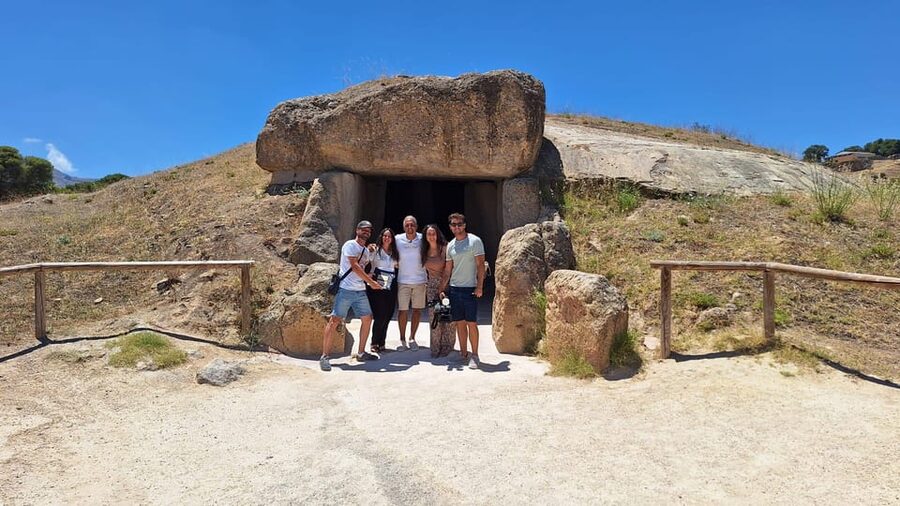
Your visit begins at the reception of the Dolmen Museum, where you meet the guide and collect your tickets. This is a useful arrangement because the museum provides an introduction before you enter the monuments. You do not have to guess where the tour begins or find a guide somewhere on the grounds.
The museum visit includes funerary offerings. The supplied information does not provide a full list of individual objects, so I would not book this expecting a large museum program. Think of it as a short orientation that helps you understand the purpose of the dolmens and the people who built them.
That first explanation matters. Without context, the stone chambers may seem like isolated structures. With it, you can pay closer attention to the form of the galleries, the size of the slabs, and the way the monuments served mortuary purposes.
The tour is live and conducted in Spanish. If you understand Spanish, this is the main reason to choose the guided option over simply visiting on your own. The explanations are meant to make the site readable, not just visible.
Entering the Menga dolmen
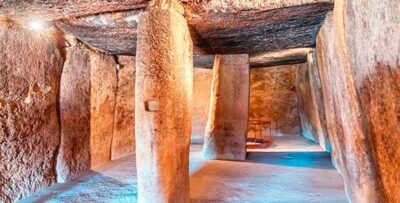
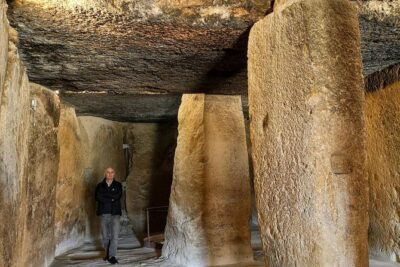
Menga is one of the two main stops, and entry is included. You go into the mortuary gallery rather than viewing the monument only from a distance. That makes the structure’s scale easier to grasp, since you can see the chamber as an enclosed architectural space.
The guide discusses construction, including how these great megaliths were built. That is likely to be the most useful part for many people. A simple description of age does not tell you much. An explanation of the building process helps you picture the effort involved and understand why the site is regarded as an early form of monumental architecture.
Menga is also the place where the visit can feel most physical. You are dealing with stone, weight, enclosed space, and the careful arrangement of a funerary monument. I would give the guide your full attention here, since the meaning comes from the explanation as much as from the stones themselves.
For families, this stop has a clear advantage. Children do not need to know a long list of dates to appreciate a chamber made from enormous slabs. The basic questions are immediate: Who built this? How did they move the stones? Why was the space made? A good Spanish explanation can turn those questions into a short history lesson that does not feel like school.
Seeing the Viera dolmen and its funerary purpose
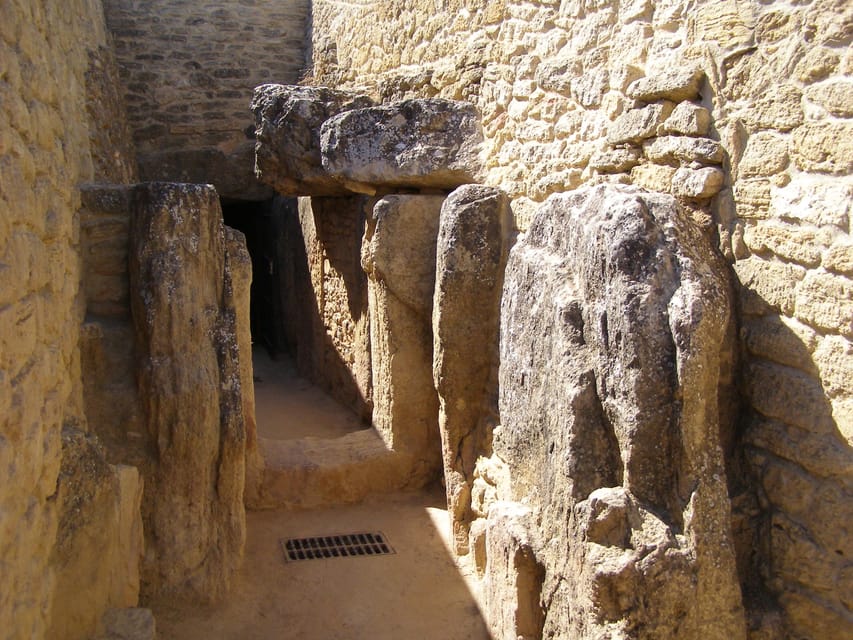
The second main stop is the Viera dolmen, also visited from inside. Having both Menga and Viera in the same guided visit gives you a useful comparison. You are not judging one monument in isolation, and the guide can explain the two galleries as part of the same archaeological setting.
The focus remains on funerary use and ritual. The exact details of the rituals are presented by the guide in Spanish, but the overall idea is clear: these were not ordinary shelters or practical domestic buildings. They were monumental spaces connected with death and remembrance.
I appreciate that the experience joins the museum’s funerary offerings to the actual chambers. The objects provide a small amount of human detail, while the dolmens show the large-scale setting. That combination is more effective than seeing either one alone.
The second monument also helps keep the hour moving. You are not spending the whole visit in one chamber before returning to the museum. The route has a simple rhythm: introduction, first dolmen, second dolmen, and return to the archaeological complex.
Same base, a completely different kind of day:
- Málaga: Dolmens and El Torcal de Antequera Guided Day Trip
★ 4.6 · 80 reviews - Torcal de Antequera Hiking Tour from Málaga
★ 5.0 · 59 reviews - From Malaga: Torcal de Antequera Hiking Tour
★ 4.8 · 58 reviews - From Málaga: Guided Hike in El Torcal de Antequera
★ 4.9 · 51 reviews
What the Spanish guide adds
The guide is not an optional extra here. The included service is a guided visit in Spanish, and the strongest feedback points to the quality of the explanations. Sandra is singled out for making the tour clear, entertaining, and unhurried. One particularly useful detail is that her manner is described as both helpful and personable, which matters at a site where questions can make the difference between a quick look and a meaningful visit.
I would choose this tour if you are comfortable following Spanish explanations. A guided visit can add real value at an archaeological site, but only if you can understand the language well enough to follow the story. If you do not speak Spanish, the monuments may still be worth seeing, but you should not assume that an English explanation is available. The stated tour language is Spanish.
The current overall score is 4.3 out of 5 from 37 ratings. That suggests a generally positive experience, while also leaving room for the practical problems that can occur with bookings. One low rating describes a last-minute failure, and another reflects confusion about being charged when entrance may otherwise be free. I would confirm exactly what your $14 payment covers before booking, especially if you are comparing this tour with a free admission option.
Is $14 good value for one hour?
At $14 per person, the value depends on what you want from the visit. If you only need access to the site and are happy to read the information yourself, paying for a guide may not be necessary, particularly because one booking complaint involved the question of free entry.
If you want the museum introduction, access to both Menga and Viera, and a live explanation of construction and funeral rituals, the price is reasonable. The cost is modest for a short cultural activity, and the tour gives you a clear structure instead of leaving you to work out the significance of the stones alone.
The timing needs a little care. The activity is advertised as lasting one hour, while the visit outline gives 75 minutes. That may simply reflect rounding or the time spent moving between the museum and the monuments. I would allow at least 75 minutes in your day and avoid arranging another appointment immediately afterward.
A short tour can be a benefit in Antequera. You get a focused archaeological visit without giving up half a day. The limitation is that there may not be much time for extended questions or a slow independent look after the guide finishes.
The setting beside the Peña de los Enamorados
The dolmens are located in the Vega de Antequera, in front of the Peña de los Enamorados. That setting is part of the appeal. The monuments are not presented as random stones placed in a modern display area. Their position within the wider surroundings gives the visit a stronger sense of connection between place, memory, and ritual.
The supplied details do not promise a separate viewpoint session or a long outdoor walk, so I would not treat this as a scenic hiking experience. The Peña is a notable part of what you see around the archaeological complex, while the main activity remains the museum and the two dolmens.
I like having this geographic context during an archaeological visit. It helps you understand that the ancient builders were working within a particular setting, not merely creating an enclosed chamber without reference to the world around it.
Who will enjoy this visit most?
I would recommend the tour to adults and children who are curious about prehistoric monuments and want a short, guided introduction. It is especially suitable if you are already visiting Antequera and want an activity that fits neatly into a morning or afternoon.
It also suits you if you prefer explanations to independent reading. The guide covers construction and funerary rituals, and Sandra has been praised for keeping the presentation lively and easy to follow.
You should think twice if you need an English-language guide, since Spanish is the stated language. I would also reconsider if you want a long archaeological program with many separate sites. This is a compact visit centered on the museum, Menga, and Viera.
The site is wheelchair accessible, which makes it a practical choice for visitors who need that feature. Smoking is not allowed. No other restrictions are specified, so you should check directly if you have a particular mobility or access concern beyond general wheelchair access.
Booking, timing, and a few practical cautions
Meet at the Dolmen Museum reception for ticket delivery. Arriving at the museum rather than going directly to one of the dolmens keeps the starting point straightforward.
The tour has scheduled starting times, so you need to check availability for your chosen date. Since the stated duration varies between one hour and 75 minutes, I would leave a little spare time around it.
Free cancellation is available up to 24 hours in advance for a full refund. You can also reserve now and pay later, which is useful if your Andalusia plans are still shifting. Still, I would read the final payment details carefully. The complaints about last-minute failure and confusion over entrance charges make it worth confirming the booking conditions and what the $14 includes.
Some content is presented in its original language. In practical terms, that reinforces the need to expect Spanish rather than an automatic translation.
Should you book the Antequera dolmen tour?
Book it if you want a focused, affordable introduction to two major prehistoric funerary monuments, especially if you understand Spanish. The combination of the museum, funerary offerings, Menga, and Viera gives the hour a clear purpose, and the explanations about construction and ritual add much more than a quick walk around the stones.
I would be more cautious if you are choosing it only for admission. Check whether a free entrance option is available for your date and make sure the paid booking includes the guided service you want. For Spanish speakers, families, and anyone interested in how early monumental architecture was made, this is a strong short stop in Antequera. For non-Spanish speakers, the value is less certain unless you are comfortable exploring with limited guidance.
FAQ
Where does the guided visit begin?
The meeting point is the reception of the Dolmen Museum, where you meet the guide and receive your tickets.
What monuments are included?
The visit includes entry to the Menga dolmen and the Viera dolmen, including their mortuary galleries.
Is the museum included?
Yes. The experience begins with an introduction to the Dolmen Museum and includes a visit to its display of funerary offerings.
What language is the tour in?
The live guided visit is conducted in Spanish. Some content is shown in its original language.
How long does the activity last?
The duration is listed as one hour, while the visit outline describes approximately 75 minutes. Check the available starting time and allow up to 75 minutes.
How much does the tour cost?
The stated price is $14 per person.
Is the site wheelchair accessible?
Yes, the activity is described as wheelchair accessible.
Can I cancel for a full refund?
Yes. You can cancel up to 24 hours in advance for a full refund.
Is smoking allowed?
No. Smoking is not allowed during the activity.
Just added around Antequera
- Antequera World Heritage guided tour guide★ 4.8 · 4 reviews
- Antequera Old Town & El Torcal Experience from Málaga★ 3.7 · 5 reviews
- Antequera Monumental with entrance tickets to dolmens and town★ 3.0 · 6 reviews
- Walking among Ammonites, El Torcal de Antequera★ 5.0 · 17 reviews
- Private Guided Tour to Torcal de Antequera★ 5.0 · 30 reviews
- El Torcal de Antequera Hike with Transfer★ 5.0 · 33 reviews
- From Málaga: Guided Hike in El Torcal de Antequera★ 4.9 · 51 reviews
- From Malaga: Torcal de Antequera Hiking Tour★ 4.8 · 58 reviews
Antequera Tours, compared.
Caminito del Rey & Antequera: Dolmens and free time
Read our review →
Dolmens and El Torcal de Antequera Guided Day Trip
Read our review →
Browse the lists this tour appears in