
Reviewed · MALAGA CATHEDRAL AND OLD TOWN
Ronda Old Town Walking Tour with Audioguide on Your Smartphone
Ronda’s great drama is packed into a small walk: a 120-meter gorge, the monumental Puente Nuevo, Moorish gateways, old bridges, and viewpoints that make you stop mid-sentence. This audio tour gives you a simple route through that story without tying you to a guide’s schedule. The price is remarkably low, and the route covers far more than the famous bridge.
I like two things especially. First, you can pause, replay, or skip the 21 recordings as you please. Second, the walk includes free-to-see landmarks and less obvious corners, including the Minaret of San Sebastian and Puente Viejo. The main caution is practical: this is an app purchase, not a guided meeting. You must download and activate it yourself, and some users have had trouble getting the code to load.
In This Review
- Key points to know
- Why Ronda works so well as an audio walk
- Starting at Plaza del Socorro
- The Balcón del Coño and Ronda’s sudden drop
- Plaza de España and the first view of Puente Nuevo
- Puente Nuevo and the 120-meter gorge
- Mirador de Aldehuela and José Martín de Aldehuela
- Don Bosco House and Mondragon Palace
- Santa María la Mayor and the Minaret of San Sebastian
- Lara Museum and the House of the Moorish King
- Puente Viejo and the Arab Baths
- Puerta de Almocábar and the route’s final stretch
- How the app works in real life
- Who gets the best value from this tour
- Should you book the Ronda audio walk?
- FAQ
- Where does the Ronda walking tour begin?
- How long does the tour take?
- Does a human guide lead the tour?
- What does the purchase include?
- Is the tour available in English?
- Are entrance tickets included?
- Do I need to bring headphones?
- Can I cancel for a refund?
Key points to know
- Ronda’s gorge is the star: Expect repeated views of Puente Nuevo, El Tajo, and the Guadalevín River.
- The walk lasts about 90 minutes: The listed stops are short, usually 10 minutes each, but photographs and optional entries can extend your visit.
- You receive 21 audio recordings: Narration is provided in English by a professional historian through an iPhone or Android app.
- No admission fees are built into the route: The walk takes place on public streets, while optional museums, churches, and historic sites may charge separately.
- Bring your own headphones: Smartphones, earphones, transport, and entry tickets are not included.
- Check the finish point carefully: The booking information says the activity ends at the starting point, but practical feedback describes a finish about 20 minutes away.
Why Ronda works so well as an audio walk
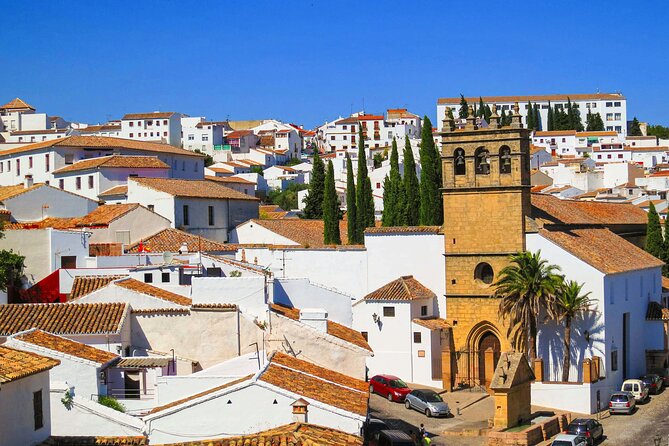
Ronda is one of Andalusia’s easiest towns to understand on foot. The old city sits beside the El Tajo gorge, while the newer streets spread out on the other side. Bridges and viewpoints tie the two areas together, so a route can show you the city’s setting, architecture, and layered past without requiring a bus or long transfer.
That makes this format useful for a day trip. At $6.73 per person, you are paying for structure and explanation rather than admission. The app tells you where to go, identifies buildings with illustrations, and keeps the route available offline. You can stop for coffee, linger at a viewpoint, or take a break when the Andalusian sun gets strong.
The walk is offered in English and includes one year of access. The date and time selected at checkout are approximate, so the guide can be used at a time that suits your visit. That flexibility is more valuable than it may sound if your arrival by car, train, or bus does not go exactly to plan.
Still, you should know what you are buying. There is no human guide at Plaza del Socorro. The experience depends on your phone, the app, your battery, and your ability to follow the map. If you want a lively conversation with a local guide or instant answers to questions, this is not the right format.
More Walking Tours in Malaga
- Málaga: 3-Hour Complete Walking Tour with Tickets
★ 4.5 · 976 reviews - Málaga: Cathedral, Alcazaba, Roman Theater Walking Tour
★ 4.7 · 315 reviews - Malaga Private Walking Tour, Alcazaba & Catamaran Cruise
★ 5.0 · 159 reviews
Starting at Plaza del Socorro
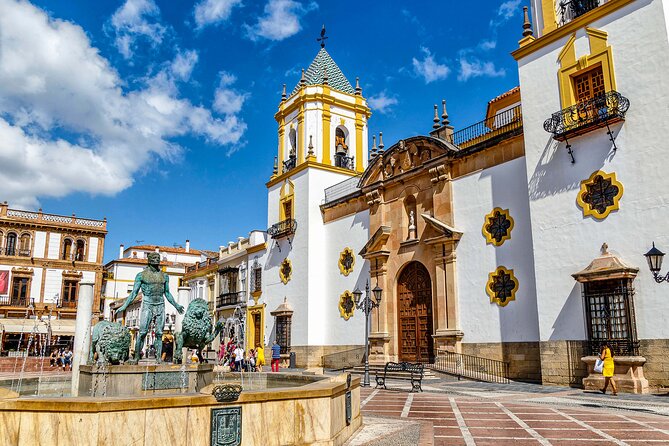
The walk begins at Plaza del Socorro, a pleasant square in central Ronda surrounded by historic façades and cafés. It is a sensible place to get oriented because it feels like part of everyday town life rather than a formal monument courtyard.
The Church of Socorro gives the square its visual focus. The fountain, decorated with Hercules and two lions, adds a small but memorable piece of Andalusian symbolism. Your first recording is likely to help you notice details you might otherwise pass while looking for the next turn.
Allow about 10 minutes here. You can listen, look around, and get your bearings before moving on. If you arrive early, the square also gives you an easy place to settle your app before the route gets more complicated.
The Balcón del Coño and Ronda’s sudden drop
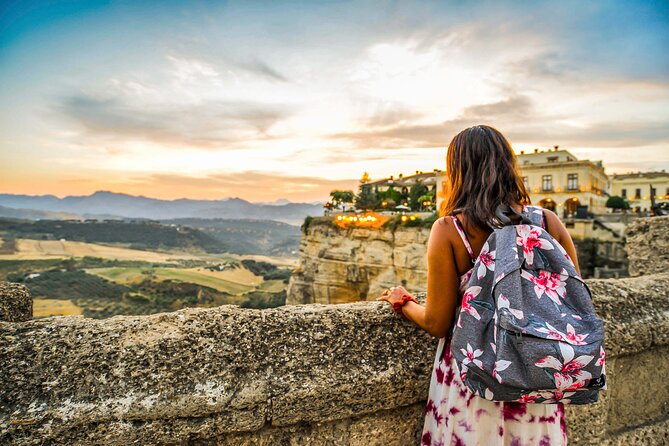
The Balcón del Coño is a quick stop with a memorable name and a serious view. It projects over the gorge and looks toward the Serranía de Ronda mountains, the valley, and Puente Nuevo.
This is one of the places where the audio guide earns its small fee. A map can point you to a viewpoint, but narration gives the setting some meaning. You begin to understand why Ronda’s position on the gorge shaped its streets, bridges, defenses, and reputation.
Give yourself time for photographs, but take care near the edge. The stop is brief on paper, yet you may want longer if the light is good or the gorge is clear. The route involves regular street walking, so comfortable shoes are sensible.
Plaza de España and the first view of Puente Nuevo
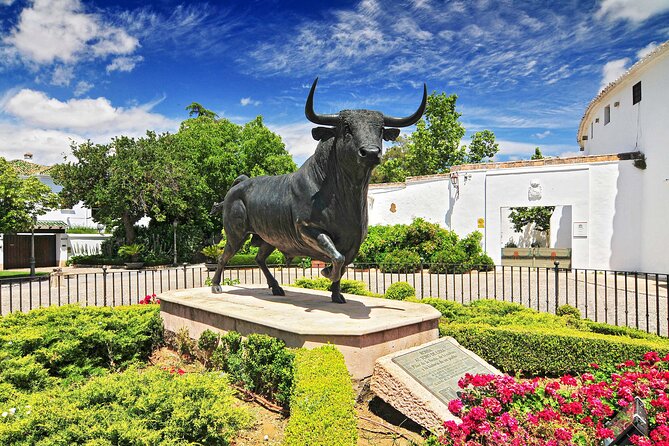
The itinerary description links this stop with the Bullring of the Royal Cavalry of Ronda, but the visit itself focuses on Plaza de España and its position beside the gorge. The square has cafés, restaurants, historic buildings, and the Parador de Ronda, a former town hall with a prominent neoclassical façade.
From here, you can see Puente Nuevo in its urban setting. That matters because the bridge is more impressive once you understand how it connects Ronda’s old and newer districts. You are not simply looking at a photogenic structure. You are seeing the central piece of the town’s layout.
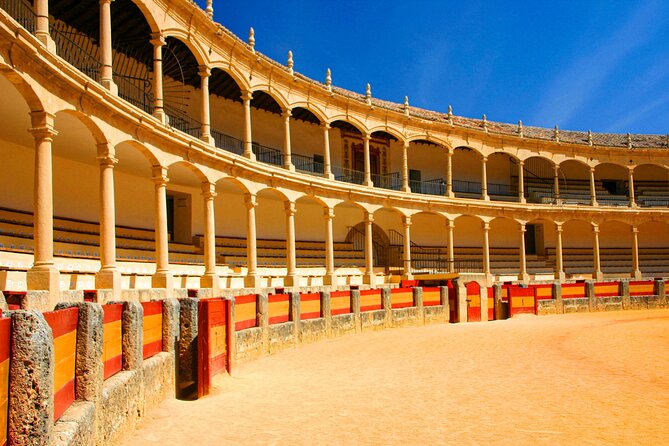
The bullring is associated with Ronda’s long connection to Spanish bullfighting, but an entrance ticket is not included in this walk. One audio note specifically points out that a short tour may leave you wishing for more time at the arena. If that site matters to you, treat it as a separate visit rather than expecting the app route to cover its interior.
More Walking Tours in Ronda
- Ronda: Guided Walking Tour with English or Spanish Guide
★ 4.5 · 423 reviews - Ronda: Guided Walking Tour
★ 4.6 · 104 reviews - Ronda: 2-Hour Private Walking Tour
★ 4.6 · 87 reviews - Ronda, the dreamt city: Private Walking Tour
★ 5.0 · 41 reviews
Puente Nuevo and the 120-meter gorge
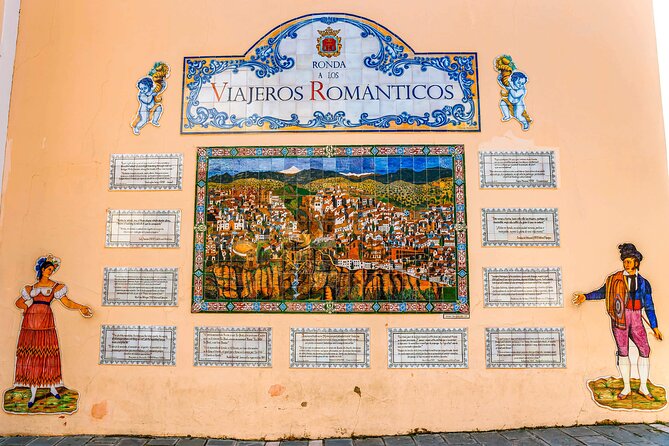
Puente Nuevo is Ronda’s signature sight. Completed in 1793 after 40 years of construction, the stone bridge spans the 120-meter-deep El Tajo gorge and links the old and new parts of town.
The bridge is powerful from several angles. From above, you can watch people cross its broad roadway and look down toward the Guadalevín River. From nearby viewpoints, its central arch appears to grow straight out of the rock. The audio recording should help you connect the engineering achievement with the shape of the city around it.
The scheduled stop is about 10 minutes, but I would not hurry here. This is the place to pause the narration, take several photographs, and look at how the gorge cuts through Ronda. At crowded times, you may need patience to find a clear spot at the railings.
Mirador de Aldehuela and José Martín de Aldehuela
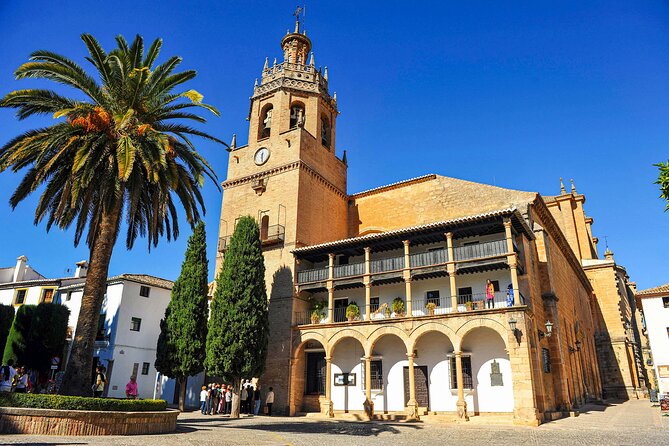
The Mirador de Aldehuela is named for José Martín de Aldehuela, the engineer associated with Puente Nuevo. It offers another view across the gorge, toward the river and the surrounding mountains.
The value of a second viewpoint is that Ronda changes with each angle. Puente Nuevo can look massive from one place and almost delicate from another. The audio stop also gives you a chance to connect the bridge to the person who designed it, rather than treating it as an isolated photo stop.
This is a good point to slow the pace. The listed duration is 10 minutes, but the route is not a race. You have one year to access the audio, so there is no need to force every stop into a strict 90-minute window if you want to return later.
Don Bosco House and Mondragon Palace
Several of the route’s most interesting sites are optional interior visits rather than simple street stops. Casa Museo Don Bosco is an early 20th-century mansion furnished in the style of a wealthy Ronda household. Inside, you might find period rooms, antiques, and detailed azulejo tiles. Its gardens look toward the gorge and Puente Nuevo.
The house gives the old town a human scale. Bridges and fortifications tell you how Ronda was built, but a home shows how an affluent family lived. If you enjoy decorative arts and historic interiors, this is a worthwhile addition. It is not included in the $6.73 price, so check the separate entrance arrangements before committing time.
Palacio de Mondragón presents a much older layer. Its origins reach back to Moorish times, while its later design includes Renaissance and Mudéjar elements. The palace served as a residence for Moorish kings and later the Catholic Monarchs, and it now houses the Municipal Museum.
Expect courtyards, tiled rooms, and gardens with views toward the Serranía de Ronda. This is one of the strongest places to add an entrance if you want more than exterior sightseeing. The audio guide can lead you there, but admission remains your responsibility.
Santa María la Mayor and the Minaret of San Sebastian
The Church of Santa María la Mayor shows how Ronda’s religious buildings changed over time. It began as a mosque and later became a Christian church after the Reconquista. Its architecture combines Gothic, Renaissance, and Baroque elements, with a Mudejar coffered ceiling and a carved altarpiece.
The church is valuable because you can read several centuries in one building. Look for the different styles rather than expecting one uniform design. A bell tower offers broad views of Ronda, but the church entrance is not included in the walking tour price.
Nearby, the Minaret of San Sebastian preserves a piece of the town’s Islamic past. The former mosque tower, with its brickwork and compact form, is a small site compared with Puente Nuevo, yet it helps explain how much of Ronda’s earlier city survives in fragments.
This is a useful reminder not to measure importance by size. The minaret may take only a few minutes, but it adds context to the palace, baths, gates, and other Moorish remains along the route.
Lara Museum and the House of the Moorish King
The Lara Museum occupies an 18th-century palace and takes a different approach from the city’s formal museums. Its collections range from scientific instruments and clocks to firearms and ethnographic objects. One themed section deals with witchcraft and the Inquisition.
That variety can be either a strength or a weakness. If you enjoy unusual collections, this is a lively change from churches and viewpoints. If you prefer a tightly focused museum, the mix may feel scattered. The audio guide can direct you to the building, but the ticket is separate.
Casa del Rey Moro combines gardens, views, and a dramatic descent into the Water Mine. The house was built over the remains of a Moorish palace, while the gardens were designed by French architect Jean-Claude Nicolas Forestier. Steps cut into the rock lead down toward the Guadalevín River.
This is one of the route’s more physically demanding options. The Water Mine involves a long descent and, naturally, an equally long climb back. The site connects legend with engineering, since access to water was central to the survival of a fortified town. Allow extra time and do not treat it as a quick 10-minute stop.
Puente Viejo and the Arab Baths
Puente Viejo is a smaller, older-looking bridge across the gorge. Dating from the 17th century, it connects the old town with newer parts of Ronda and gives you a quieter view of the river below.
Compared with Puente Nuevo, it feels modest. That is precisely why it helps the route. You see that Ronda’s crossing points developed over time, and the town’s story is not limited to one monumental bridge.
The Arab Baths are among the best-preserved Moorish bathhouses in Spain. Dating from the 13th and 14th centuries, they include chambers with horseshoe arches, star-shaped skylights, and brickwork. The design also shows how water was heated and how steam was produced.
This is a strong optional entry for anyone interested in daily life rather than royal buildings. The baths explain social customs, hygiene, and building technology in a direct way. As with the other interiors, the entrance fee is not part of the audio tour.
Puerta de Almocábar and the route’s final stretch
The walk ends at Puerta de Almocábar, a fortified gate dating from the 13th century. Built during the Moorish period, it controlled access to the medieval town and retains the solid arches, stonework, and defensive character of a city entrance.
The gate helps complete the route. You begin in a modern-feeling square, pass through the gorge and central monuments, then finish at a place that shows how Ronda was protected. It is a satisfying final chapter, especially if you have listened to the recordings in order.
There is one important planning issue here. The official end point is described as the original meeting point, Plaza del Socorro, but practical feedback indicates that the route may finish roughly 20 minutes away, creating an extra walk back to a parked car. If you drive, do not assume you will end beside your vehicle. Check the app route on the day and leave time for the return.
How the app works in real life
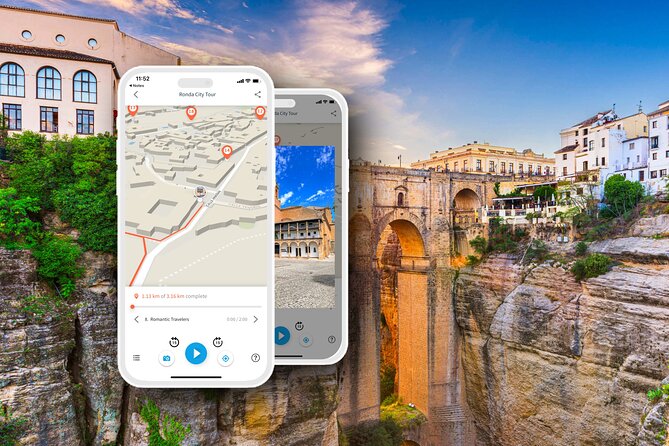
Before setting out, download the audio guide app for iPhone or Android, activate the purchase, and load the route. The offline map is useful because it lets you follow the walk without relying fully on a mobile signal.
Bring your own headphones. The booking includes neither headphones nor a smartphone, and sharing one set can make the experience awkward. One user had activation problems and had to pass a single working set between two people. Another needed support after the purchase did not load intuitively.
I would activate the tour before leaving Plaza del Socorro, while you still have time to solve a problem. Keep the confirmation details available, and contact support promptly if the purchase fails to appear. The low price is attractive, but it also means the experience is only as smooth as the setup.
The tour is listed for a maximum of 20 participants, but because it is self-guided, you are not physically walking as one group. You can move at your own pace, stop for food, or split the route over more than one visit during the one-year access period.
Who gets the best value from this tour
This is a good choice for you if you want a low-cost introduction to Ronda and prefer independence. It suits a first-time visitor who wants a clear route, basic historical context, and the freedom to stop whenever a view catches the eye.
It also works well for a short day trip. The 90-minute outline gives you a framework, while the optional interiors let you expand the visit according to your interests. You can simply walk the public streets, or add Mondragon Palace, the Arab Baths, the Lara Museum, Don Bosco House, Santa María la Mayor, or Casa del Rey Moro.
I would be more cautious if you dislike phone-based tours, have unreliable data or battery access, or want personal interaction. The narration is provided by a professional historian, but you cannot ask follow-up questions. You also need to budget separately for any entry tickets.
At $6.73, the value is strongest when you use it as a town orientation tool, not as a complete Ronda sightseeing package. It points you toward major sights and explains them, but the best interiors require extra time and money.
Should you book the Ronda audio walk?
Book it if you want an inexpensive, flexible route through Ronda’s gorge, bridges, viewpoints, and Moorish quarters. The public-street itinerary covers the essential setting, and the 21 recordings add more substance than wandering from one photo point to the next.
Skip it if you expect a human guide, included admissions, or a perfectly effortless app setup. Download and activate everything before you start, bring headphones, and plan for a possible 20-minute walk back to Plaza del Socorro if you have parked there.
For most independent visitors, the low price makes the gamble reasonable. Just treat the audio guide as a useful companion to Ronda, not a substitute for allowing extra time at the places that interest you most.
FAQ
Where does the Ronda walking tour begin?
It begins at Plaza del Socorro, Pl. del Socorro, 29400 Ronda, Málaga, Spain.
How long does the tour take?
The walking route takes approximately 1 hour and 30 minutes. You may need longer if you enter museums, churches, or other sites, stop for photographs, or pause the recordings.
Does a human guide lead the tour?
No. This is a self-guided experience. No guide will be waiting at the meeting point.
What does the purchase include?
It includes one year of access, 21 audio recordings narrated by a professional historian, the audio guide app for iPhone and Android, landmark illustrations, and an offline map with GPS route guidance.
Is the tour available in English?
Yes. English is the available language stated for this experience.
Are entrance tickets included?
No. The route itself uses public streets and does not require an entry fee, but admission to sites such as museums, churches, and historic buildings is not included.
Do I need to bring headphones?
Yes. You must provide your own smartphone and headphones. Neither is included.
Can I cancel for a refund?
Yes. You can receive a full refund if you cancel at least 24 hours before the experience start time. Cancellations or changes made within 24 hours are not refunded or accepted.
More Guided Walks in Malaga
- El Chorro: Caminito del Rey Gorge Route Guided Walking Tour
★ 4.4 · 753 reviews - Ardales: Caminito del Rey & El Gaitanejo Guided Walking Tour
★ 4.8 · 552 reviews - Guided Walking Tour of the Old Town of Frigiliana
★ 5.0 · 101 reviews - Malaga Private Walking Tour, Alcazaba & Catamaran Cruise
★ 4.7 · 92 reviews
More Old Town Walks in Malaga
- Malaga Bike Tour – Old Town, Marina & Beach
★ 4.7 · 1,150 reviews - From Malaga: Cordoba Day Trip and Mosque-Cathedral
★ 4.5 · 563 reviews - Malaga Tour with Cathedral, Alcazaba and Roman Theatre
★ 4.5 · 548 reviews - Málaga: Historic Center Tour with Local Guide
★ 4.9 · 162 reviews
Just added around Malaga
- San Miguel Cemetery Tour of Malaga★ 5.0 · 3 reviews
- A Self-Guided Tour of Ancient Malaga’s History★ 4.5 · 3 reviews
- Private Winery Tour and Visit to Ronda★ 5.0 · 3 reviews
- Ronda and Setenil from la Costa del Sol★ 3.8 · 3 reviews
- MALAGA: ULTIMATE FLAMENCO & TAPAS TOUR★ 5.0 · 3 reviews
- From Nerja/Almunecar: Sierra Nevada and Alpujarra day trip★ 4.0 · 3 reviews
- From Seville: Ronda and Setenil de Las Bodegas Private Tour★ 5.0 · 3 reviews
- Private tour in Malaga from Costa del Sol★ 4.5 · 3 reviews
Malaga Cathedral and Old Town, compared.
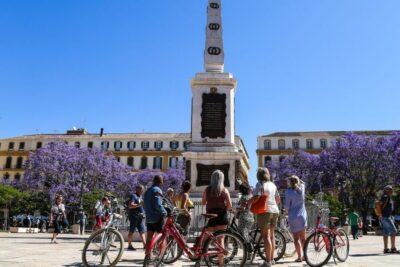
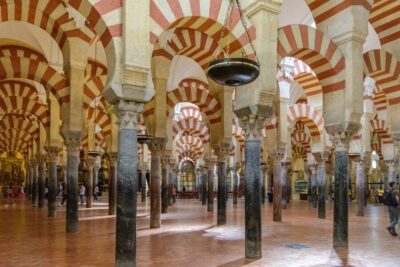
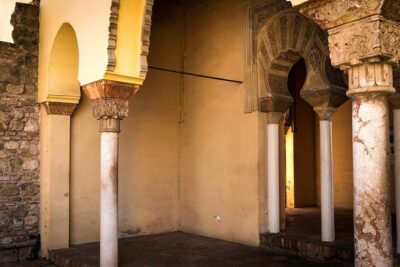
Malaga Tour with Cathedral, Alcazaba and Roman Theatre
Read our review →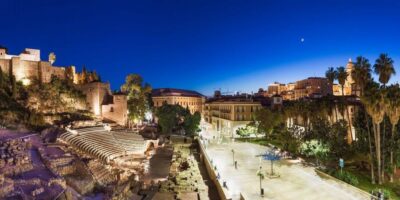
Cathedral, Alcazaba, Roman Theater Walking Tour
Read our review →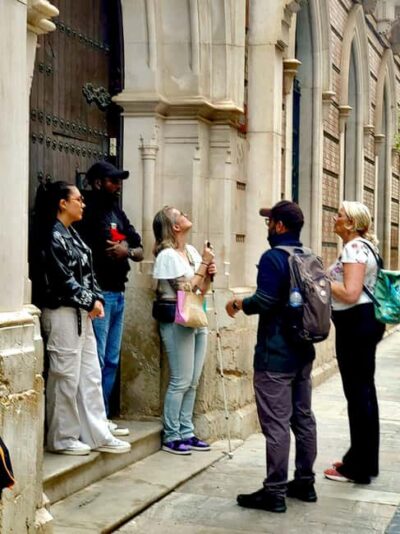
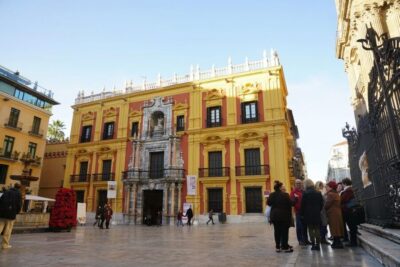
Skip-the-Line Malaga Cathedral Tickets with Tour
Read our review →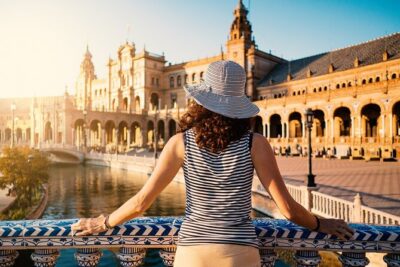
Seville Day Trip with Cathedral Entrance from Malaga
Read our review →
Browse the lists this tour appears in