
Reviewed · MALAGA CATHEDRAL AND OLD TOWN
Málaga: Highlights, Old Town & Viewpoint Walking Tour
Málaga’s best surprise on this two-hour walking tour comes near the end: a short uphill walk leads to a viewpoint over Málaga Bay that many standard city walks skip. Along the way, you move from Roman ruins and Moorish walls to tropical gardens and the modern port, seeing how the city changed over 3,000 years.
I like the tour’s clear route and its useful local advice. I also like that it links the famous sights to the city’s changing identity, rather than treating each monument as an isolated photo stop. The main consideration is the paved uphill hike, which makes this a poor fit for anyone with mobility problems.
In This Review
- Key points at a glance
- Starting beside the White Fountain in Plaza de la Constitución
- Calle Larios and the city’s social center
- Plaza del Obispo and Málaga Cathedral
- Picasso’s Málaga around two compact museums
- Church of Santiago and Málaga’s older street plan
- The uphill path to a Málaga Bay viewpoint
- Fortress walls and life after the reconquest
- Paseo del Parque and the Gardens of the Dark Door
- The Alcazaba and Roman Theatre from street level
- What the two-hour format really gives you
- Price, guide style, and overall value at $46
- Who should book this Málaga walk
- Should you book the Highlights, Old Town and Viewpoint Walking Tour?
- FAQ
- Where does the tour begin?
- Where does the tour finish?
- How long does the tour last?
- What languages are available?
- What sights are included?
- Does the tour enter the museums or monuments?
- Is there an uphill section?
- What should you bring?
- Is the walk suitable for people with mobility impairments?
Key points at a glance
- A rare bay viewpoint: Walk up a paved path for broad views over Málaga Bay.
- Three layers of Málaga: See Roman, Moorish, and Christian-era landmarks in one compact route.
- Old Town orientation: Begin at Plaza de la Constitución and follow Calle Larios into the historic center.
- More than monuments: Visit the Gardens of the Dark Door and Paseo del Parque’s tropical planting.
- Practical local advice: Finish with tips to help you continue exploring Málaga independently.
- Small-group potential: Alicia has led an especially personal outing for just two people.
Starting beside the White Fountain in Plaza de la Constitución
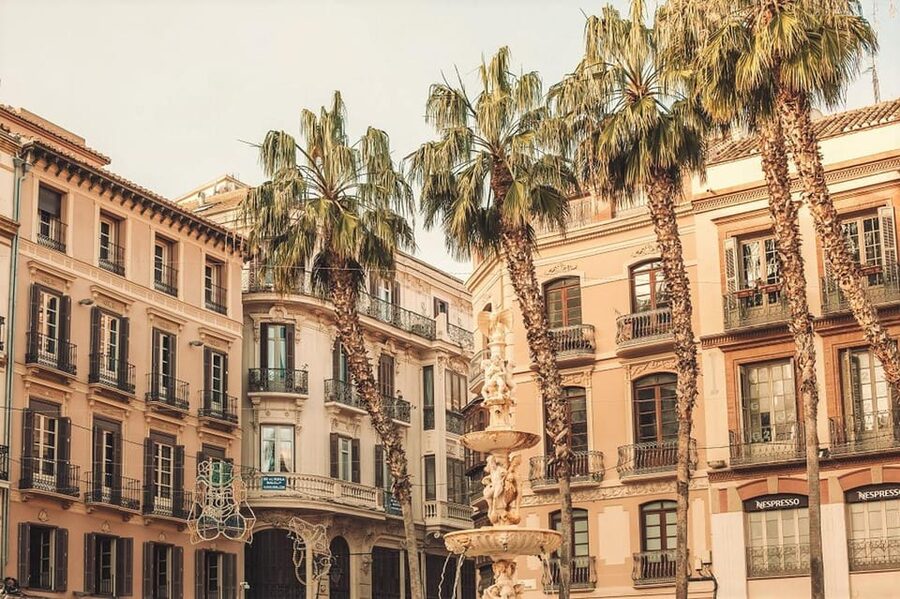
Meet your guide beside the White Fountain, also called Fuente de Genova, in Plaza de la Constitución. This is a sensible starting point because the square sits at the center of Málaga’s pedestrian Old Town, with Calle Larios leading directly away from it.
Your guide speaks English or Spanish. The walk lasts two hours, so the opening explanation needs to be focused. You will not get a long academic lecture on every building. Instead, the tour gives you a working map of Málaga: where the main sights are, how the old center fits together, and what changed as the city moved from ancient settlement to modern cultural destination.
That makes this a useful first-day activity. You can use the information later as you walk on your own, visit museums, or return to a square that caught your eye.
More Walking Tours in Malaga
- Málaga: 3-Hour Complete Walking Tour with Tickets
★ 4.5 · 976 reviews - Málaga: Cathedral, Alcazaba, Roman Theater Walking Tour
★ 4.7 · 315 reviews - Malaga Private Walking Tour, Alcazaba & Catamaran Cruise
★ 5.0 · 159 reviews
Calle Larios and the city’s social center
From the plaza, you head along Calle Larios, Málaga’s famous central street. This is one of the city’s main pedestrian routes and a natural place to begin watching local life.
The value here is not just the street itself. Calle Larios helps you understand how Málaga’s historic center is organized. It connects the main square with the Cathedral area and gives you an easy reference point for later wandering.
I would pay attention to the guide’s practical advice here. The tour is designed to give you suggestions for the rest of your stay, and this is the sort of route where a local guide can point out which streets and plazas deserve a second look.
The pace should be brisk. With only two hours and many stops ahead, you will get orientation and commentary rather than a long pause at every corner.
Plaza del Obispo and Málaga Cathedral

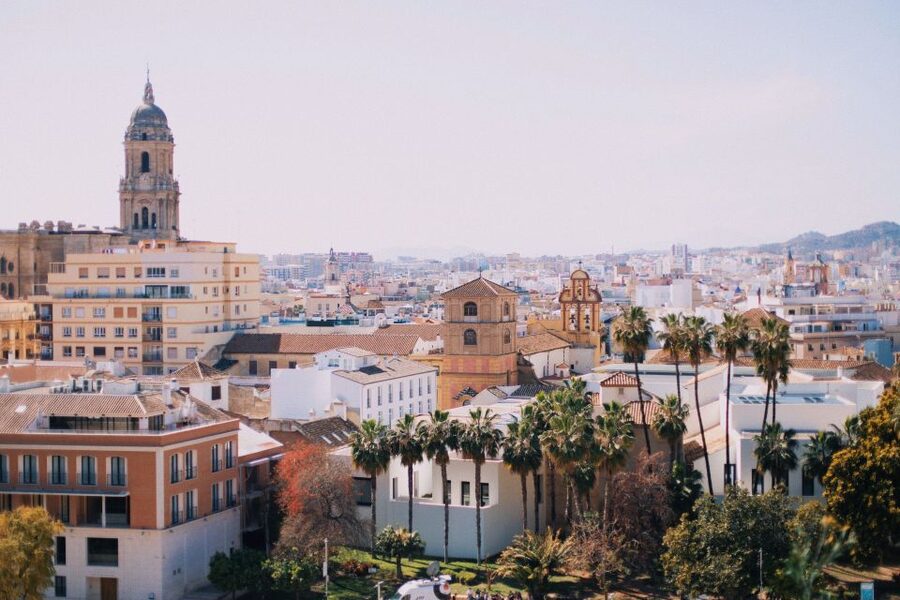
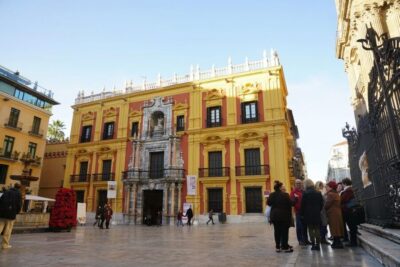
The walk continues to Plaza del Obispo, one of the most attractive open spaces near the Cathedral. You then see Málaga Cathedral, one of the city’s defining landmarks.
The Cathedral is included as a guided sightseeing stop and pass-by, so you should not book this tour expecting an interior visit. That distinction matters. If you want detailed art and architecture inside the Cathedral, plan a separate visit after the walk.
The exterior still gives the guide plenty to discuss. The Cathedral helps explain Málaga’s Christian period and the changes that followed the reconquest. Its presence also shows how the city’s religious and civic center developed around the older streets.
For a first visit, this stop is valuable because it places the Cathedral in context. You are not simply checking off a grand building. You are seeing how it fits into the Old Town, the nearby plazas, and the larger story of Málaga’s changing rulers and traditions.
Picasso’s Málaga around two compact museums
The route passes the Picasso Museum Málaga and the Picasso’s Birthplace Museum. These are important stops for understanding the city’s modern cultural identity, but the tour does not include museum admission or a full interior visit.
That is another point to keep in mind. The guide can show you where these museums are and explain their connection to Málaga, but you will need extra time and a separate ticket if you want to go inside.
The two locations also make a useful contrast. One presents Picasso’s work in a museum setting, while the other connects the artist to his birthplace. Together, they show why Málaga now draws so much cultural tourism.
If you have only a short stay, the guide’s advice can help you decide if one of these museums deserves your own afternoon. If you already plan to visit them, this walking tour gives you a quick orientation before you return on your own.
More old-town walks in Malaga:
- Malaga Bike Tour – Old Town, Marina & Beach
★ 4.7 · 1,150 reviews - From Malaga: Cordoba Day Trip and Mosque-Cathedral
★ 4.5 · 563 reviews - Malaga Tour with Cathedral, Alcazaba and Roman Theatre
★ 4.5 · 548 reviews - Málaga: Historic Center Tour with Local Guide
★ 4.9 · 162 reviews
Church of Santiago and Málaga’s older street plan
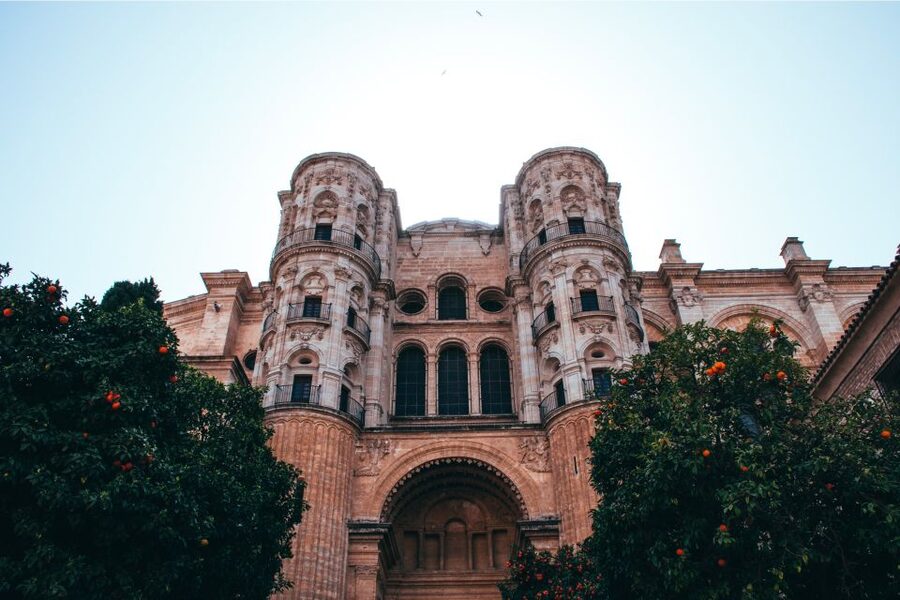
The Church of Santiago comes next, another pass-by stop with guided sightseeing. It sits within the dense Old Town, where narrow Moorish-era streets create a very different feel from the broad pedestrian routes near the plaza.
This part of the walk is where the city’s long timeline becomes easier to picture. Málaga has more than 3,000 years of history, and the old center still reflects layers of different periods. Roman, Islamic, and Christian influences appear close together, even when the buildings themselves belong to separate eras.
Do not expect every alley to receive a detailed architectural reading. The schedule is tight. Instead, use this section to notice the street pattern, the shifts in scale, and the way major monuments appear suddenly between narrow lanes.
That contrast is part of Málaga’s appeal. You get a city that feels both compact and historically deep without needing a bus ride between the main sights.
The uphill path to a Málaga Bay viewpoint

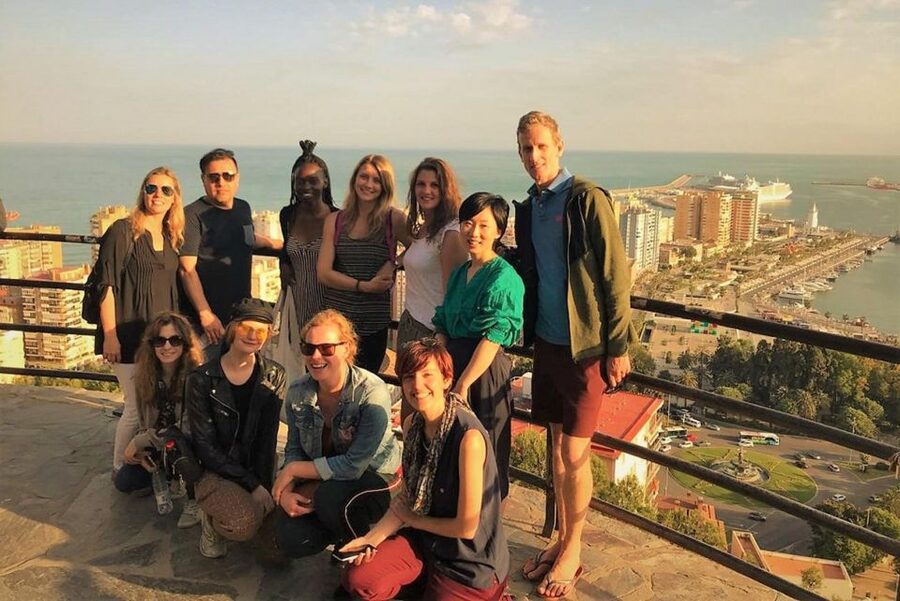
The most distinctive part of the tour is the short hike to a viewpoint. The route follows a paved path uphill, and the guide points out remains of the fortress wall along the way.
This is not a mountain trek, but it is still an uphill walk. Wear comfortable shoes and bring water. Anyone with mobility limitations should choose another way to see the city, since the activity is specifically not suitable for people with mobility impairments.
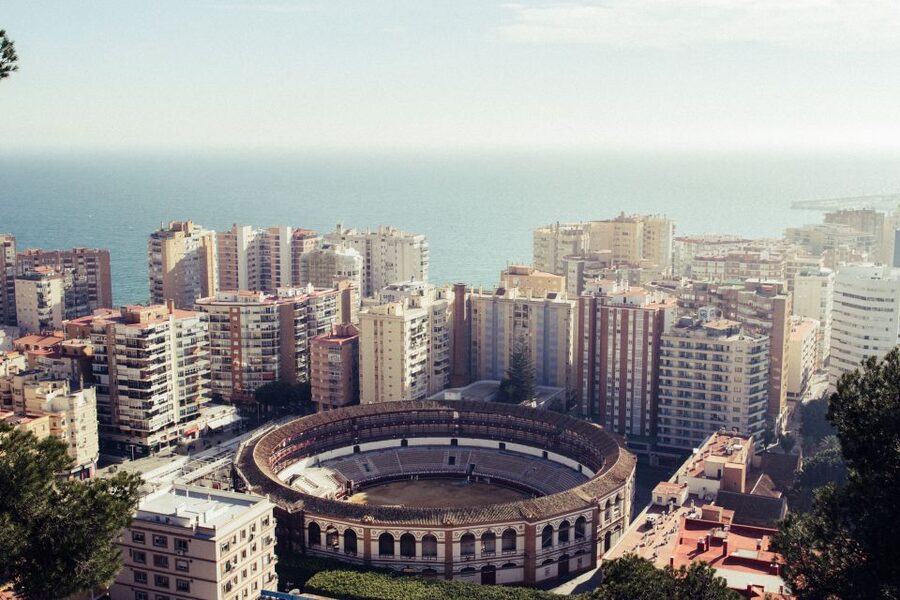
The climb adds real value to the tour. From street level, you can see Málaga’s monuments one by one. From above, you begin to understand how the city is arranged around the bay, the Old Town, the port, and the fortifications.
The view is also a welcome change of pace after the crowded streets. You get a broader picture of Málaga Bay and a better sense of why the old fortress occupied such an important position.
The tour describes this as a viewpoint that other tours do not reach. Even without relying on that claim, the practical point is clear: many standard city walks remain at street level, while this one adds a short climb for a wider view.
Fortress walls and life after the reconquest
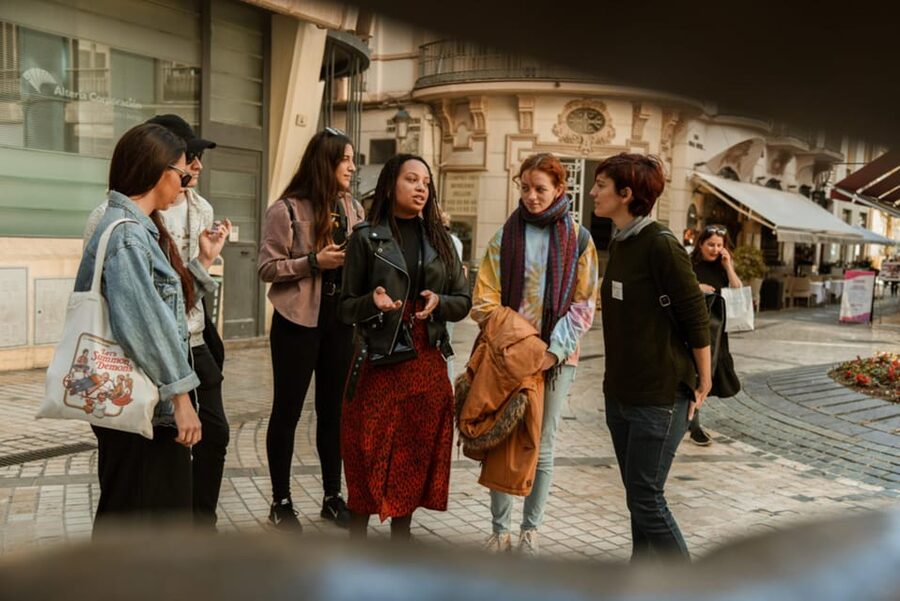
On the way up, your guide explains the remains of the fortress wall and describes how life in Málaga changed after the Christian reconquest. This gives the uphill section a purpose beyond reaching a photo stop.
The Alcazaba and its defenses are easier to understand from this angle. Walls are not just attractive ruins. They show how the city was protected, how power was displayed, and how Málaga’s daily life was shaped by its position on the coast.
The tour passes by the Alcazaba rather than offering a full interior visit. If you want to explore its courtyards, gardens, and rooms in detail, set aside separate time. The advantage of seeing it during this walk is that you get the basic historical frame before visiting on your own.
I like this approach for a short introduction. You receive enough context to make a later visit more meaningful, without spending the whole two hours inside one monument.
Paseo del Parque and the Gardens of the Dark Door

From the viewpoint, the guide connects Málaga’s older fortifications with its more recent public spaces. You learn how the construction of Paseo del Parque’s tropical park and the new port helped reshape the city.
Paseo del Parque is a particularly useful stop because it shows Málaga as a living city, not just an old quarter preserved for sightseeing. Its tropical planting gives the center a softer, greener character, and the broad park area forms a strong contrast with the tight Moorish streets.
The tour also points out the Gardens of the Dark Door, a less obvious place that many people could easily miss when walking between the main monuments. The information provided does not promise a long garden visit, so treat it as a discovery along the route rather than a stand-alone garden tour.
This section links past and present well. You see the old wall, the public park, the port, and the bay in one view. That is a better explanation of urban change than a simple list of dates.
The Alcazaba and Roman Theatre from street level
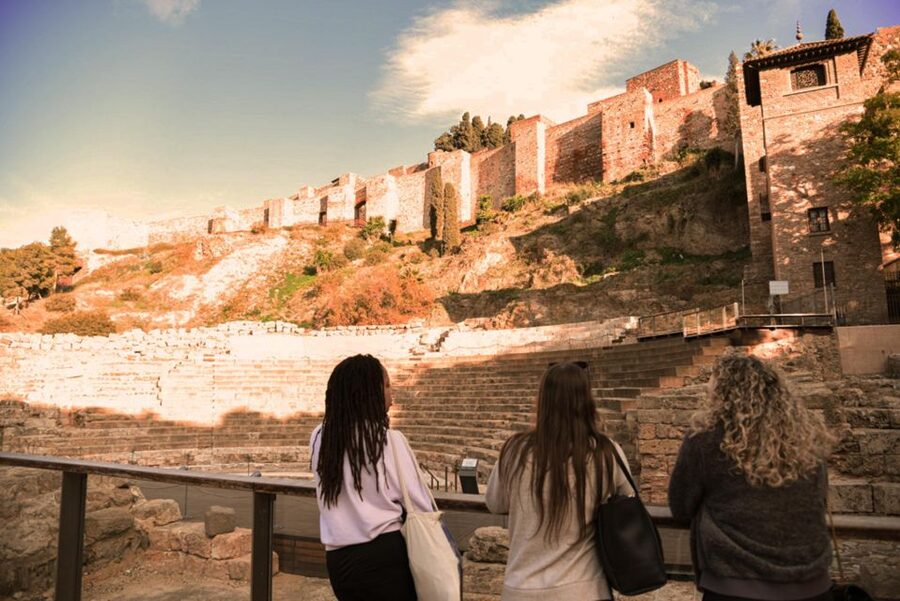
The tour then returns toward the historic center, passing the Alcazaba and the Roman Theatre. These are two of Málaga’s most important ancient and medieval sights, and their close position makes the city’s layered past especially visible.
The Roman Theatre represents Málaga’s Roman period. The Alcazaba reflects the city’s Moorish era and its defensive role. Seeing both in one walk helps you understand why Málaga can feel like several cities placed on top of one another.
Again, these are pass-by stops. The guide provides sightseeing and explanation, but the tour does not include a full archaeological visit. That is not a flaw if your goal is a broad overview. It would be a limitation if you want detailed examination of the theatre seating, fortress rooms, or decorative features.
The Roman Theatre is also the finish point, which works well. You end near a major monument and can continue exploring the Old Town, return to a museum, or stop for food nearby.
What the two-hour format really gives you
Two hours is enough for a strong first look, but not enough for leisurely monument visits. You should think of this as a city orientation with history, views, and local suggestions, not as a full-day archaeological tour.
The route covers a lot: Plaza de la Constitución, Calle Larios, Plaza del Obispo, the Cathedral, Picasso sites, the Church of Santiago, a viewpoint, fortress walls, the Alcazaba, and the Roman Theatre. That range is the tour’s main strength, but it also means the commentary must keep moving.
I would book it early in your stay. You can then use the final recommendations to shape the rest of your time in Málaga. A guide’s suggestions are most useful before you have already spent your days choosing restaurants, museums, and neighborhoods at random.
The tour is also a good fit if you want history without committing to a long museum visit. You get a plain-speaking introduction to the city’s past and present, with enough visual variety to keep the walk interesting.
Price, guide style, and overall value at $46
At $46 per person, the tour is not the cheapest way to stroll through Málaga. You can walk many of these streets yourself for nothing. The question is what you want the fee to provide.
Here, you are paying for a live English- or Spanish-speaking guide, a planned route, historical explanation, a viewpoint that requires some local knowledge, and practical advice for the rest of your stay. For a first visit, that can be fair value, especially if you prefer a guided overview rather than stopping to research each monument yourself.
The price makes less sense if you want extensive interior access. The Cathedral, Picasso museums, Alcazaba, and Roman Theatre are seen from the outside or passed by, so you may still pay separate admission later.
The guide can make a major difference. Alicia led one especially small outing with only two people, creating the kind of personal setting that allows more questions and conversation. A separate booking was praised for strong recommendations and an authentic guide style, so you should expect the human side of the experience to matter as much as the route.
There are English and Spanish departures, but starting times vary, so check availability before you plan the rest of your day.
Who should book this Málaga walk
I would choose this tour if you want:
- A first look at Málaga’s Old Town and main sights
- A guide who can explain the city’s long timeline in a short format
- A viewpoint over Málaga Bay, not just street-level monuments
- Advice for planning the rest of your stay
- A walking route that combines old walls, museums, parks, and the port
- A small-group feel if the departure happens to be lightly booked
I would skip it if you need a fully accessible route, dislike uphill walking, or want to spend time inside every major monument. It also may not suit you if you prefer a slow photographic walk, since the two-hour schedule covers many places.
Comfortable shoes and water are practical essentials. The paved path is manageable for suitable walkers, but the climb still deserves attention in your planning.
Should you book the Highlights, Old Town and Viewpoint Walking Tour?
Book it if you want Málaga explained as a whole city rather than as a set of disconnected attractions. The combination of Old Town streets, Roman and Moorish remains, Picasso landmarks, tropical parkland, port views, and a bay overlook gives you a useful first framework.
I especially like it for the start of a Málaga visit. You finish at the Roman Theatre with enough orientation to decide what deserves a longer return visit. At $46, the value depends on using the guide’s context and advice, since most monuments are pass-by stops rather than interior tours.
Skip it if mobility is a concern or if your priority is detailed time inside the Cathedral, Alcazaba, museums, or theatre. For everyone else who wants a lively two-hour introduction with one worthwhile uphill view, it is a practical choice.
FAQ
Where does the tour begin?
Meet beside the White Fountain, also called Fuente de Genova, in Plaza de la Constitución in Málaga.
Where does the tour finish?
The walk finishes at the Roman Theatre of Málaga.
How long does the tour last?
The guided walk lasts two hours.
What languages are available?
The live guide conducts the tour in English or Spanish.
What sights are included?
The route includes Plaza de la Constitución, Calle Larios, Plaza del Obispo, Málaga Cathedral, the Picasso Museum Málaga, the Church of Santiago, Picasso’s Birthplace Museum, a viewpoint, the Alcazaba, and the Roman Theatre.
Does the tour enter the museums or monuments?
The supplied details describe guided sightseeing and pass-by visits for the Cathedral, Picasso Museum Málaga, Picasso’s Birthplace Museum, Alcazaba, and Roman Theatre. They do not state that admission or interior visits are included.
Is there an uphill section?
Yes. You take a short hike on a paved path to a viewpoint overlooking Málaga Bay and pass remains of the fortress wall along the way.
What should you bring?
Bring comfortable shoes and water.
Is the walk suitable for people with mobility impairments?
No. The activity is listed as unsuitable for people with mobility impairments.
More Guided Walks in Malaga
- El Chorro: Caminito del Rey Gorge Route Guided Walking Tour
★ 4.4 · 753 reviews - Ardales: Caminito del Rey & El Gaitanejo Guided Walking Tour
★ 4.8 · 552 reviews - Ronda: Guided Walking Tour with English or Spanish Guide
★ 4.5 · 423 reviews - Ronda: Guided Walking Tour
★ 4.6 · 104 reviews
More Sightseeing Tours in Malaga
- Malaga: City Sightseeing Hop-On Hop-Off Bus Tour
★ 4.0 · 2,619 reviews - From Malaga and Costa del Sol: Gibraltar Sightseeing Tour
★ 3.9 · 1,586 reviews - Malaga: Private City Tour by Eco Tuk Tuk
★ 4.9 · 1,319 reviews - Malaga City Tour 2 Hours Monumental Segway Tour
★ 5.0 · 896 reviews
Just added around Malaga
- San Miguel Cemetery Tour of Malaga★ 5.0 · 3 reviews
- A Self-Guided Tour of Ancient Malaga’s History★ 4.5 · 3 reviews
- MALAGA: ULTIMATE FLAMENCO & TAPAS TOUR★ 5.0 · 3 reviews
- Private Winery Tour and Visit to Ronda★ 5.0 · 3 reviews
- Ronda and Setenil from la Costa del Sol★ 3.8 · 3 reviews
- From Seville: Ronda and Setenil de Las Bodegas Private Tour★ 5.0 · 3 reviews
- Private tour in Malaga from Costa del Sol★ 4.5 · 3 reviews
- From Nerja/Almunecar: Sierra Nevada and Alpujarra day trip★ 4.0 · 3 reviews
Malaga Cathedral and Old Town, compared.


Malaga Tour with Cathedral, Alcazaba and Roman Theatre
Read our review →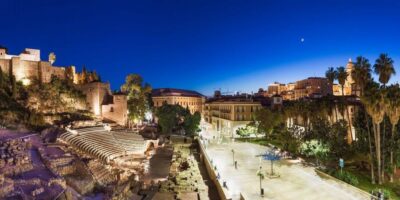
Cathedral, Alcazaba, Roman Theater Walking Tour
Read our review →
Skip-the-Line Malaga Cathedral Tickets with Tour
Read our review →
Seville Day Trip with Cathedral Entrance from Malaga
Read our review →
Browse the lists this tour appears in