
Reviewed · TAPAS AND WINE TOURS
Manilva: Nilva Vineyard, Wine Tasting & Tapas Guided Tour
Manilva’s best wine experience ends not in a tasting room, but among old vines with the Mediterranean Sea and Africa in view. You start at CIVIMA, visit Nilva’s small winery, then taste local wines and tapas at Viña del Peñoncillo, an organic vineyard.
I like the clear local purpose: your $35 helps support farmers trying to keep Manilva’s centuries-old Moscatel de Alejandría vines alive. I also like Maggie’s warm, funny way of explaining the work behind each bottle. The main catch is transport between stops. The vineyard is about 1 kilometer away, and you need your own vehicle or must walk there.
In This Review
- Key points to know before you book
- Why Manilva wine matters
- Starting at CIVIMA, Manilva’s wine museum
- Seeing Nilva’s small working winery
- Reaching Viña del Peñoncillo
- Tasting three or four Nilva wines
- The views are part of the value
- Is two hours enough?
- Who will enjoy this Manilva experience?
- Does $35 offer good value?
- What to bring and how to plan
- Should you book Nilva’s vineyard tour?
- FAQ
- Where does the tour begin?
- How long does the experience last?
- Do I need my own transport?
- How many wines will I taste?
- What food is served with the wine?
- What happens if the weather is bad?
Key points to know before you book
- Old Moscatel vines by the sea: See a grape variety closely tied to Manilva and its coastal vineyards.
- Three useful stops: CIVIMA explains local wine traditions, Nilva shows small-scale production, and the vineyard provides the tasting.
- Maggie makes the tour personal: Her humor, clear English, and practical knowledge of vineyard work are a major part of the experience.
- Wine comes with proper nibbles: Expect tapas such as ham, cheese, walnuts, and crisps alongside the tasting.
- Allow extra thought for the transfer: The vineyard is not at the museum, so arrange a car, taxi, or a walk of roughly 10 to 20 minutes.
- The setting depends on weather: The vineyard portion can be changed or limited in poor conditions.
Why Manilva wine matters
Manilva is a small town on Málaga’s Costa del Sol, surrounded by both vineyards and sea. Its traditional vines are not planted in some distant inland wine country. They grow close to the coast, with views toward the Mediterranean and, on clear days, Africa.
The main local grape is Moscatel de Alejandría. It is an old variety with a strong connection to Manilva’s farming culture. These vines face a very modern threat: urban development and low profits make it difficult for farmers to keep working the land.
That gives this tour more weight than a simple afternoon tasting. Nilva’s project, called Save the Vineyards of Manilva, uses wine production and visits like this one to help make vineyard work more sustainable. The project has received an International Skal award for sustainable tourism.
You are not just sampling a bottle and moving on. You are seeing a small producer trying to keep an agricultural tradition alive in a town under development pressure. I find that context useful because it explains why the winery is small, why the visit feels personal, and why the guide spends time on farming rather than only describing flavors.
More tapas and wine tours in Estepona:
- Estepona: Sunset boat trip & Cava & Tapa
★ 4.9 · 54 reviews - Manilva Oceanfront Wine Experience in the Marbella Area
★ 5.0 · 51 reviews - from Marbella, Estepona:Private tour Ronda incl. transfer,bullring,tapas
★ 4.8 · 12 reviews
Starting at CIVIMA, Manilva’s wine museum
The tour begins at CIVIMA, the Centro de Interpretación Viñas de Manilva. The building is between the fire station and Plaza de la Vendimia, so check the meeting point carefully rather than heading directly to the vineyard.
Your guided visit lasts about 30 minutes. CIVIMA is arranged around three subjects:
- Viticulture, or how the vines are grown
- Oenology, or how grapes become wine
- The grape harvest and its local traditions
This first stop gives you the vocabulary and context for the rest of the visit. You learn why the vines matter to Manilva, how local farming developed, and what happens before grapes reach the winery.
The museum is especially useful if you know little about wine. You do not need to arrive with tasting experience or knowledge of Spanish grape varieties. Maggie explains the subject in practical terms, and her style is friendly rather than formal. She is also involved in the vineyard work herself, so the explanation is grounded in real labor.
One small point to bear in mind: Maggie can speak quickly when she gets going. Her English is clear, but if you prefer a slow, highly structured presentation, you may need to ask her to repeat a point. Her humor and enthusiasm help keep the short museum visit lively.
Seeing Nilva’s small working winery
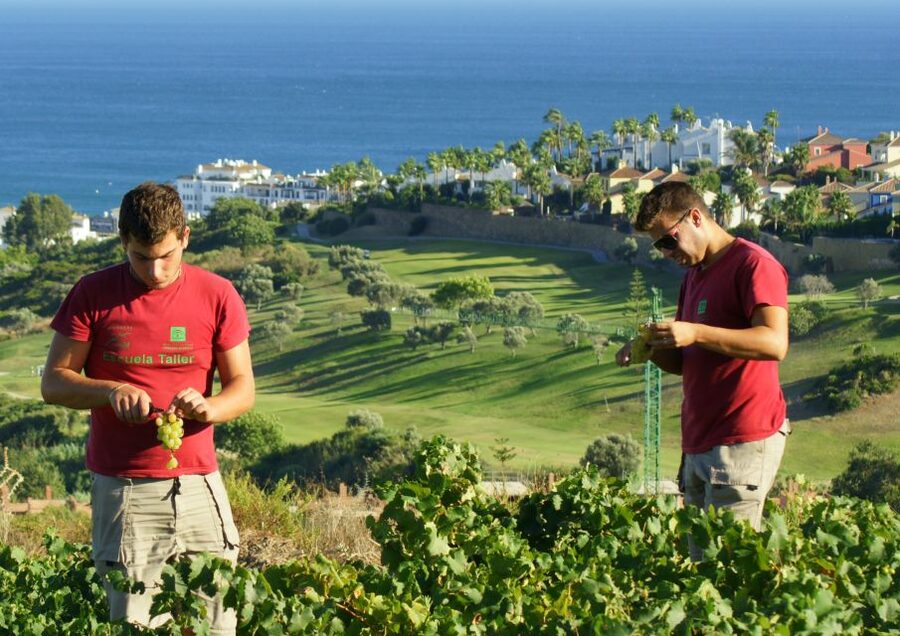
From CIVIMA, the tour continues to Nilva’s winery for about 15 minutes. This is a small artisan operation, sometimes described as garage wine. That phrase tells you what kind of visit to expect. You are not entering a large commercial cellar with rows of polished equipment and a visitor center built for crowds.
Instead, you get a look at how a small producer makes its wine. The tour covers production, fermentation, and bottling. You can connect what you saw in the museum with the actual steps used by Nilva.
I like this part because it keeps the tasting honest. You see that local wine comes from seasonal work, careful handling, and limited production. It also gives you a chance to ask about how Nilva wines are made, rather than simply hearing a sales pitch at the end.
The winery portion is short, so do not expect a full technical course in winemaking. Its purpose is to explain the process and introduce the producer before you go out among the vines. The focus stays on Manilva and Nilva, not on Spanish wine in general.
Reaching Viña del Peñoncillo
The vineyard is about 1 kilometer from CIVIMA. The information for the activity says the walk takes roughly 10 minutes, while several visitors found it closer to 15 or 20 minutes. I would plan for the longer estimate, especially if you want to stop for photos or are walking in warm weather.
You need your own transport if you do not want to walk. Hotel pickup and drop-off are not included, and transport between the museum and vineyard is not provided. A car is the simplest choice, though taxis have also been used to reach the area. If you are staying around Duquesa or Sabinillas, check your return plan before booking.
This transfer is the main practical weakness of the experience. The meeting point and tasting site are different, and the short distance can sound easier than it feels on the ground. Ask the operator for the clearest route if you have mobility concerns or are relying on a taxi.
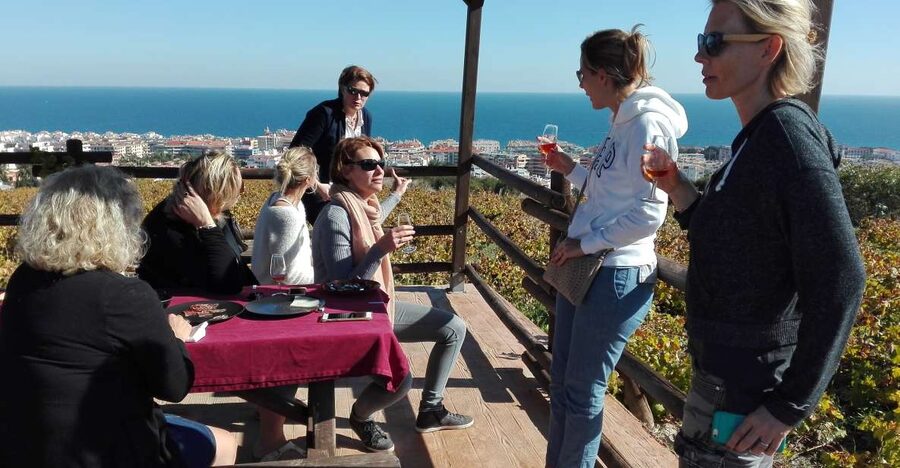
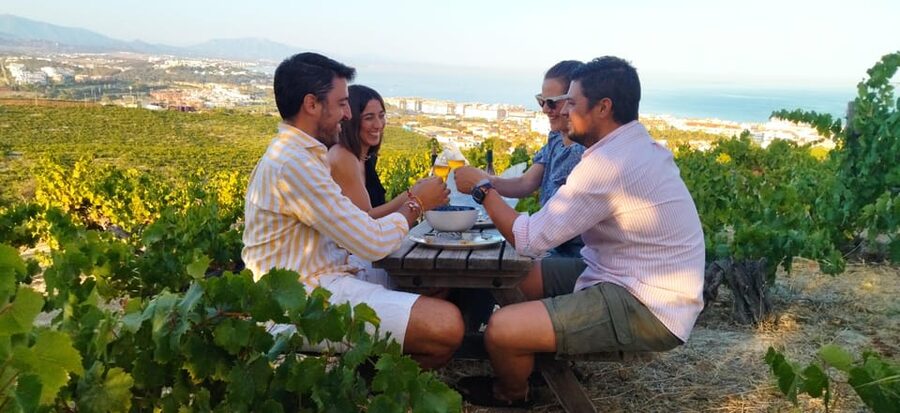
The payoff is the setting. Viña del Peñoncillo is certified for organic agriculture, and the tasting takes place among the vines rather than inside a generic bar. You get broad views over the coast, mountains, sea, and toward Africa. There are also large chairs that make an easy photo stop.
More food and drink in Estepona:
- Estepona old town tour with tapas tasting
★ 4.7 · 11 reviews - from Estepona, Marbella, Mijas: RONDA private tour incl. transportation and tapas
★ 5.0 · 3 reviews - Malaga Wine & Tapas Small Group Guided Tour
★ 5.0 · 1,972 reviews - From Malaga: Caminito del Rey/White Village Tour & Tapas
★ 4.9 · 1,361 reviews
Tasting three or four Nilva wines
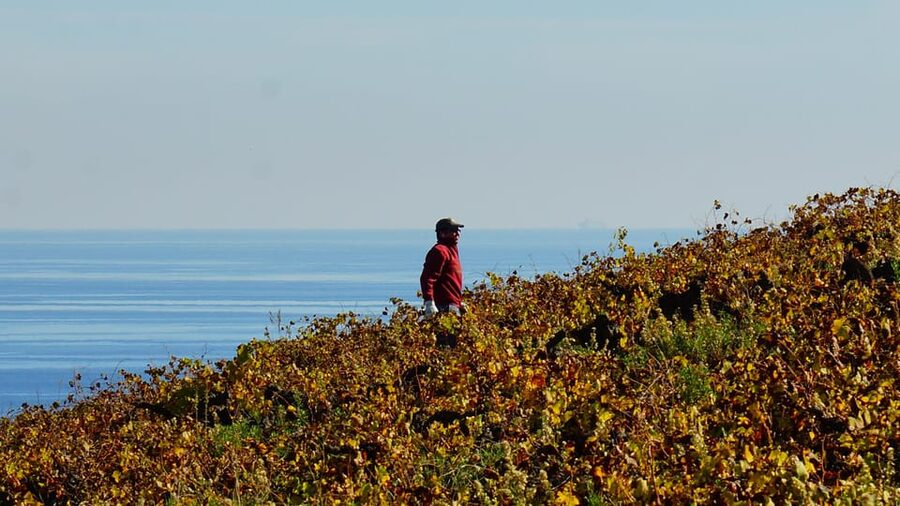
The tasting includes wines and tapas. The advertised format refers to three wines, while recent tour sessions have included four different wines. The exact number may vary, so treat three as the firm expectation and four as a possible bonus.
The tasting is explained rather than simply poured. You learn how to approach each wine and how the food changes what you notice in the glass. That makes the experience suitable for people who enjoy wine but do not consider themselves experts.
Tapas typically include ham and cheese, with walnuts and crisps also described during recent visits. It is not a full meal, but it is more substantial than a few crackers. The food gives you something salty and savory to pair with the wine, which is just right for a relaxed outdoor tasting.
The wines are varied enough to make comparison worthwhile. You can taste the producer’s style across different bottles and think about how the coastal setting and local grape tradition shape the result. The point is not to memorize tasting notes. It is to understand what makes Nilva different from a supermarket bottle with no connection to the place where you are drinking it.
You may also get a hands-on glimpse of vineyard work if the timing and season allow. One visitor had the chance to prune the vines, an experience that shows how physical the work can be. That should not be treated as a guaranteed activity, but it is a good reminder that the vines are working land, not just scenery for a tasting photograph.
The views are part of the value
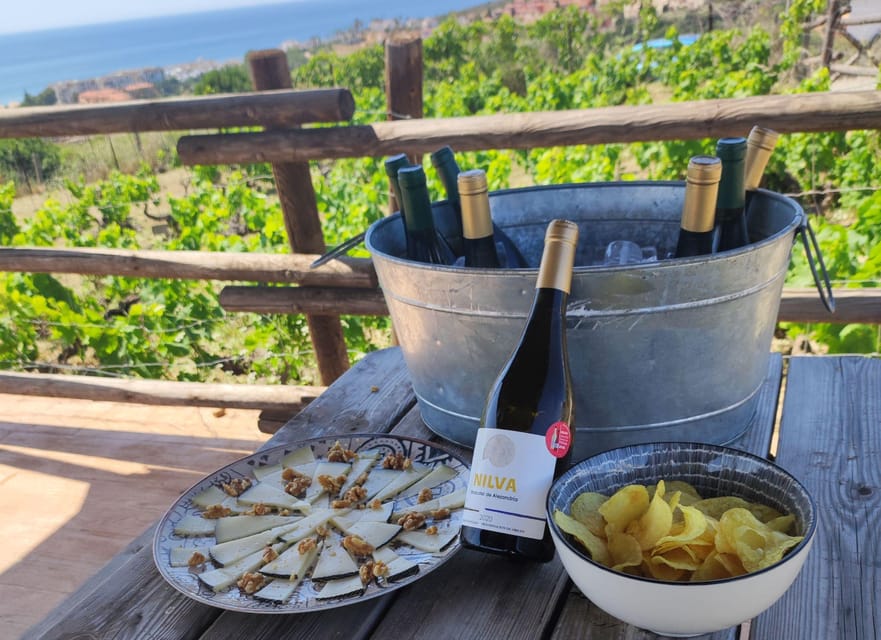
The final setting is the reason many people will choose this tour over a standard winery visit. You sit near the vineyard, wine in hand, with the Mediterranean behind you and Africa visible in the distance when conditions are clear.
Sunset can make the experience especially attractive, but the schedule and weather matter. The vineyard visit is subject to good weather, and poor conditions can mean staying away from the vines. One winter visit had to skip the vineyard because of rain, though the museum and winery still made the outing worthwhile.
That is an important tradeoff. The views are not guaranteed, and the outdoor portion is the part most affected by clouds, wind, or rain. If the vineyard setting is your main reason for booking, choose a day with a favorable forecast and keep your expectations flexible.
Even without perfect sun, the visit retains its local value. You still learn about Manilva’s wine traditions, see Nilva’s production methods, and support the project’s effort to preserve the vineyards. But the experience is at its best when you can sit outside and take your time with the tasting.
Is two hours enough?
Two hours is a good length for this experience. The museum takes about 30 minutes, the winery about 15 minutes, and the remaining time is used for the transfer, vineyard visit, wine, tapas, and conversation.
You get enough explanation to understand the place without committing half a day to a formal wine course. That makes it easy to fit into a Costa del Sol schedule, especially if you are staying in Manilva, Sabinillas, or near Puerto de la Duquesa.
Do not read the two-hour duration as a promise that every minute will be tightly timed. The vineyard tasting is meant to be relaxed, and the transfer adds some flexibility. If you need to leave immediately at a fixed time, tell the guide at the start.
The experience is guided in English. The guide’s personality matters here because the museum and winery are compact. Maggie is repeatedly praised for her warmth, humor, clear explanations, and passion for the area. She also talks about the practical work she does in the vineyard, which gives the tour a more direct connection to the land.
Who will enjoy this Manilva experience?
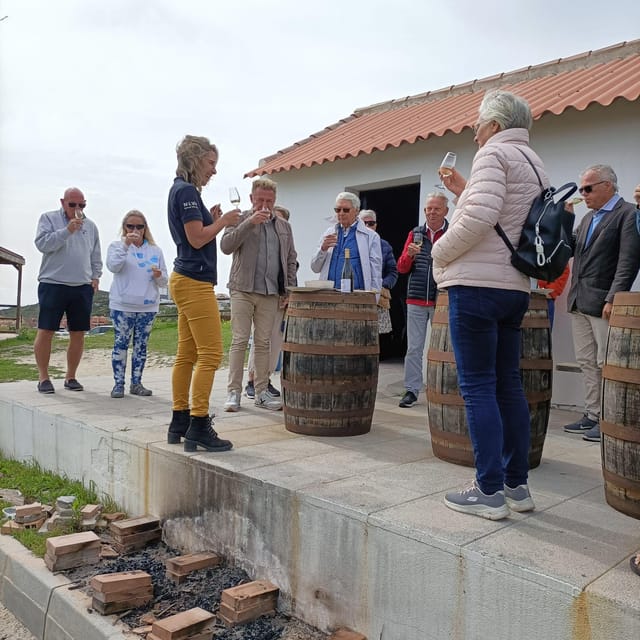
I would recommend it to you if you want a small-scale local experience rather than a grand winery complex. It suits couples, friends, and anyone looking for a gentle activity with food, scenery, and a bit of cultural context.
It is also a good pick if you are not deeply interested in wine. The guide keeps the subject approachable, and the views and tapas provide plenty of appeal beyond the tasting itself. One recent visitor specifically felt it worked even for someone who did not like wine.
You should consider it if sustainability and local agriculture matter to your holiday choices. Your visit supports Nilva’s attempt to keep old vines in production and make farming more viable. That purpose is not an abstract side note. It is central to what the company is trying to do.
The tour is less suitable if you want a large estate, extensive cellars, a long formal tasting, or guaranteed outdoor conditions. You should also think twice if arranging a short-distance transfer is difficult. The walk is manageable for many people, but the distance descriptions vary, and summer heat can change how easy it feels.
The activity is wheelchair accessible, but the vineyard is reached separately from CIVIMA and involves its own access considerations. If you use a wheelchair, contact the operator before booking so you can confirm the route and transport plan directly.
Does $35 offer good value?
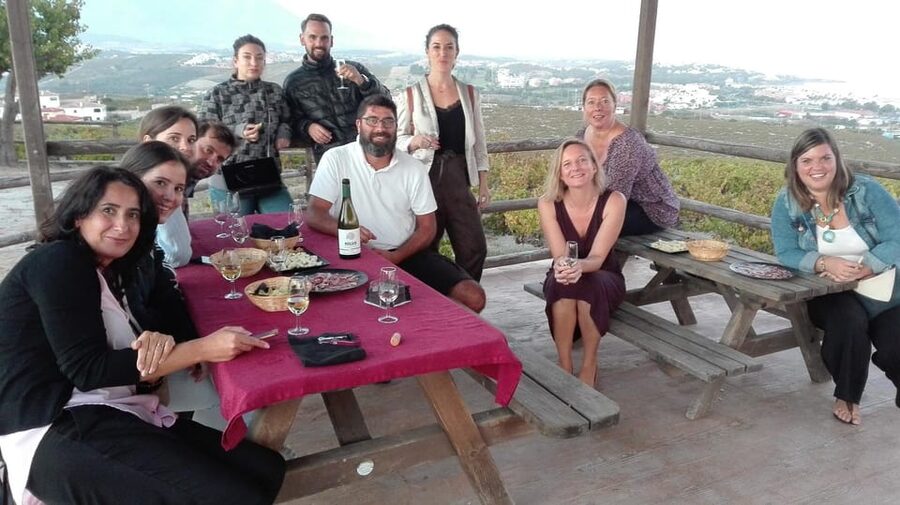
At $35 per person, the tour gives you three connected experiences: museum admission, a guided look at the winery, and wine with tapas at the vineyard. For a two-hour activity, that is fair value, especially because the final tasting comes with a memorable coastal setting.
The strongest value is not the amount of wine in your glass. It is the combination of place and purpose. You learn about a local grape, see how a small producer works, eat simple regional-style tapas, and help support an effort to preserve Manilva’s vineyards.
The price is less compelling if you mainly want a drink with a view. You could possibly find a cheaper bar tasting elsewhere, but it would not give you the same connection to CIVIMA, the production process, or the threatened vineyards.
The reserve-now, pay-later option and free cancellation up to 24 hours before the activity make planning easier. Still, the practical details matter more than the booking flexibility. Confirm the meeting point, arrange your vehicle or walk, and check the forecast before setting out.
What to bring and how to plan
Wear comfortable shoes if you plan to walk from CIVIMA to the vineyard. The route is short, but the tour includes a museum, a winery, and outdoor vineyard time, so practical clothing will serve you better than formal holiday wear.
Check the weather on the day. The vineyard visit depends on favorable conditions, and the best views need clear enough skies. If your schedule allows, an afternoon or sunset start gives the coastal setting extra appeal, but you should check the available start times.
Plan to arrive at CIVIMA, not at the vineyard. The meeting point is by the fire station and Plaza de la Vendimia. From there, the guide leads the museum and winery portions before the group moves on to the vineyard.
Animals are not allowed in the winery. Hotel pickup and drop-off are not included. Those are small details, but knowing them in advance prevents the most common planning mistakes.
Should you book Nilva’s vineyard tour?
Book it if you want an informative, personal wine visit with spectacular coastal views and a clear local purpose. The combination of CIVIMA, Nilva’s small winery, and an organic vineyard gives you much more context than a simple tasting.
I would make this a particularly strong choice for visitors staying near Manilva, Sabinillas, Duquesa, or elsewhere along the western Costa del Sol. It is also worth the trip for anyone curious about how tourism can help protect traditional agriculture.
Skip it if you need guaranteed sunshine, included transport, or a large-scale wine estate with extensive facilities. Otherwise, $35 is a sensible price for a compact experience that leaves you with a better understanding of Manilva, a few wines to compare, and a view you will remember long after the last glass.
FAQ
Where does the tour begin?
The meeting point is the CIVIMA building in Manilva, located between the fire station and Plaza de la Vendimia.
How long does the experience last?
The tour lasts about two hours. The CIVIMA visit takes around 30 minutes, and the winery visit takes about 15 minutes before the vineyard tasting.
Do I need my own transport?
Transport is not included. The vineyard is about 1 kilometer from CIVIMA, so you need your own vehicle, a taxi, or the option to walk. Walking estimates range from about 10 to 20 minutes.
How many wines will I taste?
The activity is described as including three wines. Recent sessions have included four wines, so three is the reliable expectation and the exact number may vary.
What food is served with the wine?
Tapas are included, including ham and cheese. Walnuts and crisps have also been served with the tasting.
What happens if the weather is bad?
The vineyard visit depends on good weather. If conditions are poor, the outdoor portion may not be possible, though the CIVIMA museum and winery visit can still take place.
Just added around Estepona
- from Estepona, Marbella, Mijas: RONDA private tour incl. transportation and tapas★ 5.0 · 3 reviews
- Sighting Dolphin Trip Estepona, Marbella★ 4.5 · 3 reviews
- Authentic Private Tangier Tour from Estepona Camel Ride & Lunch★ 5.0 · 3 reviews
- From Marbella: Guided Private Trip to Gibraltar and Estepona★ 4.0 · 3 reviews
- Costa del Sol: Beginner class Dynamic Windsurfing★ 4.0 · 4 reviews
- From Estepona: Vía Ferrata de Casares guided climbing tour★ 5.0 · 4 reviews
- from La Cala/Marbella/Estepona: Private VIP Gibraltar shopping tour★ 4.5 · 4 reviews
- Estepona Bike Tour★ 4.6 · 8 reviews
Tapas and Wine Tours, compared.
Taste of Malaga Tour : Tapas, History and Local Customs
Read our review →

Malaga Organic Vineyard and Winery Six Wines Tapas and Transfer
Read our review →
Organic Vineyard Tour with 6 Wines, Tapas & Transfer
Read our review →
Málaga Evening Tapas Crawl Tour by Food Lover Tour
Read our review →Browse the lists this tour appears in